
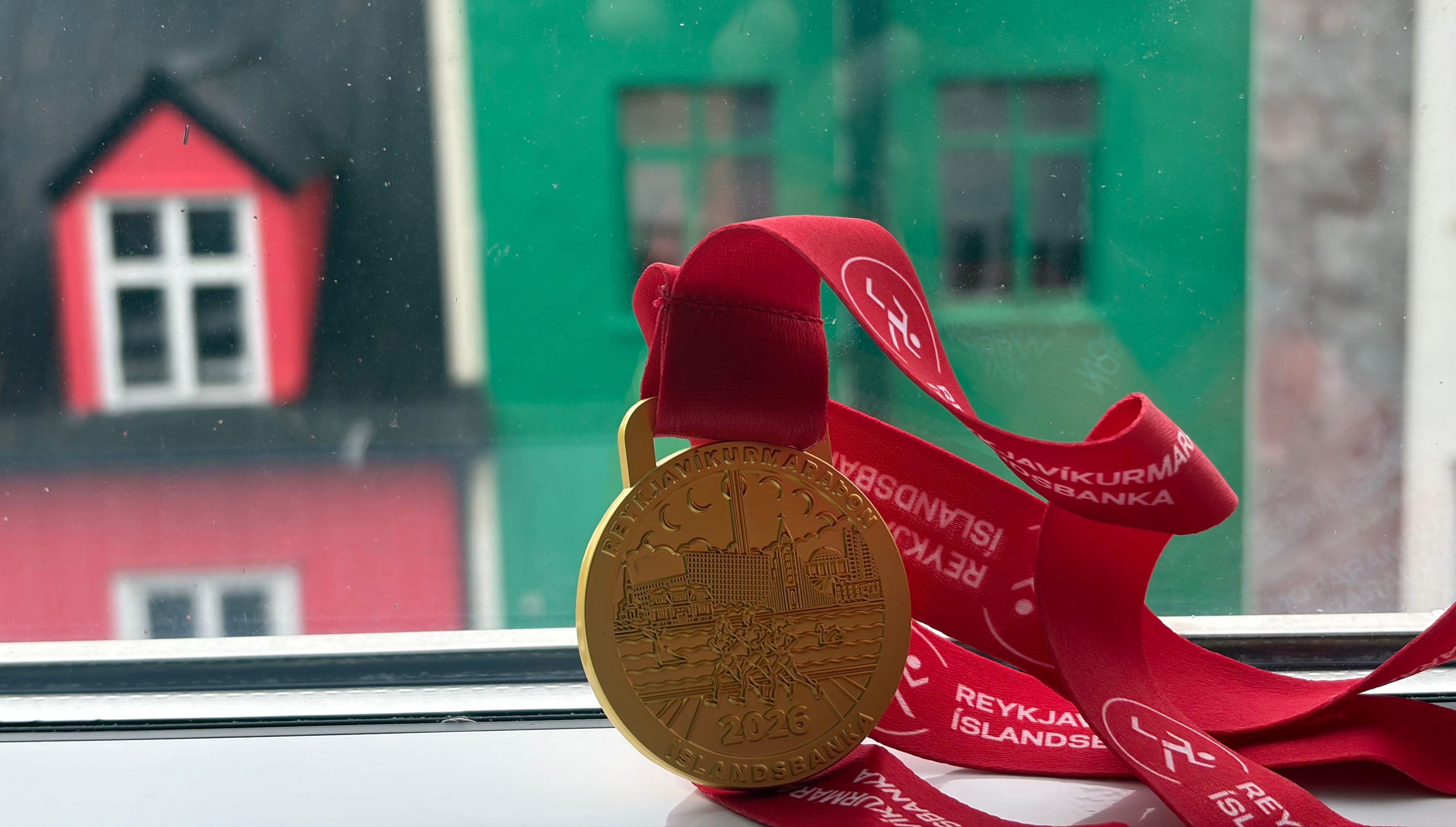
I recently flew to Reykjavik for a couple of nights to run a large 10K race. It was a low-frills, well-organized event on a flat course, and an opportunity to run in cool temperatures in the height of summer — but in a very expensive city. Here’s my report, with — as usual — some detours to other related and not-so-related topics.
New: You can listen to a narration of this post, as well as reading it. See the playback link above.
Table of Contents
A popular place
These days, just about anyone in the U.S.A. with an REI membership seems to have been to Iceland or has it on their dance card. It’s a hugely popular destination, as you can see when you land in Reykjavik by the number of U.S. airliners parked on remote stands. (Keflavik International Airport is not well endowed with jet bridges.)
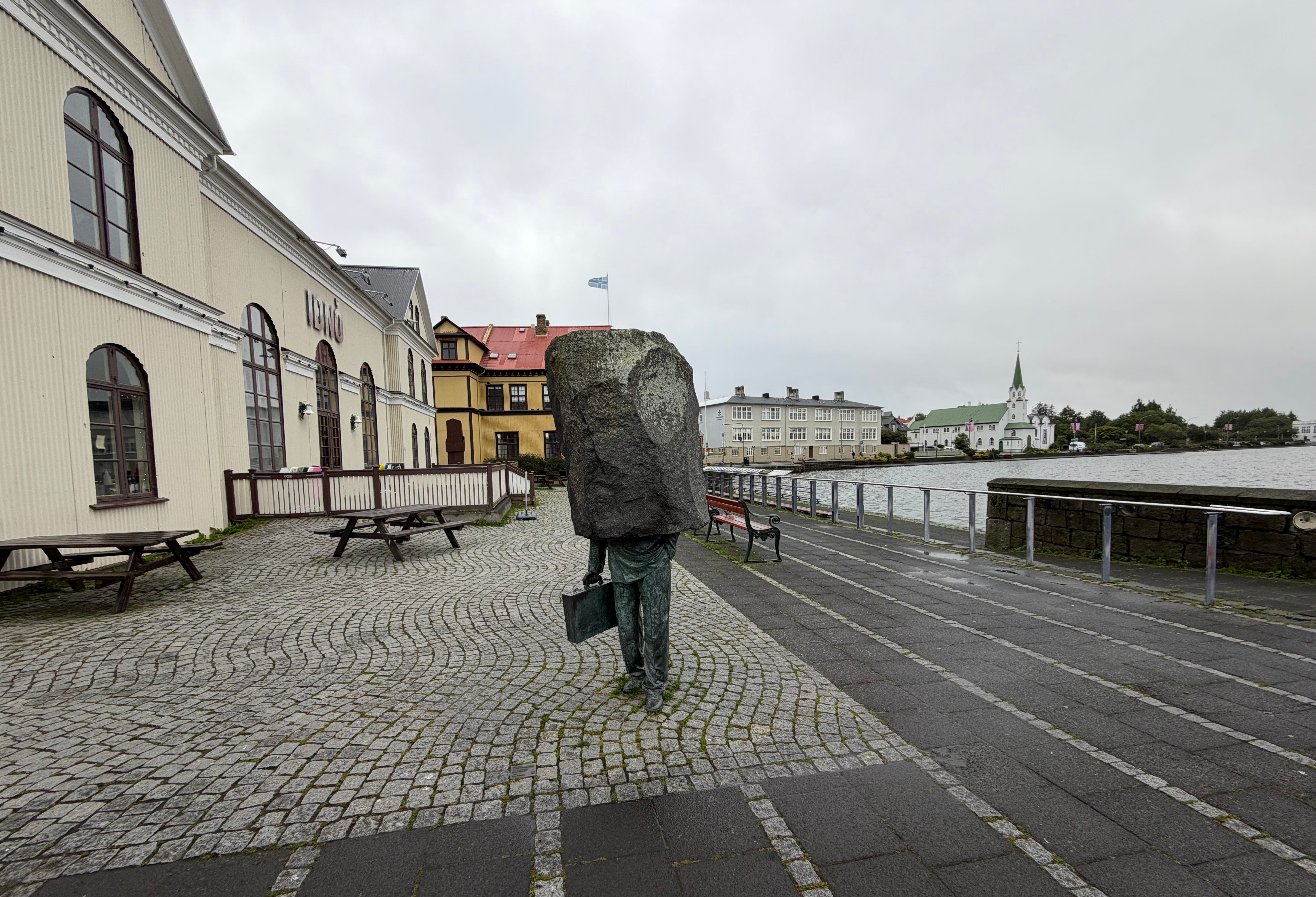
I don’t find Reykjavik, the capital, an especially charming or exciting city for the casual visitor. The old part has its quaint spots. And there are some nice vistas here and there. But, overall, it combines a sort of “Fisherman’s Wharf,” fish-and-chips tourist economy vibe with a weathered, bunkered-down-for-the-elements look.
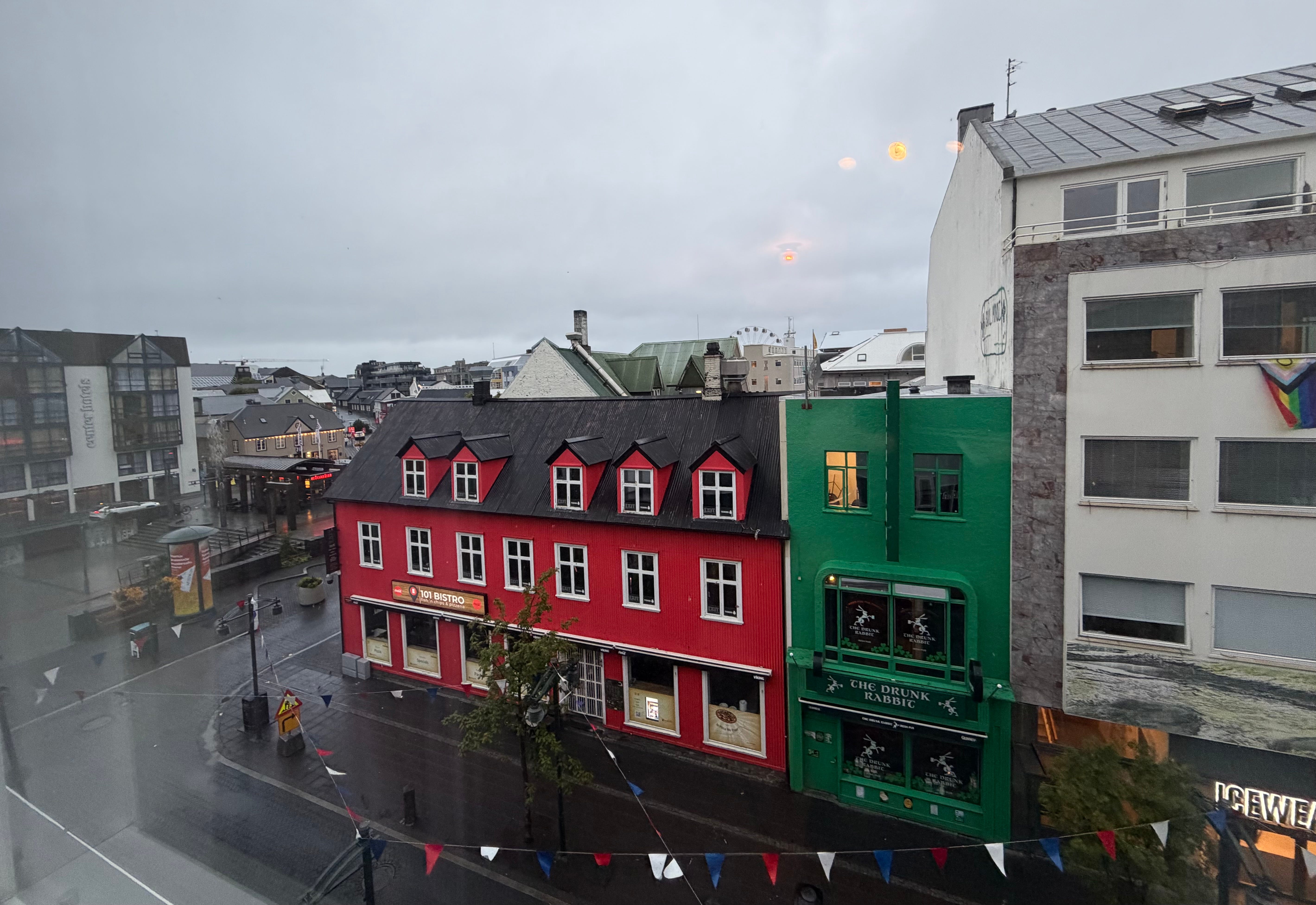
The fact that I’m not gushing about Reykjavik doesn’t mean that I didn’t enjoy going there. I don’t buy the notion that the only worthwhile travel is to places you fall in love with. I like seeing all parts of the world, not just the most obviously charming. I don’t mind “doing” charm. But it is by no means required.
The REI crowd, meanwhile, doubtless has its sights on other parts of the country. Focusing on Reykjavik as emblematic of Iceland would be like zooming in on Anchorage as capturing Alaska.
The cost of visiting
Reykjavik and Anchorage actually have some things in common. One is that they are expensive. Seriously so, in Reykjavik’s case. My rule of thumb there is to think what you’d normally expect to pay for something in most places, double it, and add a bit more for good measure. Especially in high season.
For example, I paid about $405 a night for my hotel room. I stayed only two nights, which was all that was necessary to do the race that was the purpose of my journey. But this wasn’t for some reasonably fancy place. It was for a small single room in a pretty low-frills establishment called the City Center Hotel. The basic room was fine for my purposes, but it was no better than what I got when paying around $50 a night a few weeks later in Osaka, Japan, and it was equivalent to what would be a $150 room in, say, Frankfurt. What’s more, I felt I got a fairly good deal compared with what I saw other Reykjavik hotels going for later. There’s a capsule hotel in Reykjavik, and even that was going for around $240 a night for the weekend I was there.
I booked some way in advance. By the time I arrived in Reykjavik, you could hardly get anything no matter what you were willing to pay.
European, up to a point
Iceland is generally considered a European country geopolitically. But geologically, it spans the boundary between the North American and Eurasian tectonic plates.
Iceland is, however, very much its own place. Soon after my visit there, it held a referendum on whether to resume accession negotiations to join the European Union. The result was a “no” by around 53 to 47 percent. Reykjavik, the capital, voted in favor, but the hinterland went against. Somewhat similar in demographic spread to the referendum that took the UK out of the EU 10 years earlier.
A slow way to Europe
Before airline deregulation, transatlantic flights via Iceland were one of the loopholes around high government-mandated fares between the U.S. and major European capitals. But today, Iceland can still be a gateway to Europe. And not necessarily all by air.
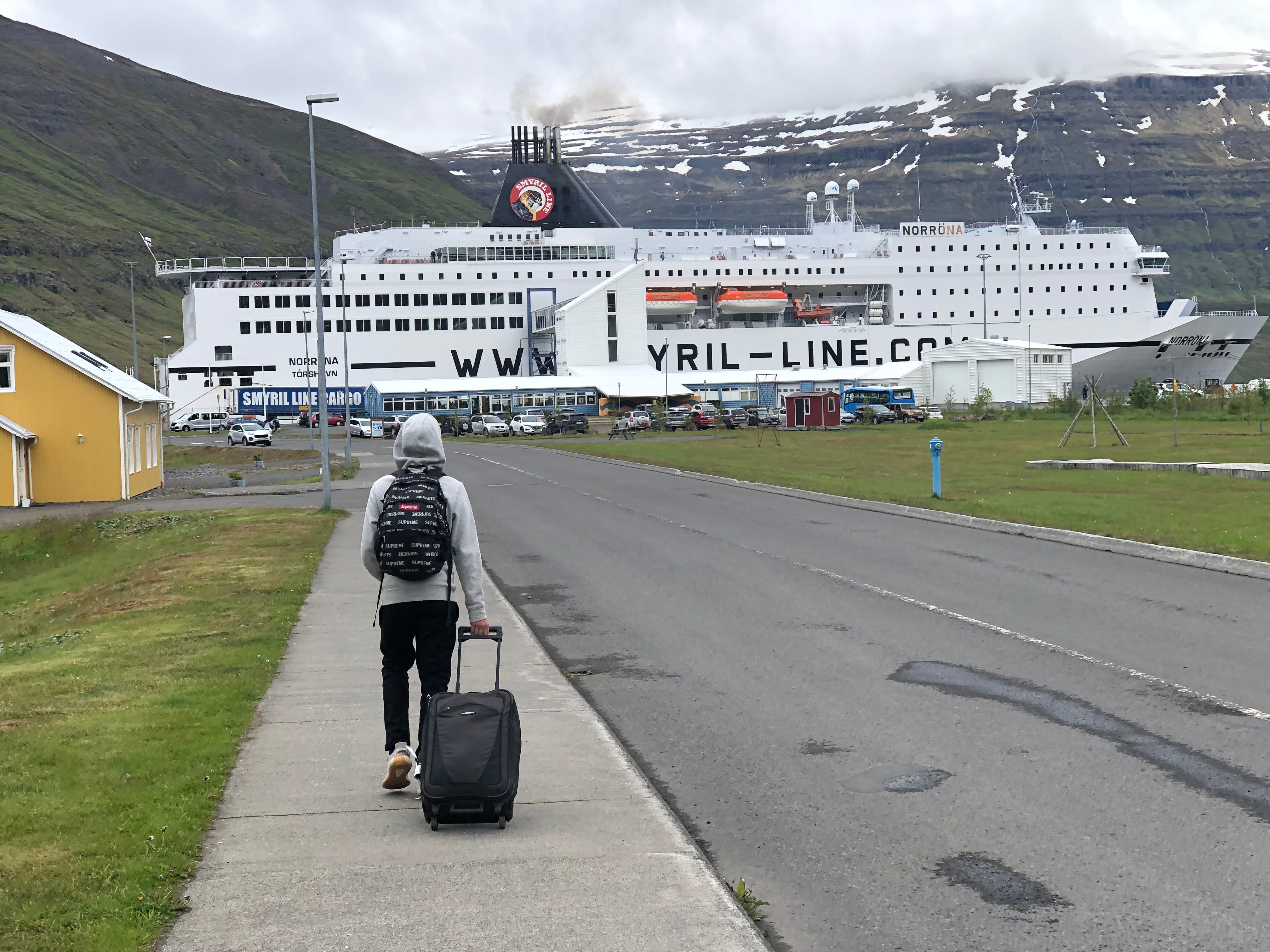
During the last summer before COVID, my son — then still in high school — and I flew from the U.S. to Reykjavik and then took a ferry from Seyðisfjörður (try pronouncing that, but it’s along the lines of “say-oes-fee-ror”) on the eastern side of the island to Denmark (on an itinerary that took us on to Marrakesh). I highly recommend that as a slow route to Europe. The ferry takes two or three days, with a brief stop in the Faroe Islands (where you could break your journey if you wanted). It’s a working ferry, not a cruise ship. It carries vehicles and cargo as well as passengers. But you can book a cabin — although not everyone does — and it’s by no means uncomfortable.
An August race
August in the northern hemisphere is not prime time for road races. But if you want to do one, the further north, the better from the point of view of avoiding summer heat. Reykjavik is among the northernmost major summer road races of which I’m aware.
When I planned my visit, I had visions of cool but pleasant summer weather. What I got was something that felt more like November or March in most parts of Europe. Cold, wet, windy. It was unusually wintry even by Icelandic standards. But that suited me fine, especially coming from one of the hottest summers in the 33 years I’ve lived in Southern California.
Reykjavik race overview
The Reykjavik event consists of a marathon, half marathon, and 10K (as well as a “fun run”). I ran the 10K. Often, 10K races that take place at the same time as full or half marathons are the lesser event. But there are some where they are the main one. That includes Reykjavik.
The 10K runners outnumbered the two longer distances combined. The finisher total for the 10K was 6,658, compared with 1,055 for the full marathon and 3,122 for the half.
All of those are impressive numbers for a small country. But the event draws runners from elsewhere. According to the organizers, runners from more than 90 countries took part in 2026, which seems quite remarkable.
“Competition” vs. “General” entry
When you register, you have to choose between “General” and “Competition” entry. Both get you a timing chip, but Competition entitles you to an official certified record of your time, which you may want if you are using it to qualify for other events.
There are, however, reasons why you might prefer to go for Competition even if you aren’t qualifying for anything. Competition runners start 30 minutes before General ones in each distance, and there are fewer of them, meaning less risk of crowding. I’d read about crowding with General entry at the start of the 10K in previous years, so the modest premium seemed worth it.
If you are a recreational, middle-of-the-pack sort of runner, you might be concerned that Competition entry would put you among too fast a class of runner. However, runners of a wide range of capabilities sign up for this entry. And the field is not all that small — there were 1,487 Competition 10K runners this year, compared with 5,171 General ones. So it is definitely not just an “elite” category.
That said, the Competition average is faster than the General one. The results for the two categories are reported separately, not in an integrated list. My finish time of 1:03:31 placed me in the 49th percentile in my Competition age division. But had I been in the General category, I would have been basking in the 91st percentile. So if percentiles help stroke your ego (and nothing wrong with that), you may want to go General.
Race sizes and performance
On the whole, I find the larger the race, the higher my percentile finishing rank at a given pace. That’s likely because large races attract more casual runners and, indeed, walkers — the latter being great percentile boosters. Small races, by contrast, have less Instagram value and tend to have higher proportions of hard-core, faster runners.
Of course, percentile rankings are of little actual meaning. The metrics that matter, if you are into them (as I unashamedly am), are your own. But that raises another question, which is whether, putting aside other runners, you yourself run faster in a large race, propelled, perhaps, by the sheer collective energy of the crowd, than in smaller ones.
I used to think that I, personally, did run faster amidst larger crowds. And there was a time when that was probably so. But now I wonder. Looking at my times in races in comparable conditions in terms of temperature, elevation profile, etc., I have generally actually done a bit better lately in ones with numbers in the low hundreds. (I don’t usually write about those races in my blog, as they tend to be local ones readers are unlikely to be tempted to fly to.)
Still, I do run faster in races overall — regardless of size — than when on my own. Maybe it’s the collective energy even from a smaller pack. But maybe it’s also the tapering and carb loading leading up to the race and the inner accountability that comes from being tracked. Plus the fact that I don my Nike Alphaflys — my race shoe of choice for a while — and, perhaps, a bit of vanity.
Reykjavik race registration and packet pickup
Anyway, back to Reykjavik. Race day is on a Saturday, which is a little unusual in a world where most big races take place on Sundays. Registration takes place over a couple of preceding days. This year, it was in some type of event facility a bit of a bus ride from the city center. Don’t expect to walk there.
The lines to pick up your race kit were by far the longest I have ever known in my almost 15 years of road races. I’m not sure why. There was nothing obviously inefficient. Perhaps I chose a bad time, quite late in the afternoon on the eve of the race. But I’d only arrived in the country that morning. There was first a line to get into the hall, and then a huge one inside. It reminded me of the sorts of lines I smugly see “other people” standing in during airport meltdowns when I am grateful for TSA PreCheck and my CLEAR+ membership (the latter free via statement credits with Amex Platinum — I would never pay for it separately as it rarely makes much of a difference in my experience, although it is great when it does). But the packet pickup line moved a bit more quickly than some airport ones. I probably waited about 40 minutes in all before getting my bib.
Registration starts at around $65 for the 10K, but expect to pay more for the longer distances and for sign-ups closer to the event. Compared with Icelandic prices overall, the race cost is surprisingly reasonable. Unusually for a high-profile race these days, it did not appear to sell out. In 2026, I believe they continued to sell spots even at the expo. Prices do not include a shirt or any swag. It’s a low-frills event. But there is a finisher’s medal. And the expo was a good size.
The Reykjavik race day experience
All the race distances start from the same location quite close to the center of town where most visiting runners are likely to be staying. It was a roughly 15-minute walk from my hotel. The races go out in order of distance, with the longest first. With each distance, the Competition field begins 30 minutes before the General one. At least, that was the arrangement in 2026.
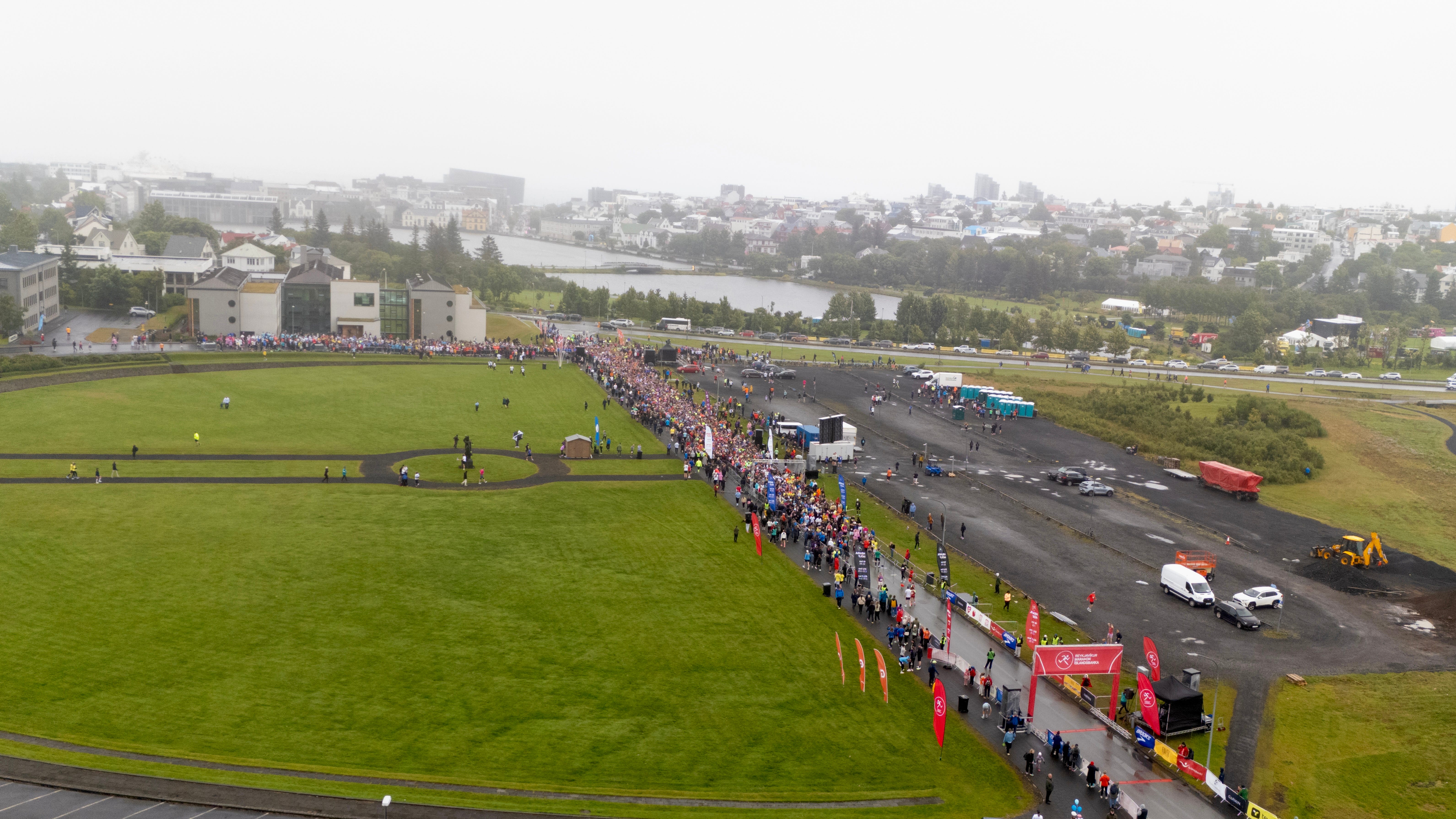
My start time for the Competition 10K was 9:30 A.M. When I arrived at around 8:45 A.M., the General half marathon field was getting going. When those runners had left, the whole start area seemed very empty. It was hard to imagine that a larger event was soon to begin. Maybe it was the weather, but this wasn’t a race where people congregate much in advance. As 9:30 drew near, however, the masses appeared from all quadrants. If I did this race again, I’d likely arrive later as there really isn’t much pre-race vibe to get you in the mood.
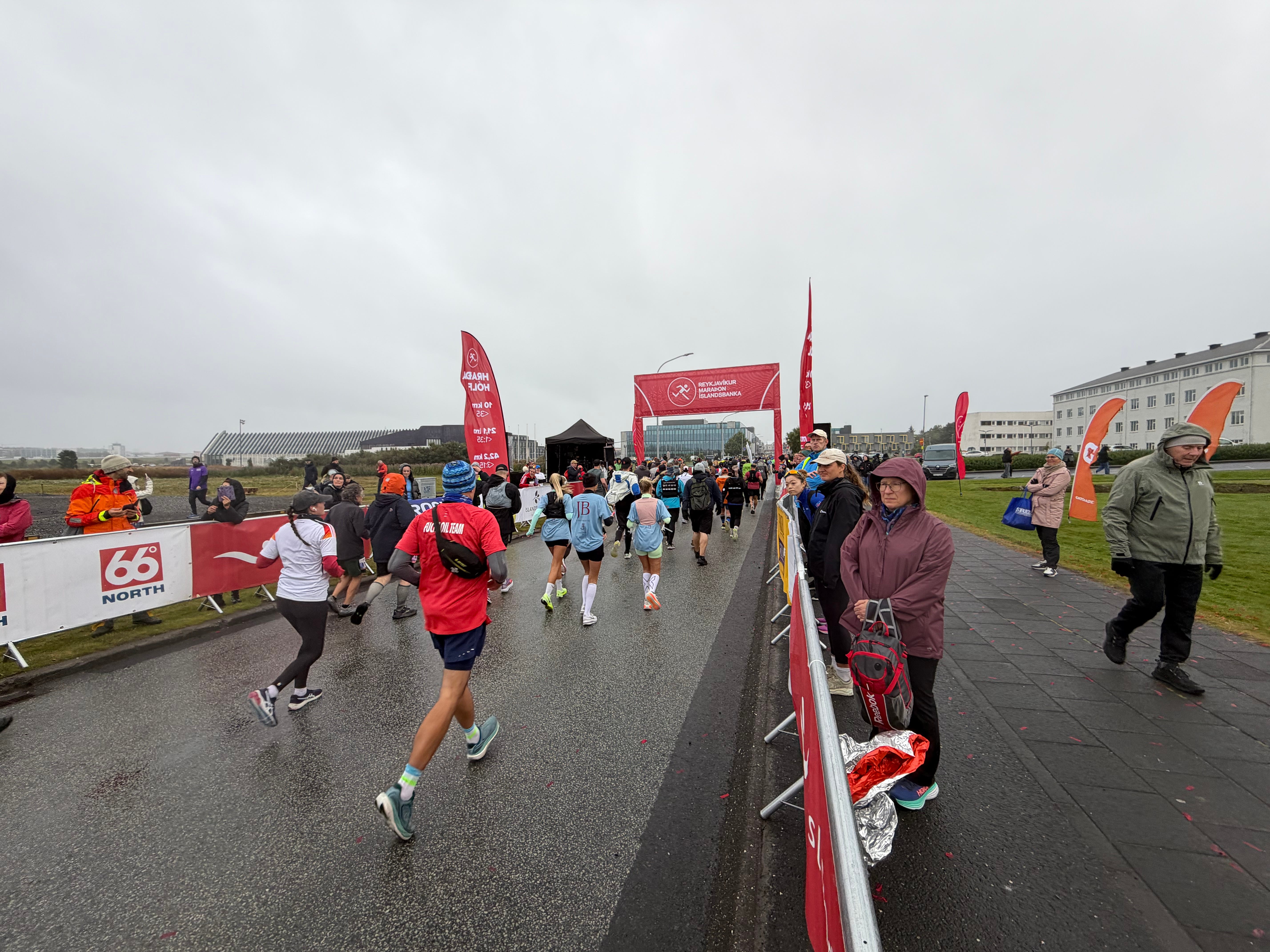
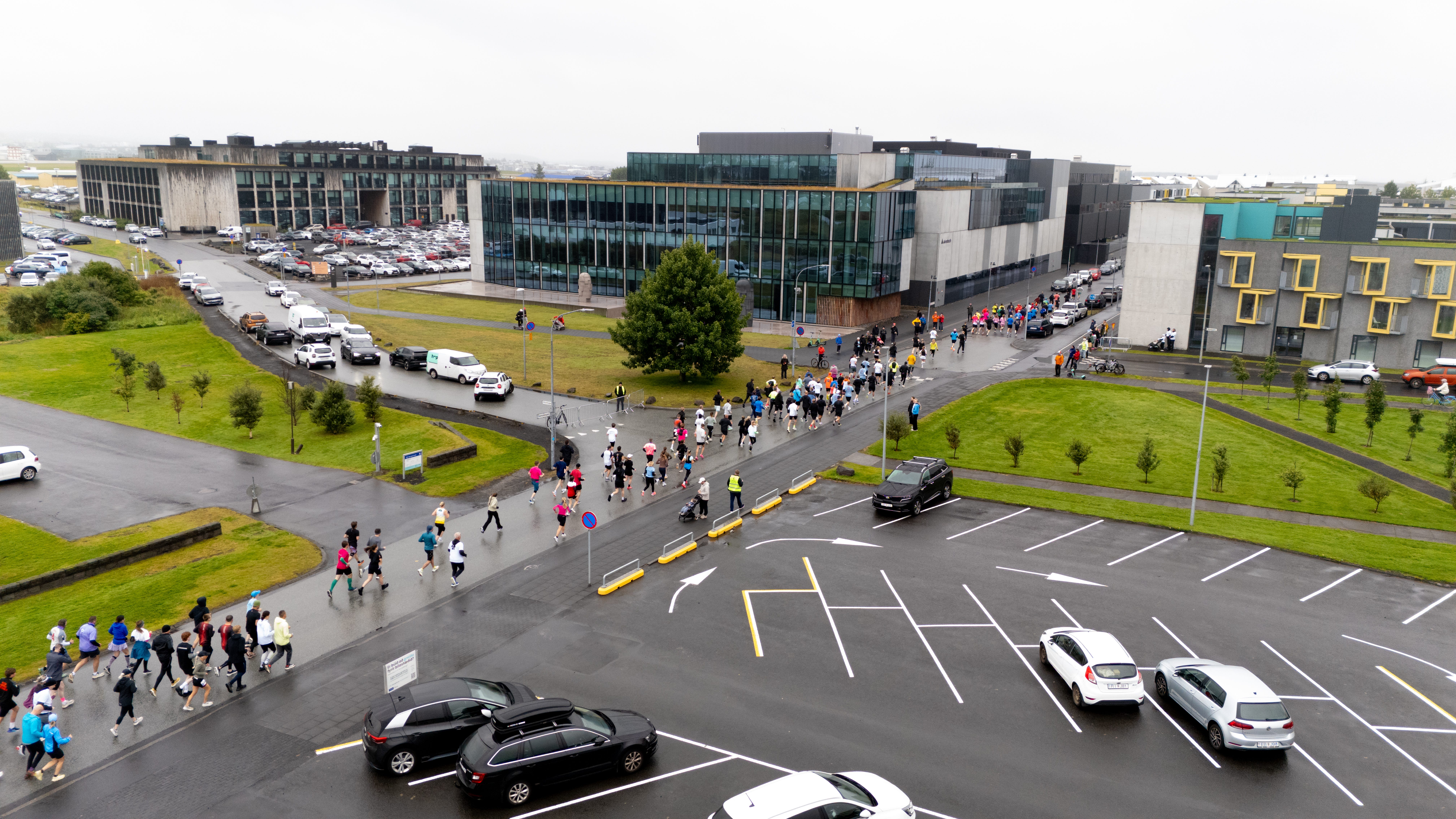
Although the weather wasn’t especially enticing for hanging around, it was pretty good for running. It was about 53 degrees Fahrenheit — a little under 12 degrees Celsius — at the start, with light drizzle. There was a bit of a wind, however.
The 10K course is a near loop that takes you back into the city center, but not to the same place as the start. It’s mostly flat with only a few gentle undulations. The combination of that and the temperatures can make for a fast course, giving runners a good shot at a PR.
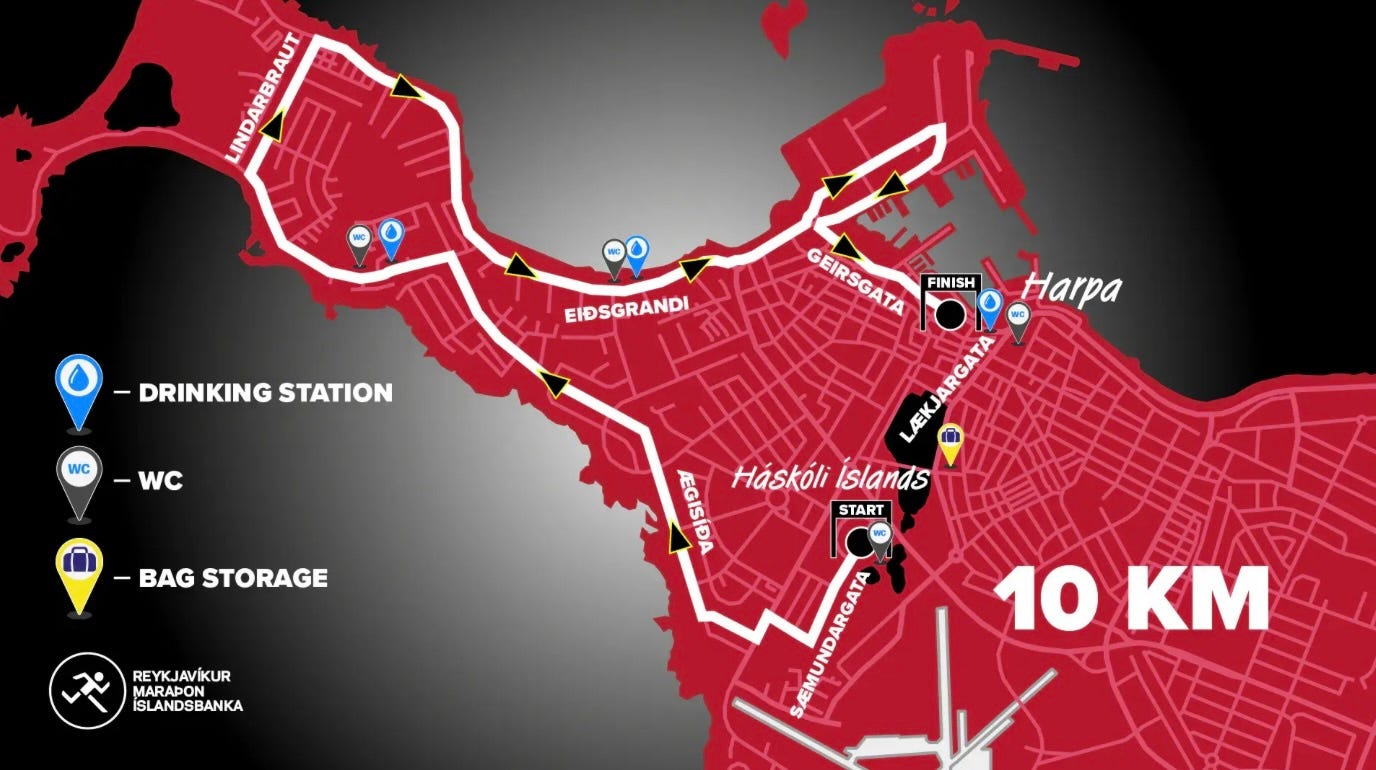
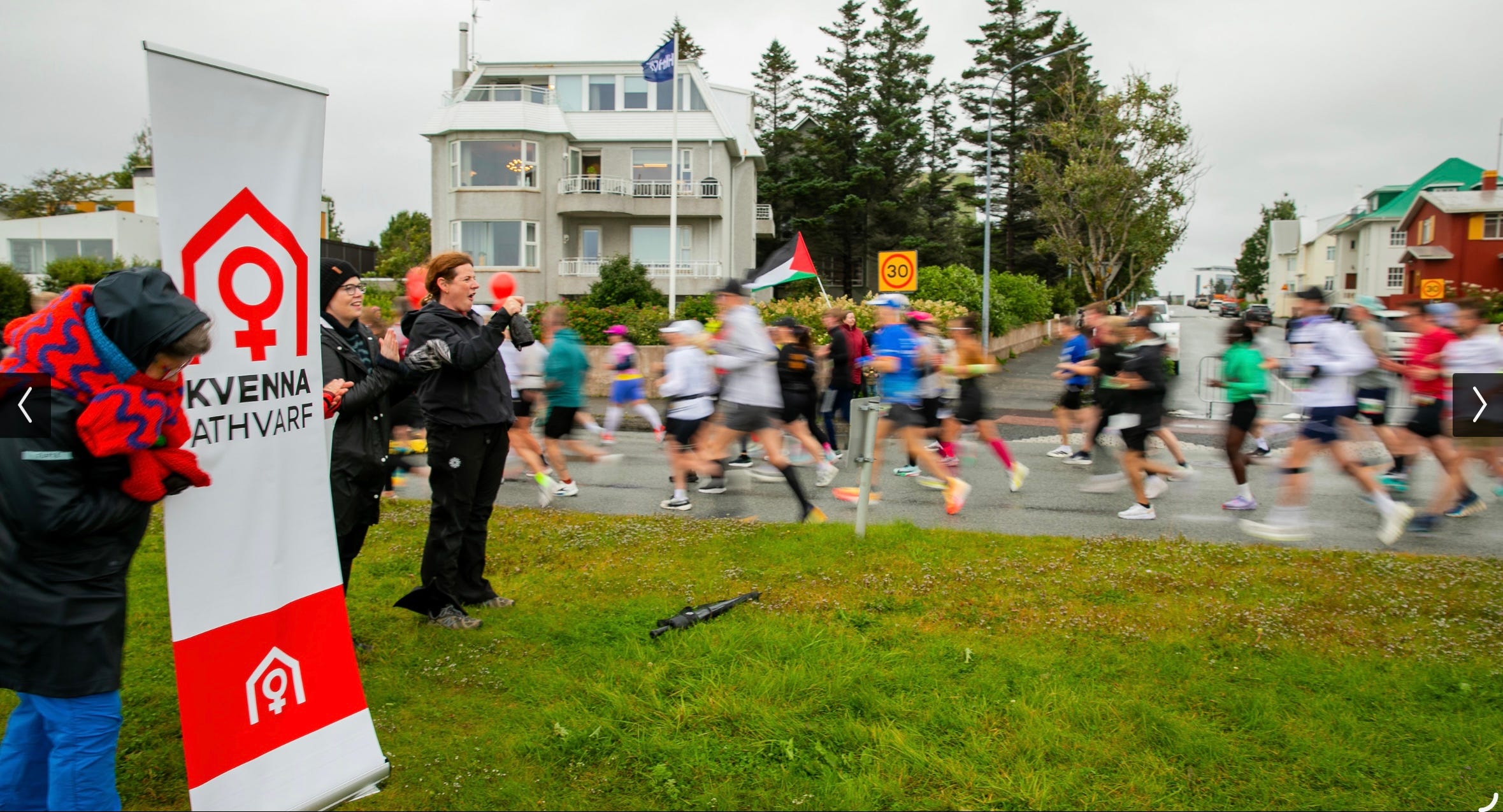
The course takes in a mixture of residential and commercial areas with a stretch along the waterfront. I wouldn’t say it was a particularly exciting course, but it captures Reykjavik well enough. Crowd and course support were decent. And the finish area was livelier than the start.
The race operated on time. Overall, the long lines at packet pickup notwithstanding, it seemed well organized.
Reykjavik “Culture Night”
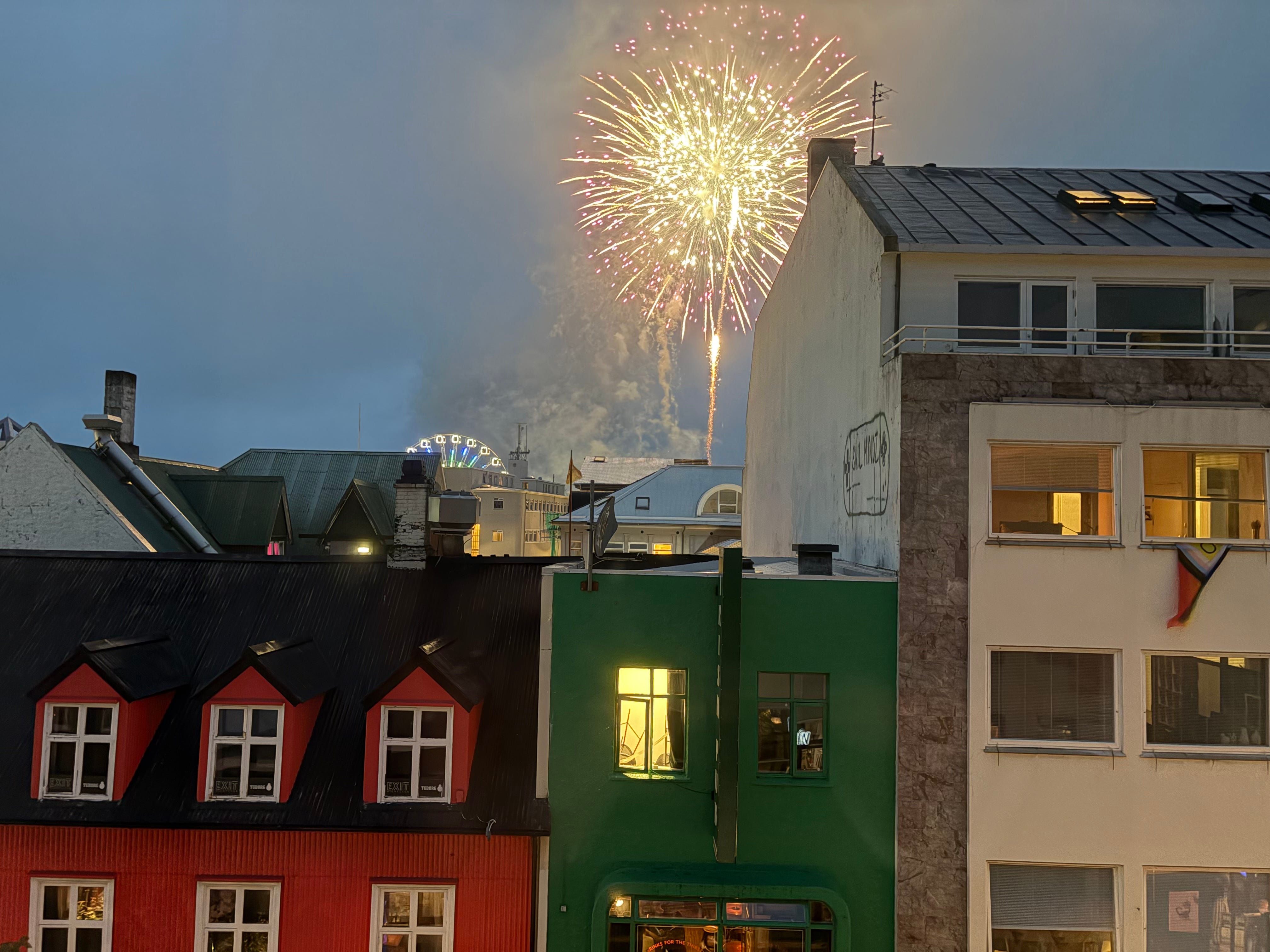
Over the remainder of race day, Reykjavik goes into something of a festive mode because of a large event called Culture Night (Menningarnótt). It’s an arts festival with events all over town, but there’s also a big party scene in the downtown area stretching well into the early hours and including a fireworks display. The party spills out onto the streets. Clean-up crews were hard at work early the next morning when I walked to the bus station to head out to the airport.
Reykjavik airport notes
I’d read some horror stories about immigration lines at Reykjavik’s Keflavik — KEF — airport. Arriving in peak season, I personally didn’t find it that bad. I wouldn’t say I sailed through. But I don’t recall standing in line for more than 20 minutes or so. Departing was also fine.
That said, there is not a lot to love about KEF, even if you are an airport junkie like me. I mentioned earlier the shortage of jet bridges. That actually doesn’t bother me much. More serious on my scorecard is that the airport is something of a lounge desert. The only lounge is Icelandair’s Saga Lounge, which you won’t get into unless you are traveling on that airline in a premium cabin or are one of its elite customers. Icelandair is not part of any global alliance, so you can’t pull that sort of string to wangle an entrance. Priority Pass has no presence whatsoever.
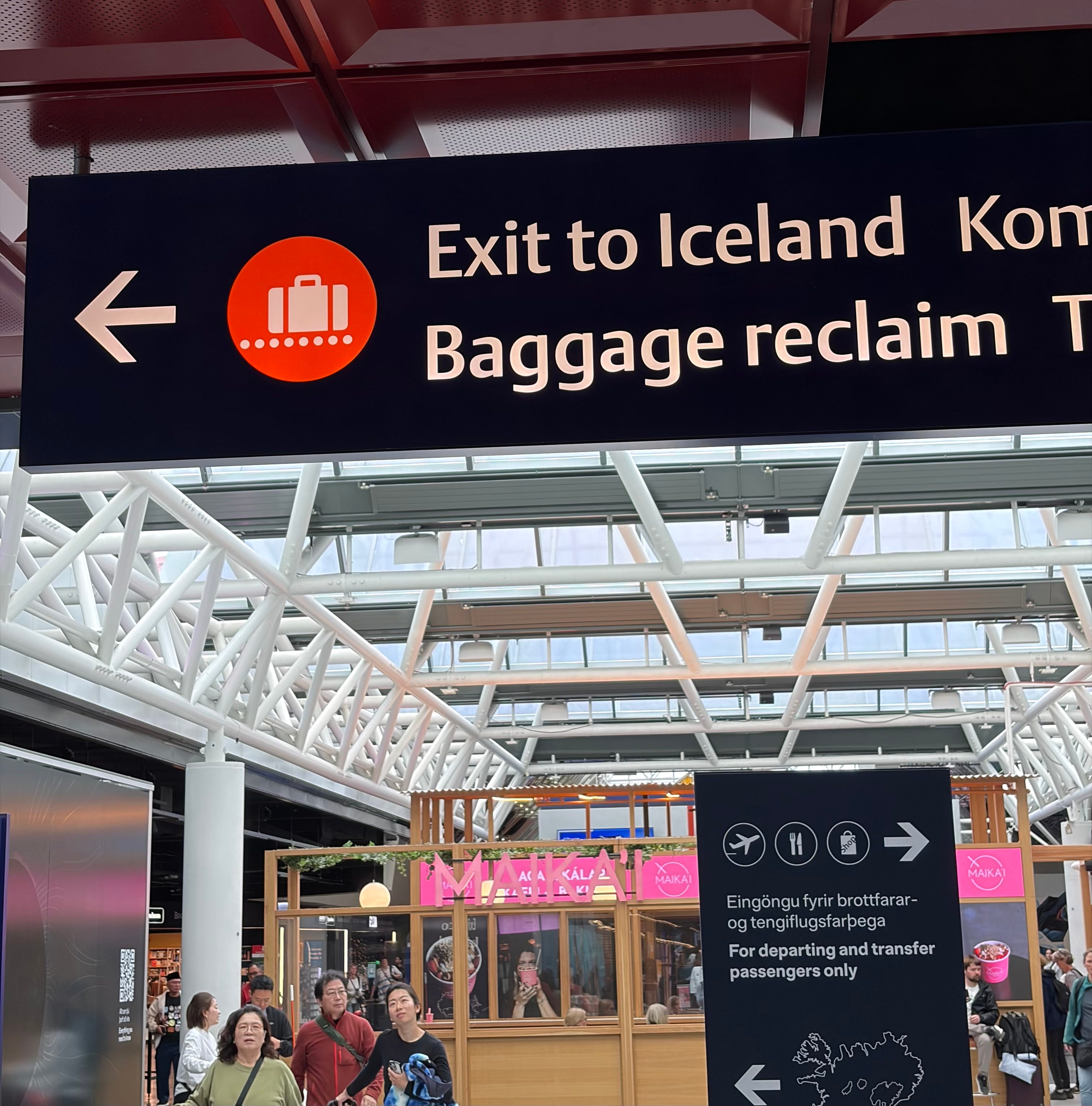
The airport is a long way from the city center. Do not confuse it with the close-in airport, RKV, that handles domestic flights (and occasionally some to Greenland) and can be reached on foot from the city center.
There aren’t that many capital cities where you can walk to an airport. But Reykjavik is definitely one, if RKV is the airport you need to get to. It probably isn’t, but I will mention one vignette from my 2019 trip to Iceland. Then, my son and I flew on a domestic flight from RKV to the eastern side of the country to catch the aforementioned ferry. And what remains in my mind is that there was literally no airport security. None. Quite unusual, and a bit of a flashback to how travel was in the olden days.
The KEF airport, by contrast, is over 30 miles away, and the journey by road typically takes around 45 minutes. There are no trains in Iceland. The drive takes you across some eerily flat and dark volcanic land with mountains in the distance. The best way to get to and from the city is to use the Flybus. It costs about $33 one-way, and about $60 round-trip, which by Icelandic standards is pretty reasonable.
The Flybus advertises that its “buses depart shortly after every flight arrival, day or night,” which almost makes it sound as though they meet every flight individually. With the high number of arrivals, that obviously isn’t the case. But there do seem to be plenty of buses, so the claim is fair. Still, I made a reservation once I was on my flight to Reykjavik and, for the return, the night before heading back to the airport.
The Flybus terminal in Reykjavik is walkable from most city center hotels, but — if you have a lot of luggage — there are also shuttles that go to and from various hotels.
The non-rev Walk of Shame
I non-revved to Reykjavik on Alaska Airlines. (“Non-revving,” for those new to my blog, refers to standby travel offered to airline staff and their loved ones. See here for more.)
Alaska started flying to Reykjavik from Seattle in 2026 as part of its international expansion. Unlike its other new international destinations that use wide-body A330 and B787 equipment, the Reykjavik flights are operated on B737 narrow-bodies. But the service is a step up from the airline’s domestic flights using that aircraft. They serve a warm wrap in economy as well as wine and beer for free. It was a nice flight — about seven and a half hours — albeit a pretty full one. Alaska is well on its way to putting in free Starlink WiFi across its entire fleet, and this flight came so equipped.
Standby travelers are warned that because of the long distance, flights between Seattle and Reykjavik might sometimes go out with seats kept empty for weight-and-balance reasons. The airline generally books them for about nine seats shy of the number on the plane. Those seats might be released to standbys at the last minute based on fuel and expected flight time, but don’t count on it. On the outbound, they did eat a little into them to accommodate standbys.
Returning, the loads were tight, and it was a nail-biter as to whether I’d get a seat assignment. At the very last moment, I was called to the desk and given a boarding pass. It was a middle seat, but I was happy to be on. Things got better once on board, as the guys on the aisle and window were traveling together and offered me the aisle so that they could stay next to each other.
But then…
When you see ground staff wearing high-visibility yellow jackets boarding a flight shortly before departure, it can mean various things. Sometimes, it can be good news for non-revs. I’ve had the ground staff hand me a last-minute boarding pass for first or business class. But knowing what I knew about potential weight restrictions, and that my chances of being seated in First on this flight were as sub-zero as the coldest Icelandic winter temperatures, my heart sank when I saw an agent start to walk down the aisle.
I prayed she would go past me to attend to something or someone else. But, no, her destination was, indeed, my row and, in particular, the middle seat to which I had been assigned. I volunteered to her that she was probably looking for me, now seated on the aisle. And she, deeply apologetic, broke the news that the captain had decided to put on more fuel such that they needed me off the plane. Yes, all it took to make the aircraft good to go was to remove one passenger.
Non-rev protocol is clear in such moments. Comply instantly. Do not complain. Grab your bags. And start the Walk of Shame.
Fortunately, I was seated fairly close to the front, so that it wasn’t a walk through the entire cabin. But no doubt passengers who observed were wondering what “wrongdoing” must have led to my removal.
The flight attendants standing at the aircraft door commiserated. But the Walk of Shame continued beyond the door. The plane was on a remote stand. So I walked down the stairs in full view of those looking out of windows on the left-hand side — alone, like a President descending the steps of Air Force One, except carrying my own bags — and then over to a waiting bus, which was laid on just for me for the lonely drive back to the terminal.

A trip on Icelandair
Non-revving home after that debacle proved challenging. I won’t regale you with the full tale, except to say that none of the flights back to the U.S. were looking promising, and I even considered flying to mainland Europe and returning from there. In the end, though, I took my chances on an Icelandair flight to Denver and snagged a middle seat in the last row.
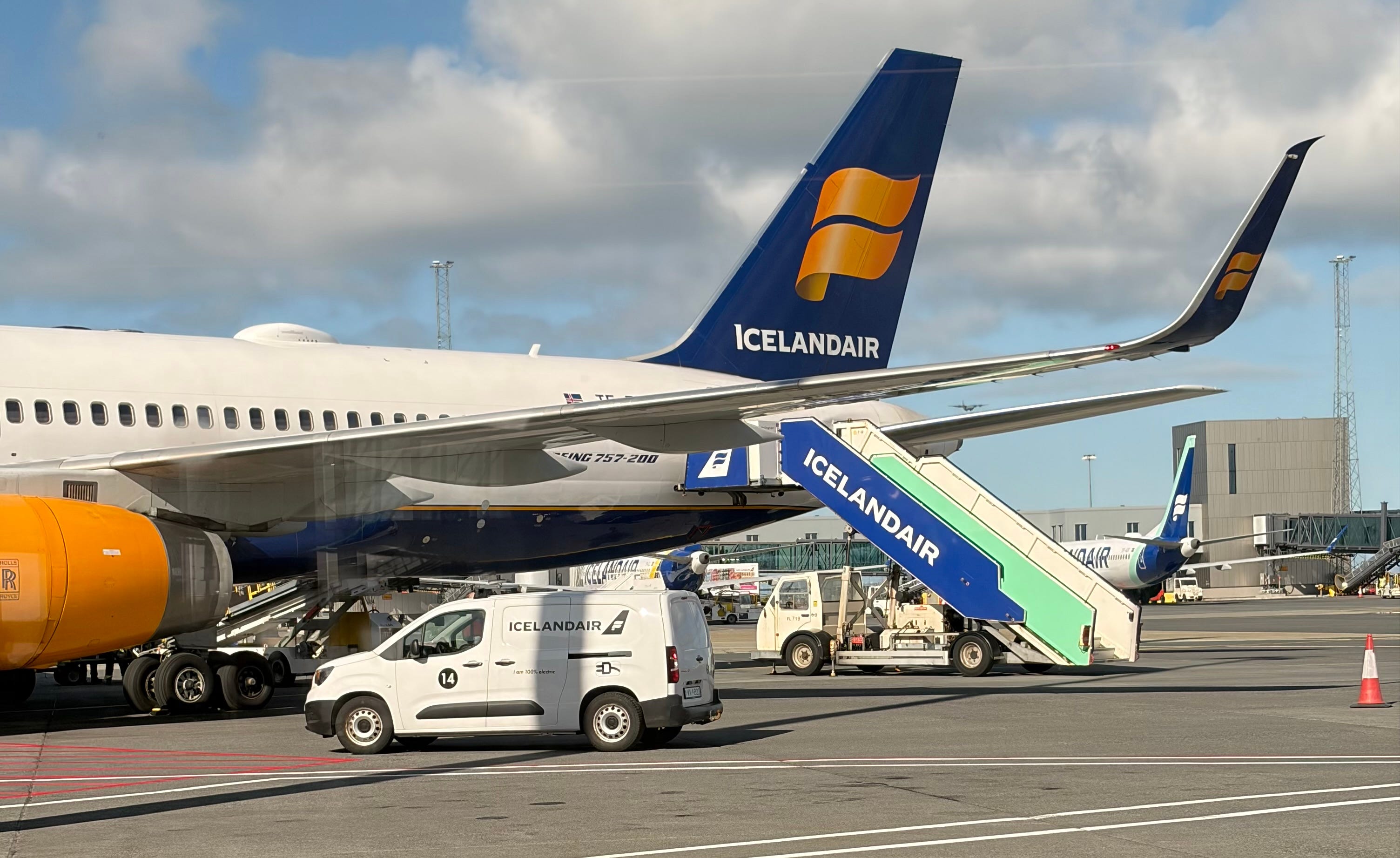
I was grateful to get on that flight. But Alaska has the edge when it comes to the overall experience on flights between the U.S. and Iceland (albeit with only one route to offer). Icelandair is not an ultra-low-cost carrier. However, its back-of-the-plane product feels a bit like one. Nothing is on the house other than water, not even soft drinks, let alone any food. And certainly not WiFi. That said, if all you want is transport, no airline flies to Iceland from more cities in the U.S. and Europe than it. So it is a convenient if unexciting option.
I never did make it home to Southern California that day, but that was no fault of Icelandair. Major thunderstorms were causing havoc with air travel in the western United States and the Southwest flight I was planning on taking from Denver canceled. I ended up getting as far as Phoenix, where I overnighted in the terminal, relieved that there is an Admirals Club there that opens at 4 A.M.
The B757 and wake turbulence
The Reykjavik to Denver flight will probably prove to be my last ever on a B757. Icelandair will be retiring its elderly 757 fleet quite soon, and most major airlines have already done so.
The B757 was a solid workhorse. It is also the only narrow-body that air traffic controllers handle much like a “heavy.” The “heavy” moniker applies to aircraft capable of takeoff weights above 300,000 pounds, since those produce a stronger wake. On radio frequencies, “heavy” is added to the callsigns of those aircraft. The suffix warns other traffic (and perhaps reminds the controllers themselves) of the heightened risk of dangerous “wake turbulence.” That term refers to the disturbance of air trailing behind an aircraft, mainly a pair of rotating vortices shed from the wingtips as the wings generate lift, which can affect a following aircraft — potentially with serious consequences.
The 757 is below the “heavy” takeoff weight threshold (which, as a practical matter, is reached by only wide-bodies). However, the FAA established heightened separation rules for the aircraft, treating it like a heavy. This followed, in particular, a fatal accident in 1993 in which a private jet carrying executives from the famed In-N-Out Burger chain lost control when encountering a United 757’s wake on approach to Southern California’s John Wayne Airport.
If you fly small airplanes, as I used to back in the day, you need to be careful about wake turbulence from any jet, regardless of whether it is classified or treated as “heavy.” I got spooked by a controller’s advisement — “caution wake turbulence” — even flying behind something like a Citation.
The trick on approaches when following a jet, as I recall, is that in addition to maintaining adequate longitudinal separation, it is prudent to fly a little above the normal glide slope, since that should put you above the sinking wake. But staying above the wake is not a viable option when departing, as jets climb faster than small piston planes. There, it is prudent to wait for the wake to dissipate before taking off and then, when possible, to turn to a heading that will further help avoid it. I used to angst a lot about wake turbulence, maybe more than necessary — but at least I never encountered any.
Last solo
My last ever solo flight was out of the aforementioned John Wayne Airport, incidentally, flying to Santa Barbara, where I had to make an unforeseen instrument approach down to near minimums. It was the first time I had done that in “actual” IFR conditions, and it actually went remarkably well.
Reykjavik 10K conclusion
For: Good choice for northern hemisphere runners looking for a large summer race in cooler temperatures. Well organized. Flat and fast course. Against: Expensive destination. Not an especially epic course. Sum-up: I was glad I went for the race, but many will want to explore beyond Reykjavik or make it a stopover on a journey to some place else. ✈️ 🏃
Return to the Table of Contents
If you’ve stumbled across this post, please consider subscribing to the Flyrun blog using the button below. It covers the intersection of running, travel, and aviation. Subscribing costs nothing (and never will). You’ll get an email every couple of months or so with a new post. Please also share this post with anyone you think might be interested. You can see an archive of previous posts here.