
There aren’t many major summer races in Europe. With rising temperatures, that’s probably just as well. However, one notable exception is The London 10K, which takes place in July. I ran it this year, and here is my report along with some notes about London and non-revving on British Airways.
Table of Contents
Definitely a “The” race
When a race is named “The” followed by the name of a major city, especially a capital, it’s clear that the organizers intend to make a statement. That’s the case with The London Marathon, The New York Marathon, and so on. No one seems to opt for the indefinite article, as in “A [insert name of city] Marathon.” It’s either the definite article or nothing. Some races do, indeed, leave out any article, as with, for example, “Copenhagen Half Marathon.” You can append an article if you wish, but it’s not part of the name.
However, naming rights for “The” are unregulated. It appears to be a matter of first-come, first-served. There’s no global naming committee that reviews and approves applications.
If such a committee existed, however, it would likely approve The London 10K’s bragging rights. This is a major event with a stunning city-center course. It’s also a large event, although not quite as large as the organizers make out. The post-race publicity talks about 19,000 runners having taken part. That might have been the number of sign-ups. But the official results show 13,868 finishers. And since relatively few people who start fail to finish, that suggests a high no-show rate — in part, perhaps, because of the summer weather (of which more shortly). Still, pretty large.
The sponsor is Saucony, a U.S. running company that seems to have carved out a niche in putting its name on 10K events, a distance often overlooked by other major sponsors. Although there isn’t a collective Saucony 10K series, I’ve noticed other Saucony-sponsored events in Paris, Berlin, and Istanbul, all of which I hope to run. All of these are 10K-only events — not ones where the 10K is an add-on to some other distance.
A spectacular course
In terms of city-center sights, The London 10K course has to be one of the best of its distance in the world. The only other standalone 10K race I’ve done that compares is the Adidas 10K Paris.
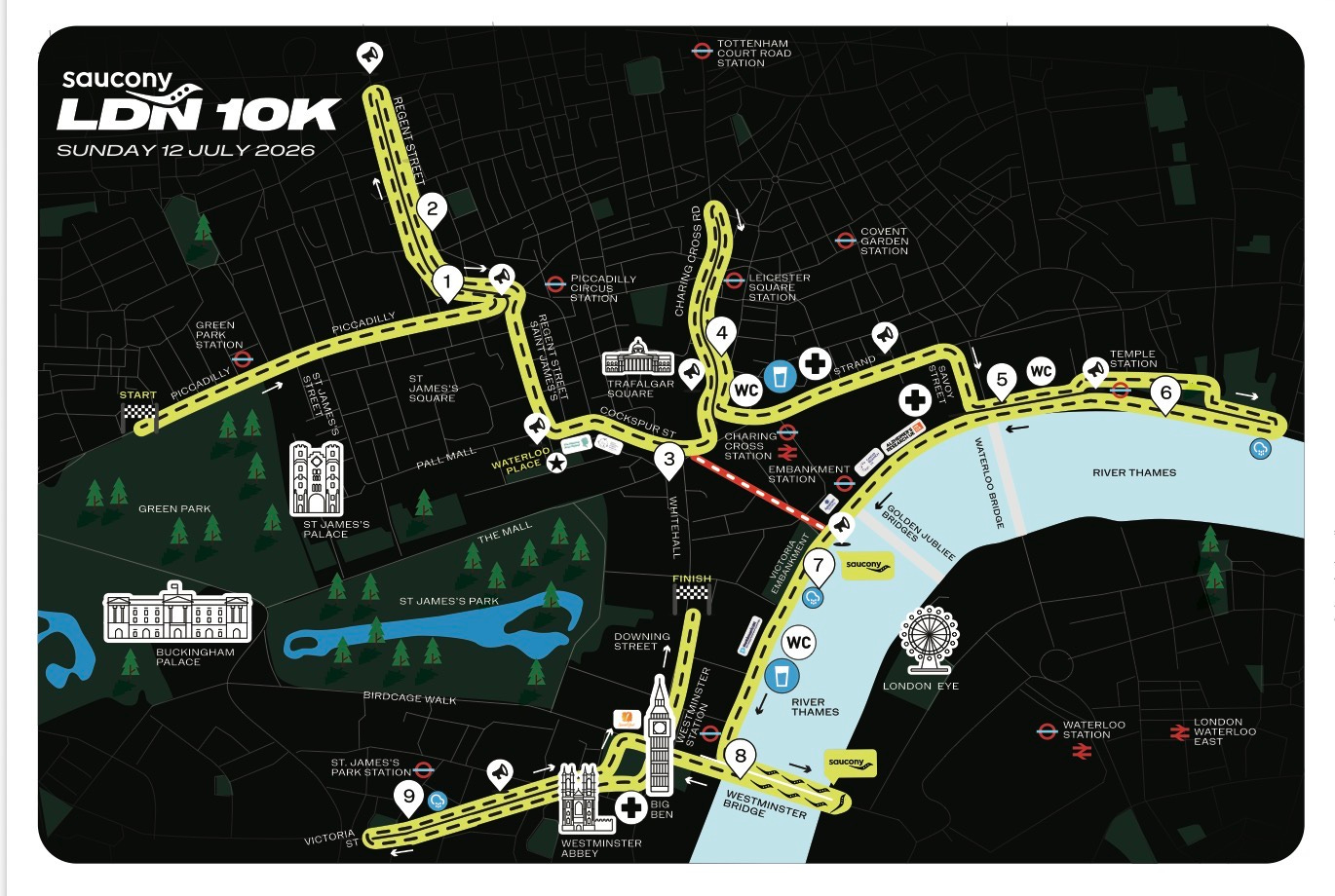
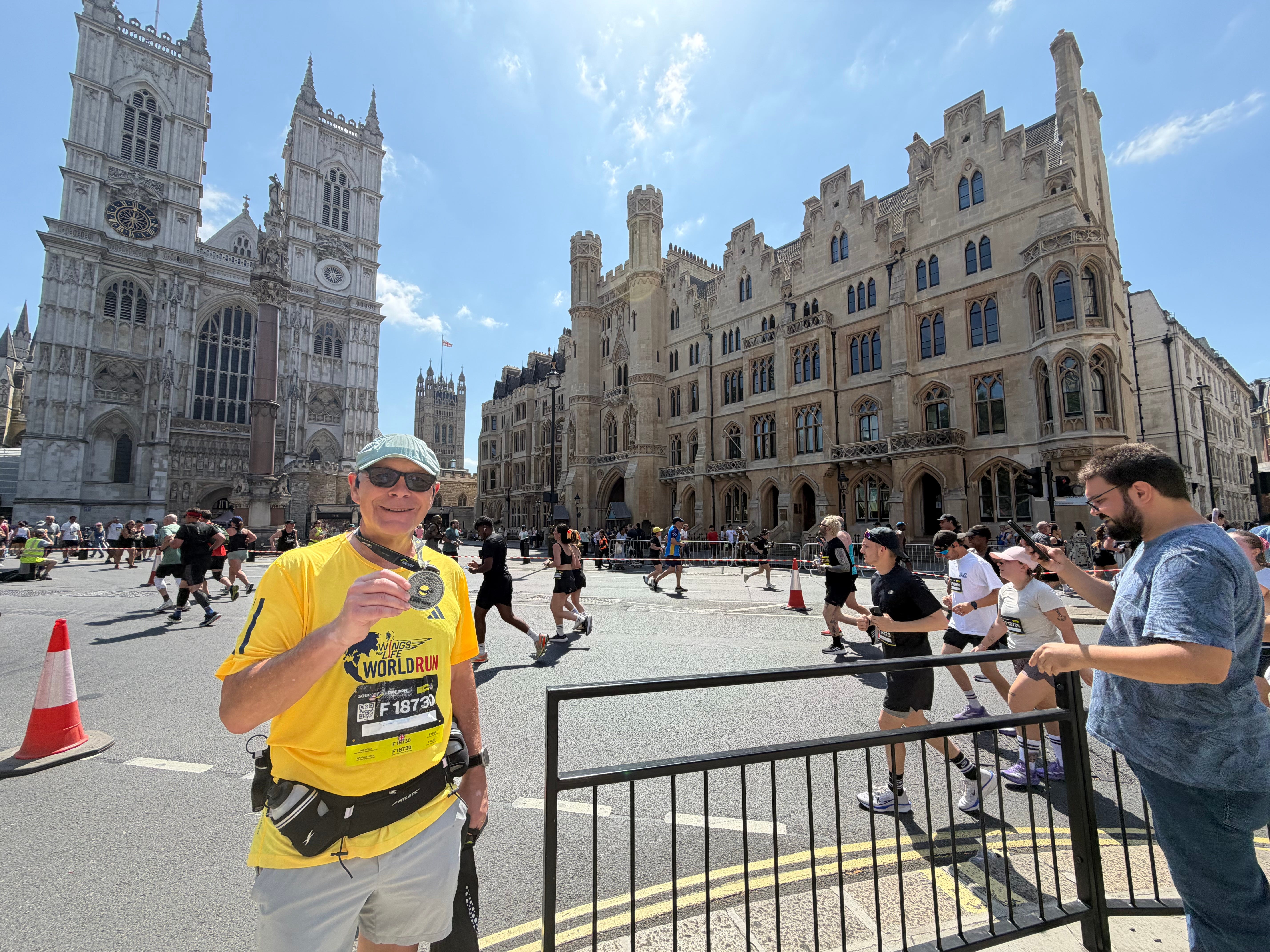
For those who know London, the course begins in Piccadilly and takes you up Regent Street, then back down toward Trafalgar Square. It continues up Charing Cross Road and then back down to the Strand. From there, you turn onto the Embankment along the Thames, before crossing and returning over Westminster Bridge. The course then passes through Parliament Square and Westminster Abbey, with a brief detour up and down Victoria Street. Finally, it ends near the Prime Minister’s residence in Downing Street.
For those who don’t know London, suffice to say that this is prime city-center, the areas to which tourists flock. The presence of hordes of tourists adds to the sense of crowd support. Even if not everyone watching had planned to do so, the tourists add to the crowd presence. But there’s plenty of active crowd support, too. The layout of the course makes it easy for supporters to switch locations to see their favorite runner more than once. My wife — who doesn’t normally go to my races — was at this one and caught up with me at a few places on the course. She enjoyed the experience as a spectator hopping around from one bit to another. The race was part of a week-long friends-and-family visit to the UK.
The course doesn’t take you along The Mall, the long boulevard leading to Buckingham Palace. But the start is close to The Mall, which was closed off on race morning so that many runners used it as a staging area, some running along it to warm up.
Summer heat and a late start time
The London 10K course is pretty flat, so, theoretically, it should be good for setting personal records. However, the challenge lies in the unpredictable heat of London summers. While summer 2026 experienced a series of heatwaves and a significant drought, “heatwave” is a relative term in the UK. Temperatures that might just be considered “hot” in the U.S. are classified as “heatwave” material in the UK because a large majority of homes lack air conditioning. Many shops and public buildings don’t have it, either. Nor do most buses or subway trains. So heatwaves in London can be a bit miserable, especially as London summer heat can be muggy. (Where I live in coastal California, homes also tend to lack air conditioning. So I’m used to it — but it’s actually quite rare that we wish we had it.)
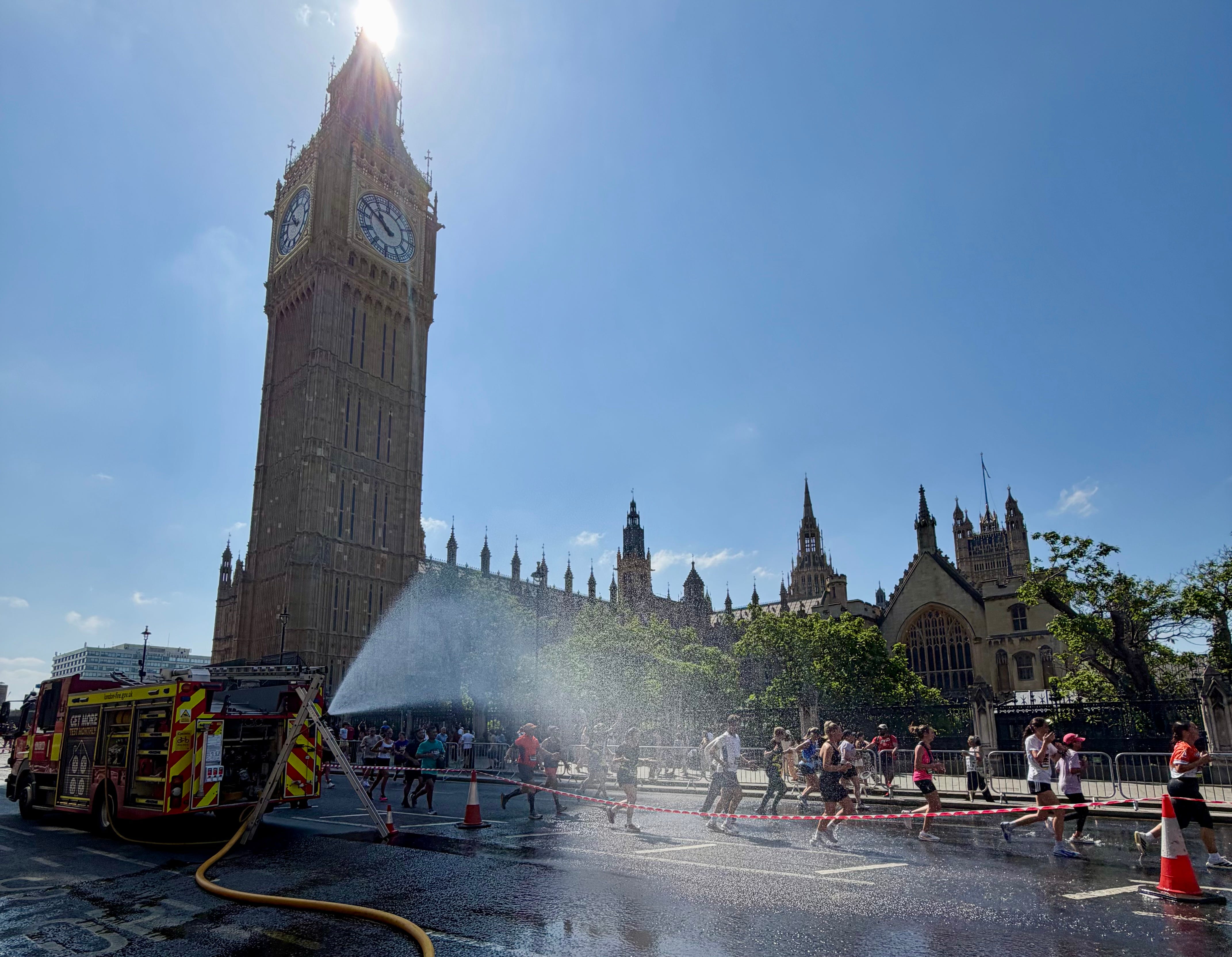
The London 10K doesn’t help its cause by starting at a rather leisurely hour. The first runners cross the start line at 9:30 AM, and I did so 22 minutes later. A summer race like this should really start two or three hours earlier. However, the temperature at the start wasn’t as bad as I had anticipated — just 72 degrees Fahrenheit (about 22 degrees Celsius). The temperature did rise to the high seventies over the ensuing hour. But the heat could have been worse. Fortunately, there were spray stations along the way, including one with water sprayed by a fire engine.
I finished in about 1 hour 4 minutes. That was a couple of minutes slower than in a local 10K I did in Southern California the previous month, but the other one was in much cooler conditions. My time put me in the top half of my Division, so I was happy to declare a victory.

Registration and packet pickup
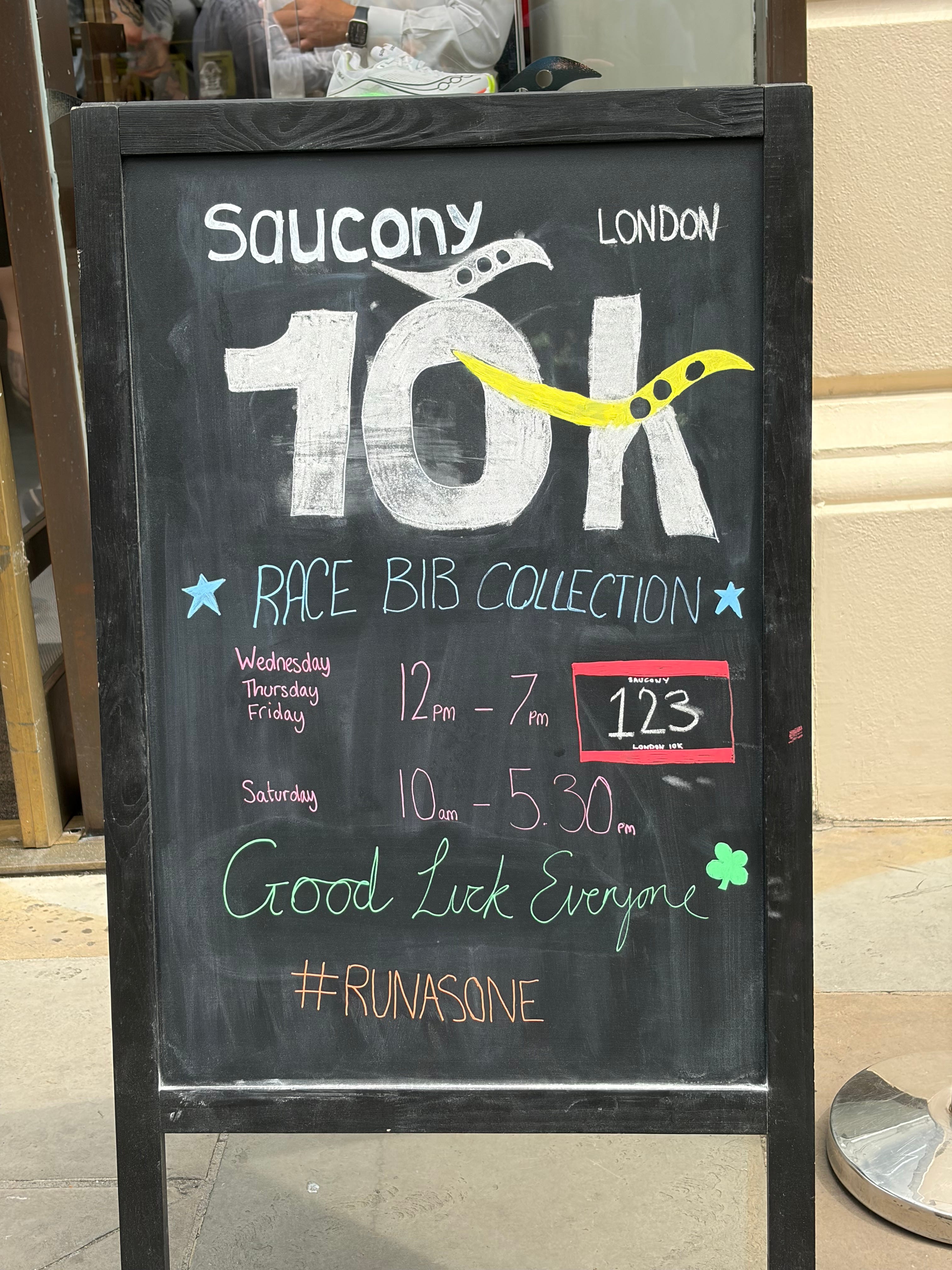
There isn’t a race expo. Runners with UK addresses are mailed their bibs. Those from other countries pick up their bib at the Saucony Store in Covent Garden, a lively area a short walk from Trafalgar Square. I paid around £60 (around $82) registering about six months in advance — which is pretty good for an event like this — but that rate increases the longer you leave it. The 2026 event sold out in the spring, so don’t leave it too late. The registration includes a decent shirt. Unusually, you get this at the finish line, along with your medal. Almost all other races I’ve done give it out beforehand.
Race pacers: helpful or Grim Reapers?
This race, like many, has pacers. That, in case you don’t know, refers to people who volunteer to run at a steady pace so that others aiming for a particular finish time can glom onto them. Typically, they hold up signs showing their planned time or pace. So long as you stick with your pacer, you are assured of making your target. And you get moral support and motivation not only from the pacers themselves, but from other same-paced runners alongside you. That’s the theory.
In practice, it doesn’t really work like that. Pacers often start out with a group around them. The groups tend to be larger for those trying to break common targets, like two hours for a half marathon or one hour for a 10K. But in my experience, pacers often end up with no one still around them in the later stages of the race. I base that on my observations during around 80 half marathons in the last 15 years when I have been overtaken by pacers or — less often — have overtaken them myself. There is something sad about the sight of the lone pacer three-quarters of the way into a race. The missing runners might, admittedly, have pulled ahead. But more often, they fell behind.
So I think pacers — whose goal is to provide encouragement and motivation — often, through no fault of their own, can have the opposite effect. I once succeeded in running an entire race with a pacer, admittedly. That was 13 years ago when I first went under 2 hours 20 minutes in a half marathon. But on the other occasions I have tried running with pacers — such as in my mostly unsuccessful efforts to finish a half marathon in under two hours — I recall the demotivating effect of realizing I couldn’t keep up and seeing my aspirations literally vanish ahead of me. The one time I did finish below two hours, it was without a pacer (albeit with a net downhill course).
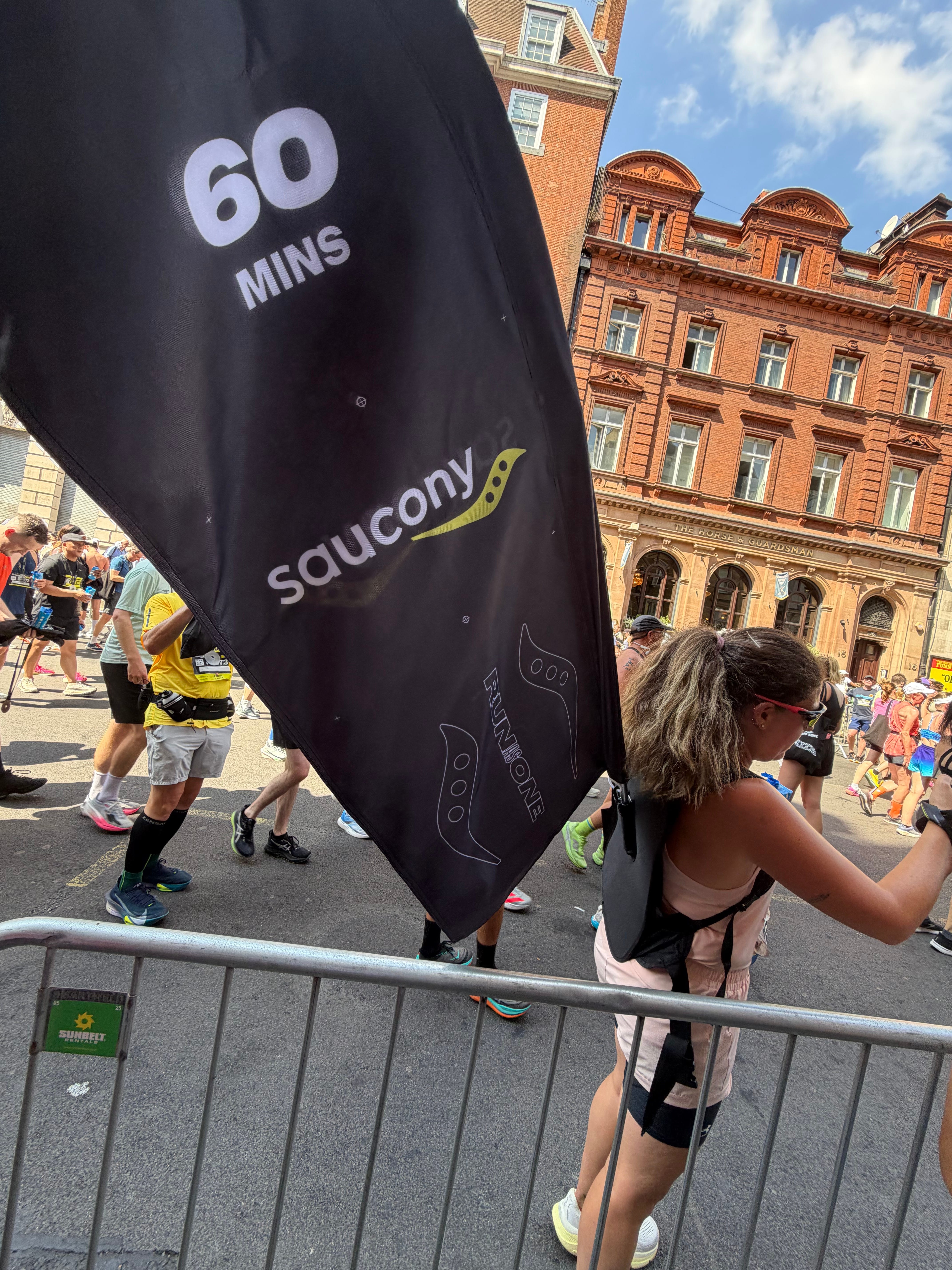
Then there is the Grim Reaper pacer. The one that actually overtakes you some miles into a race with a sign for the pace for which you were aiming — or, worse still, a slightly slower one. The pole that the pacer carries is like the scythe of the Grim Reaper. It signals the death of your hoped-for time. The pacers in this race carried black banners, an unintended nod to my theory.
Pacers were probably more helpful before GPS watches became so ubiquitous. These days, however, it really isn’t very hard to monitor your pace if you want to. And maybe that’s why in races with pacers, relatively few runners do join them in the starting corrals.
Three other London races
A quick mention of three other London races you might want to consider. There is another big 10K that takes place in central London in late September called the Vitality London 10,000. It’s put on by the same organization behind The London Marathon. I haven’t done that one — although it is on my dance card for 2027 or 2028 — but it, too, seems to have an epic course, with a start on The Mall and a finish in front of Buckingham Palace.
Then there are a couple of half marathons, which I have done (but before this blog started, so no reviews to link to). One is the Royal Parks Half Marathon, which is held in October, and the other is London Landmarks, which takes place in April. Both are fantastic races. If I had to do only one, I’d probably go with London Landmarks, as all of it is on closed streets, while the other has substantial portions in parks. Running in London’s parks is a great experience, but closed streets are something you can only enjoy in a race. Neither is easy to enter, however. Both have ballots, and applicants outweigh spots by hefty margins. However, you can snag a charity spot for around £350 (a little under $500), which is less than in many other high-profile races around the world where that option exists. You don’t have to take part in actual fundraising if you don’t want to. You can just make the charity payment yourself.
British summer drama
July 2026 was an interesting time to be in the UK. The country got its fifth Prime Minister in the last five years. Britain, which used to fancy itself as a model of political stability, a beacon for other nations, has lately been going through governments at a rapid pace due in large part to the political and economic turmoil caused by Brexit (i.e., the British exit from the European Union). Andy Burnham, who became Prime Minister a little over a week after the race, was actually the seventh in the roughly 10 years since the disastrous 2016 Brexit referendum.
Alongside the political drama was the rollercoaster of the FIFA World Cup. Britain has four national teams, one for each of England, Scotland, Wales, and Northern Ireland. That’s a grandfathered-in relic going back to the start of international soccer. No other country gets to divide itself up like that for World Cup purposes. It’s odd that there doesn’t even seem to be much pressure from elsewhere to change this. There are, no doubt, bigger battles being fought in the FIFA world.
In 2026, England and Scotland made it to the tournament and England had its best World Cup since 1966 when it beat Germany in the final. There were real hopes in 2026 that the England team could bring it home again after all those years. Sadly, however, England went out in the semi-finals the night before we flew home, defeated by Argentina, the country that Britain had beaten in war some 44 years earlier. (It’s odd that both of England’s best World Cups involved knock-out stage finales with countries with which Britain has been at war in the past 100 years.) The consolation prize was some bling after beating France 6-4 in a scrappy playoff for third place.
London as a foreign city
I grew up in London and went to the U.K. equivalent of high school in the center of the city, very close to where the 10K course passes Westminster Abbey. People who live in London often complain about life in the city. Things do not always work as they should.
But the nice thing about going back as an expatriate is that you can “do” your former hometown as a foreign city. That gives you the luxury to pick and choose. And I actually love going back to London, even though my visits there are not as frequent as they used to be. Many expatriates like to grumble from afar about how the place from which they emigrated has declined, as though to vindicate their choice to live elsewhere. Not me.
London’s 20 mph procession
London has changed a lot, however, and it continues to do so. One of the most recent changes concerns the traffic. The city has implemented a 20 mph speed limit, which now covers over 60 per cent of its roads (much more in some parts). Compliance is impressive, due to pervasive cameras. The result is a stately, almost funereal procession of traffic even in conditions that would readily allow for brisker movement.
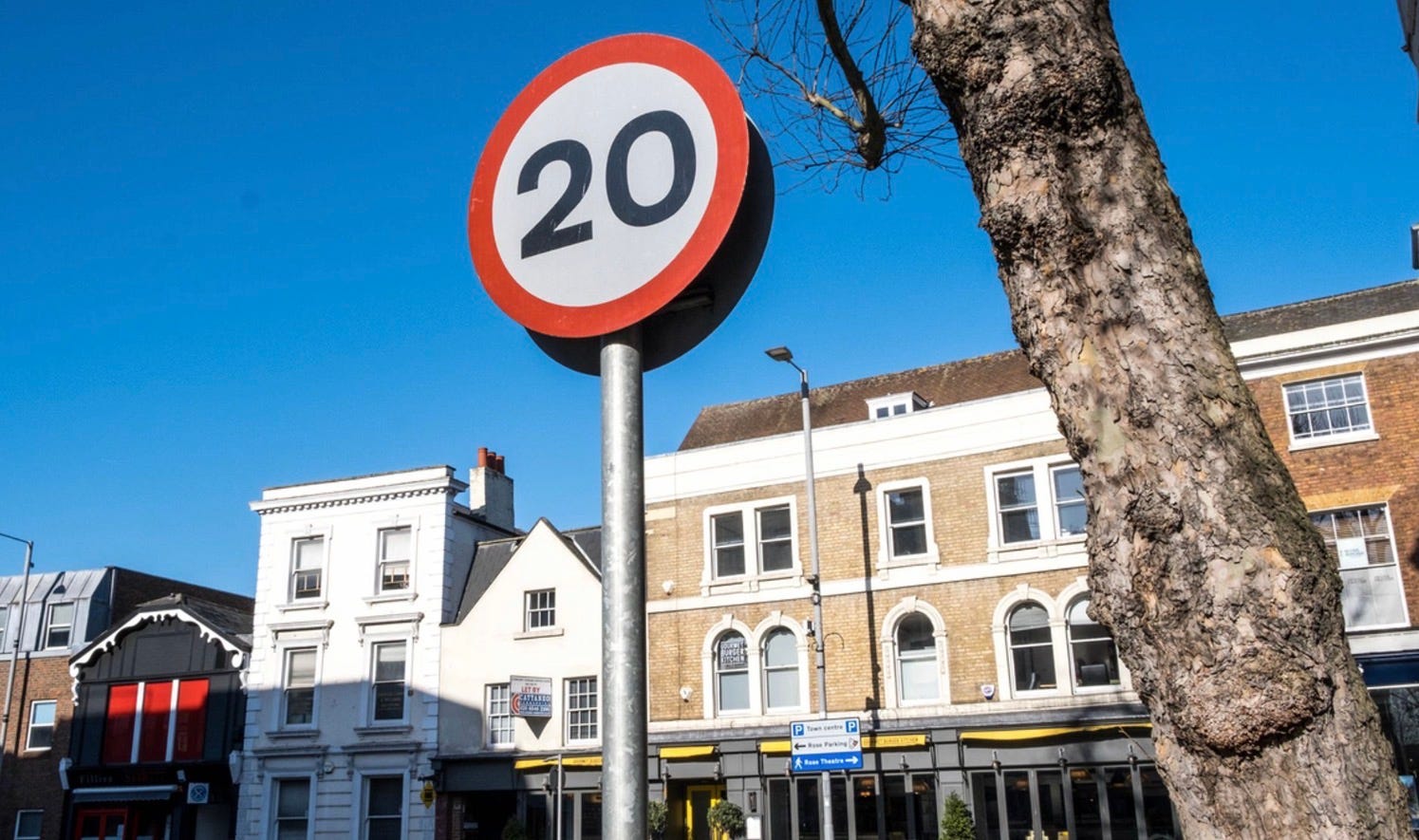
One can debate the merits. Maybe the low speed limit enhances road safety. It isn’t clear, however, that it reduces congestion. If traffic moves more slowly, vehicles presumably take longer to reach their destinations, meaning there are more on the road at any given time. But maybe the slow pace encourages people not to drive and to use public transport instead.
Anyway, it definitely affects the overall vibe of central London. And maybe not in a bad way. This seemed especially pronounced on the evening England played in the World Cup semi-final, as crowds thinned on the streets with people hurrying into pubs and homes to watch the game, somehow making the remaining slow movement of traffic even more distinctive.
British Airways non-rev notes #1: seat assignments
We non-revved from Seattle to London on British Airways. This is the first time I’d been on BA since the non-rev agreement between it and my wife’s airline was enhanced recently to allow us to list for Business Class when traveling on ZED fares. About six months earlier, we had gotten a courtesy upgrade by the BA cabin crew, but being able to list for the front of the plane — although requiring a modest supplemental payment — is much preferable as it provides a clear path to lie-flat provided there is space available.
British Airways has become one of my favorite airlines for non-rev purposes. This is, in part, for two reasons (aside from their great route network). The first is that although the airline doesn’t allow non-revs to check in online, they do assign you a seat as soon as you check in at the airport if the loads are good enough. I’m not sure what the required number of empty seats is for this to apply, but we got confirmed Club Suites (that’s the name of their new Business Class) at check-in at SEA — and that was in the height of summer. (There was a time when summer meant more open seats in the front of the plane, because business travel traditionally slows down at that time of year, but these days “Business Class” increasingly appeals to affluent leisure travelers such that former assumptions about times of year when there would likely be open seats at the front no longer apply.)
Club Suites, by the way, is in a completely different league from the old dormitory-style BA Club World Business Class seating, which, depending on aircraft type, could have you lying flat in a 2-3-2 or even 2-4-2 configuration. The old seating has not yet gone away entirely, however, so choose your flights with care. Like Lufthansa, BA was a latecomer to 1-2-1 Business Class, but its new product is highly competitive (including with sliding privacy doors). Food in BA Business Class can be a bit hit or miss, but I am, naturally, happy with whatever when non-revving.
U.S. airlines, by contrast, rarely assign seats to non-revs at check-in and generally only do so about an hour or so before departure or during or at the end of the boarding process — even when there are clearly seats available. The BA approach takes some of the stress out of standby travel. Also, having a confirmed seat assigned two to three hours before departure can ease your way into those lounges — such as Amex Centurion ones — that require a confirmed seat assignment showing on your boarding pass. (Those lounges don’t bar non-revs, per se, but want to keep out people with airside access who aren’t actually traveling.)
If you are listed for Business on BA and they can’t confirm you at airport check-in, they’ll instead give you an Economy or Premium Economy seat assignment if there is one available to at least tide you over. You then stand by at the gate hoping for something better. Otherwise, if they can’t immediately assign you any seat on the flight regardless of cabin, you may — depending on the airport — either get a gate pass with no assignment or have to come back to the check-in counter at the end of revenue passenger check-in.
Returning, my wife got a Club Suites seat at check-in back to the U.S. at Heathrow, where there is a dedicated staff travel check-in desk at Terminal 5. I could have got one too, but ended up taking United (more on that shortly). The staff desk is way over to the right when you enter Terminal 5, but I can’t recall the counter number. You may come across information online suggesting that when you non-rev on BA, and out of Heathrow in particular, you should first try to check in on one of the machines, but I have never found that to work. Maybe I’m missing something or maybe it’s just an option for BA staff.
We were the only travelers at the staff travel counter when we got there, which seemed surprising given the size of BA’s operation at Heathrow. The agent at the staff check-in counter could not have been more friendly and helpful. She was more than willing to advise on loads on different flights I was thinking of taking.
British Airways has always had a positive culture when it comes to staff travel (more so than some airlines outside the U.S.). In fact, I believe the very term “staff travel” originated within BA. It’s the term that tends to be used outside the U.S. The term “non-rev” tends to be more of a North American thing.
Detour: An odd but good United non-rev experience (and the perils of standby unboarding)
I wrote just above that U.S. airlines generally assign non-rev seats no more than an hour before departure and often at the very last minute. But for every generalization about non-rev travel there is an exception. That day heading back to the U.S., I was trying to fly to San Francisco or LAX, whereas my wife was headed to Seattle. I’d listed on United to SFO, but the loads had begun to go south. There’s generally a lot of competition for United Polaris Business Class on routes like that both from United staff and from revenue passengers seeking upgrades. And the back of the plane wasn’t looking great, either. Hence I switched plans to take BA.
But then while at BA in Terminal 5, and about to commit to going on BA to Seattle (BA loads to California were also not promising), I suddenly got one of United’s “Good News” texts — those are the words they always use — about a seat assignment. Glancing down at my Apple Watch, I assumed it would tell me about something in the back, but it instead told me that I’d been assigned 16F, which is Polaris on the B787. This was with three hours to go, way earlier than usual (and I’ve non-revved on United out of Heathrow on numerous occasions — the first time, indeed, was when they’d just taken over Pan Am’s transatlantic routes after being a U.S. domestic and regional international carrier). And it was on a flight with tight loads, making last-minute assignments overwhelmingly likely. What’s more, it appeared as though I’d gotten 16F out of priority order among other checked-in non-revs.
I couldn’t quite understand it (and still can’t). But I thought I’d take it at face value and head over to Terminal 5, from which all the Star Alliance flights depart. While in the T2 United Club (which, by the way, is pretty nice), I kept refreshing the United app, half expecting to see my Polaris placement yanked. What the standby gods giveth, the standby gods can, indeed, take away. “Unboarding” — as it is called — does happen. (In fact, it happened to me on the day I finished writing this post, in Reykjavik after I was in my seat. But that is a story for another post.)
On this flight, however, 16F held. And I had a comfortable ride to SFO.
British Airways non-rev notes #2: premium inventory
Anyway, back to BA. I said earlier that one of the reasons it has become one of my favorite airlines for non-revving is how/when they assign seats. The other reason is the sheer size of their premium seat inventory. Put simply, they tend to have more premium seats on their widebodies than other airlines flying the same equipment.
Take the Boeing 777-300, for example. There, BA has 76 Business Class pods compared with American’s 70 on their newest configuration (and 52 on the older ones) and United’s 60. But the overall difference is larger. That’s because BA also offers a First Class on many of its wide-bodies, including the B777-300, which American is in the process of scrapping and United hasn’t offered in recent memory. Plus BA offers more Premium Economy seats than many other airlines.
So if you add together First Class, Business Class, and Premium Economy, you get the following total numbers of premium seats on the B777-300: British Airways: 124; American (new configuration): 114; United: 84.
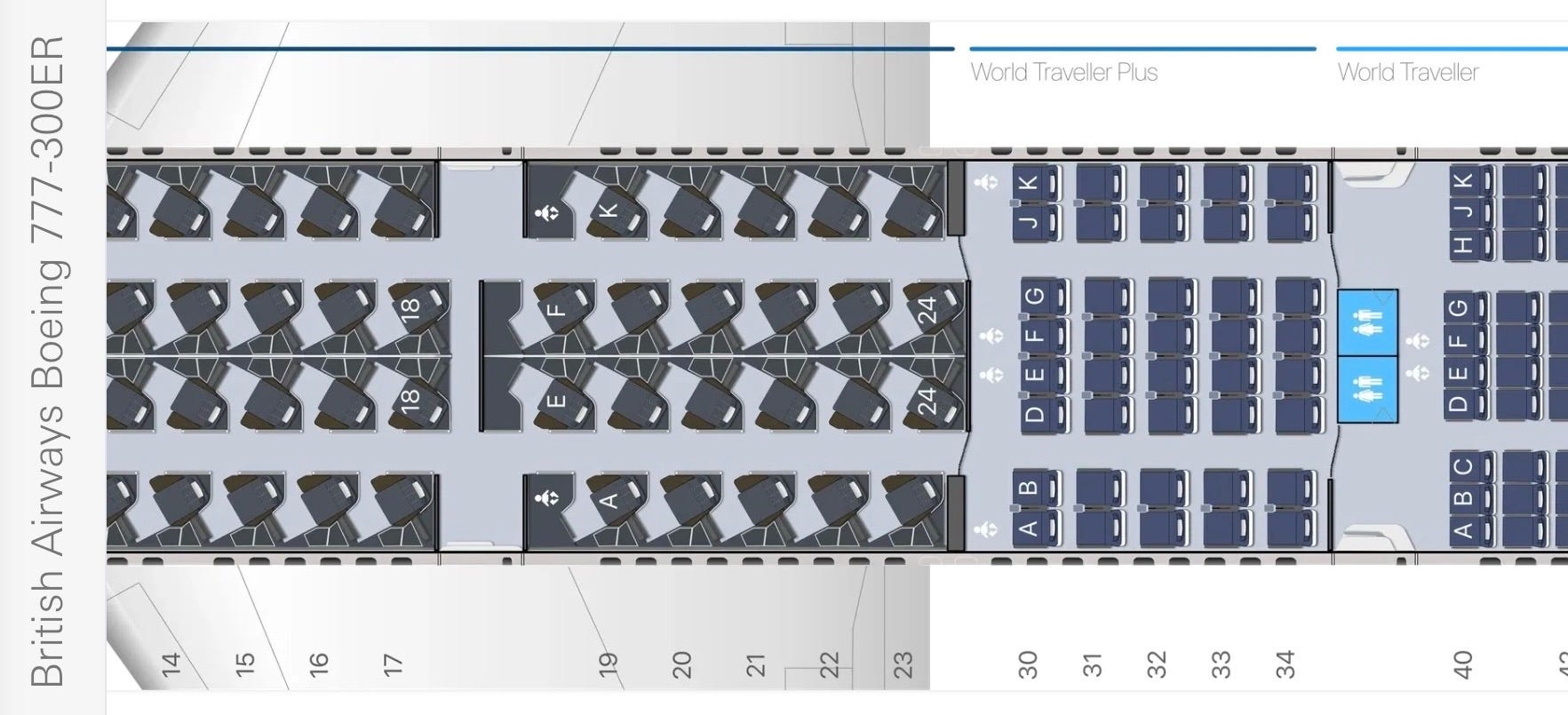
Of course, having more premium seats does not necessarily mean that non-revs have a better chance of getting one. The higher totals could reflect BA’s ability to fill those seats with revenue passengers, including those paying for last-minute, cut-price upgrades (the bane of non-rev hopes). But, on the whole, I think higher inventory makes for better chances.
That’s it for now. Happy running, flying, and so forth.
The London 10K conclusion
For: Epic course; one of few major races in Europe in the summer. Against: Potential for hot weather. Sum-up: Great choice if you want to do a race on a trip to the UK, and a no-brainer if you live there. ✈️ 🏃
Return to the Table of Contents
If you’ve stumbled across this post, please consider subscribing to the Flyrun blog using the button below. It covers the intersection of running, travel, and aviation. Subscribing costs nothing (and never will). You’ll get an email every couple of months or so with a new post. Please also share this post with anyone you think might be interested. You can see an archive of previous posts here.