

The Warsaw Half Marathon, which takes place each year in March, is one of the earliest big races in the European road race season. It attracts a field of around 25,000 registered runners. That makes it the largest race in Eastern Europe, and among the larger ones on the continent.
Table of Contents
Warsaw underrated?
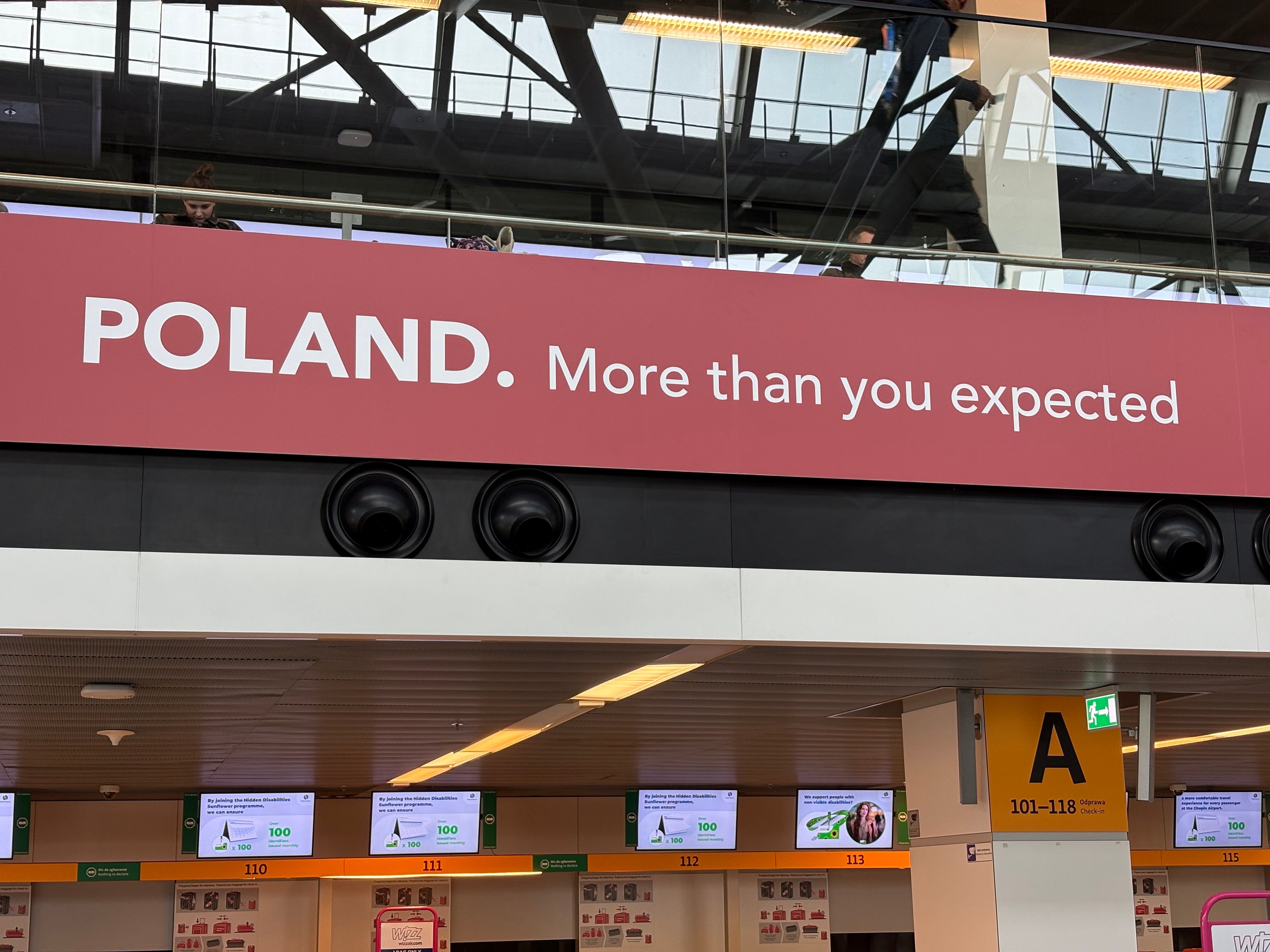
Warsaw can be overlooked on travel itineraries. Visitors from the U.S. are more likely to be drawn to Prague or, perhaps, Budapest. Perhaps it’s because Warsaw has a reputation for being a “gray” sort of city. And there, indeed, are parts where — especially on a winter day with the overcast sky merging into Soviet-era concrete — it can feel a bit like that. That is my recollection from my previous visit, a fleeting one during a January road trip through Eastern Europe back in the 1980s when Poland was still trapped behind the Iron Curtain.
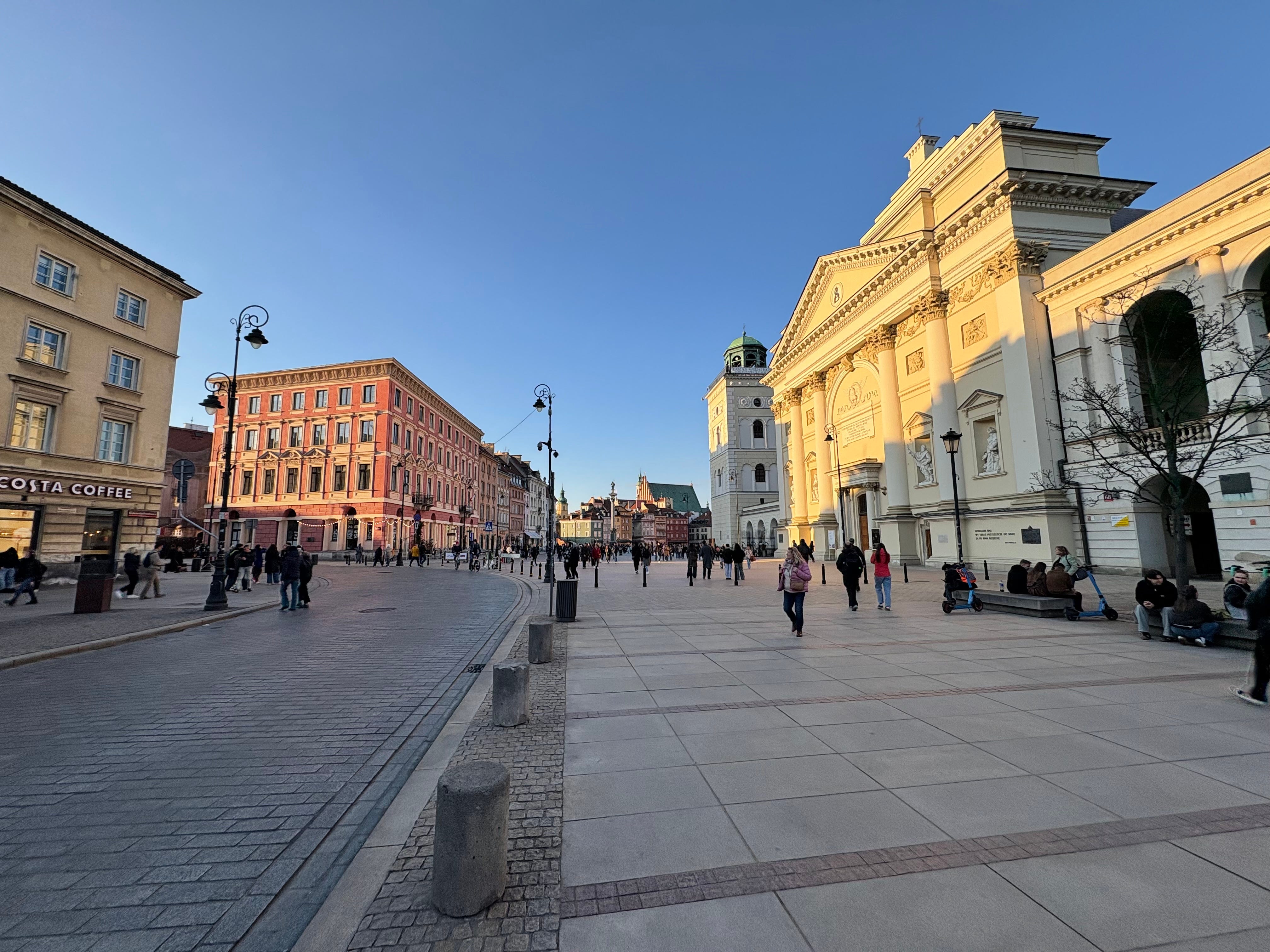
But the city deserves a closer look. While much of it was destroyed in World War II and most of the reconstruction took place in the Communist mold, part of the old city center was faithfully restored and is now a UNESCO World Heritage site.
Prague — which came through the war largely intact — has the more immediately seductive streetscape, with in-your-face European charm making for easy Instagram moments. But the flip side is that it’s much more touristy. And I’m not just talking about sightseers, but a more rowdy, stag-party type of tourism as well. Warsaw offers something harder to package, but arguably more interesting.
Polish growth
Poland is a large country. Its land mass is quite close to that of Germany, and its population is not far short of Canada’s.
For many years, Poland’s economic reputation was as a supplier of cheap labor to more affluent parts of the European Union, of which it is now part. Large parts of London were gentrified through the toil and sweat of Polish “builders” (as the Brits refer to construction workers generally).
But the economic tables are turning. Poland’s per-capita gross domestic product is rapidly catching up with the UK’s. It has now reached around 81 percent of Britain’s (when adjusted for purchasing power), up from just 36 percent in 1995. Since 2019, Poland’s inflation-adjusted per-capita GDP has grown by nearly 18 percent, while the UK’s has increased by less than one percent. It is likely only a matter of time before Poland overtakes the UK.
At present, Poland is establishing itself back on a mainstream political course, after veering in an authoritarian direction from 2015 to 2023.
Courageous uprisings
The destruction of much of Warsaw during World War Two came in several phases. It began when the Germans invaded Poland in 1939. But it continued while the city was occupied. Poland was the site of the two largest uprisings against Nazi occupiers during the entire war. The first was the Warsaw Ghetto uprising in 1943. The Germans created the ghetto in 1940, forcing 400,000 Jews — about 30 percent of the city’s population — into a small area in the center of the city. Conditions were beyond appalling with extreme overcrowding, malnutrition, and disease. Tens of thousands died from hunger and illness even before deportations to concentration camps began for mass murders on an industrial scale.
By the end of 1942, the ghetto’s population was reduced to under 70,000 people, many forced to work in factories. In April 1943, when German forces moved in to deport the remaining population, Jewish fighters launched an armed uprising. They held out for nearly four weeks, which was remarkable. But the German forces eventually suppressed the revolt by systematically burning the ghetto block by block, killing those who remained.
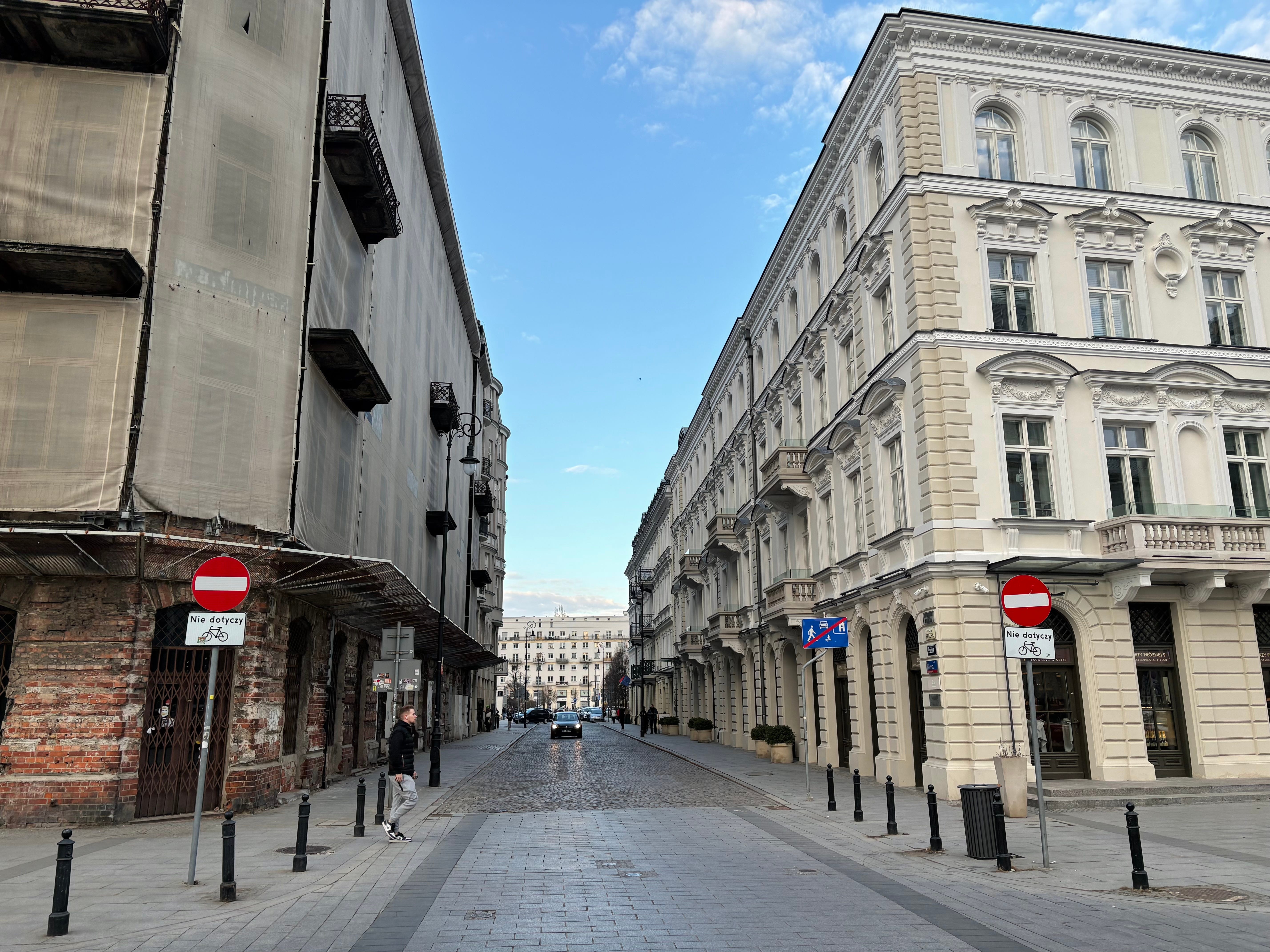
On the afternoon after running the race, I walked a mile or so from my hotel to Prozna Street, where there remain a few buildings that survived in what was once the ghetto. Today, Prozna Street is part of a mixed residential and commercial inner-city area.
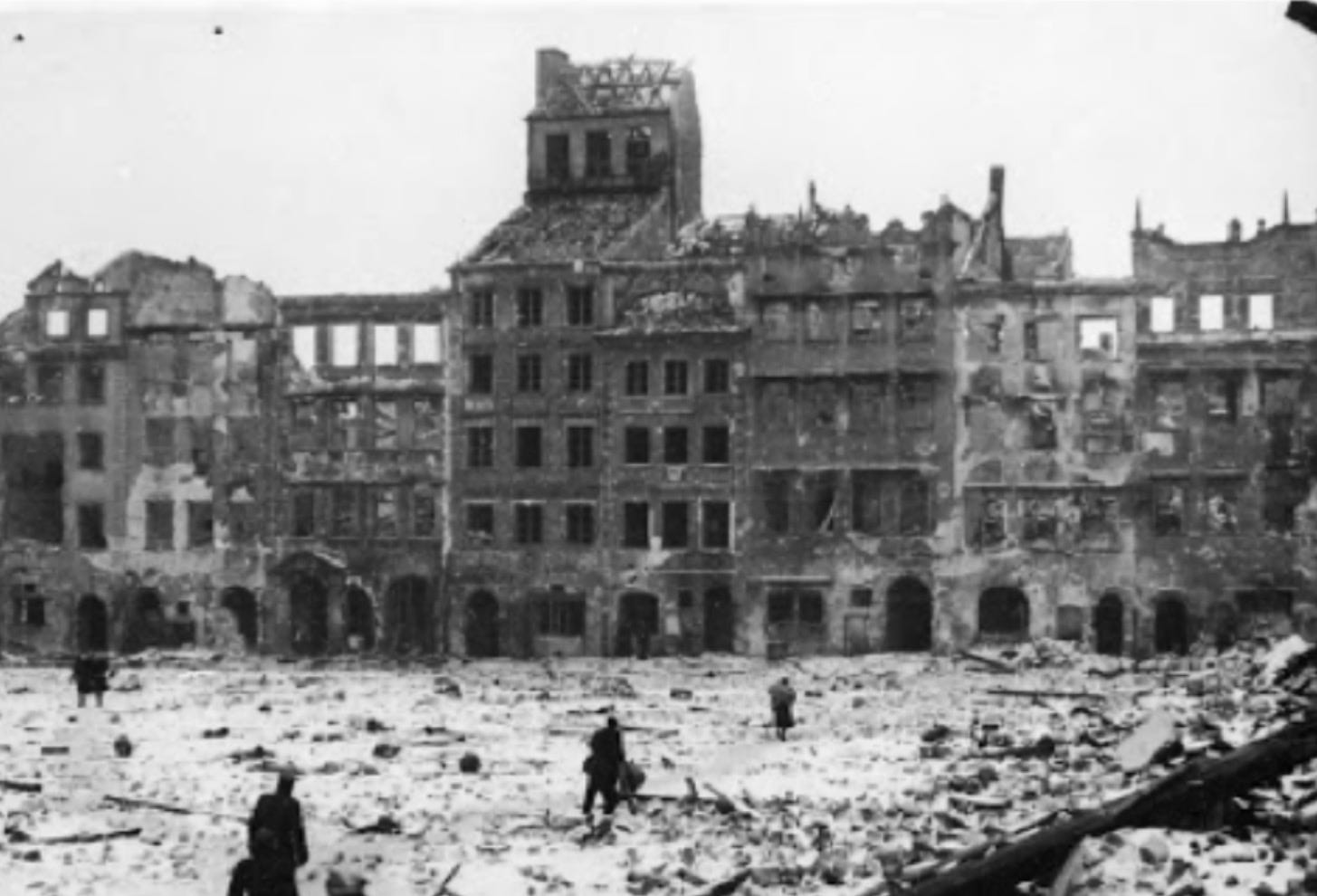
The final wave of destruction came in 1944, when Polish resistance forces launched an uprising to try to establish control of Warsaw as a weakened Germany began losing ground to advancing Russian forces on the eastern front and before the latter could establish an occupation of their own. But in an awful end to the war in Poland, the Russians held back, so as to allow the Germans to brutally defeat that uprising, leveling much of what remained of the city and killing over 200,000 civilians as well as many thousands of fighters. The Russians were then able to take over what remained of the devastated city, all resistance having been vanquished by the previous occupiers.
Poland remained under effective Soviet control for roughly 45 years until 1989, about two years before the end of the Soviet Union. Just as it was the first — and really only — country under Nazi occupation to have a large uprising, so it was the first country in the Soviet bloc to break away.
In praise of loop courses
Just as Warsaw isn’t all that visible on most tourist radars, so too its half marathon has a relatively low profile for a race of its size. It does sell out, but this year — 2026 — not until a couple of months or so before the event. So it is more accessible than some large races in Europe that are increasingly hard to get into even if you’re on it a long time in advance.
This year was the 20th running of the race. The 13.1-mile distance is the main event, but there’s also a 5K. The half marathon is more or less a loop. That’s my favorite type of course. Out-and-backs offer half the variety and — depending on your pace — can make you “feel” slow as you press forward against the flow of faster runners who have already turned around (although I guess some people might get a buzz by being faster than the opposite crowd). Point-to-points can give plenty of variety, but come with logistical issues in terms of getting there and away.
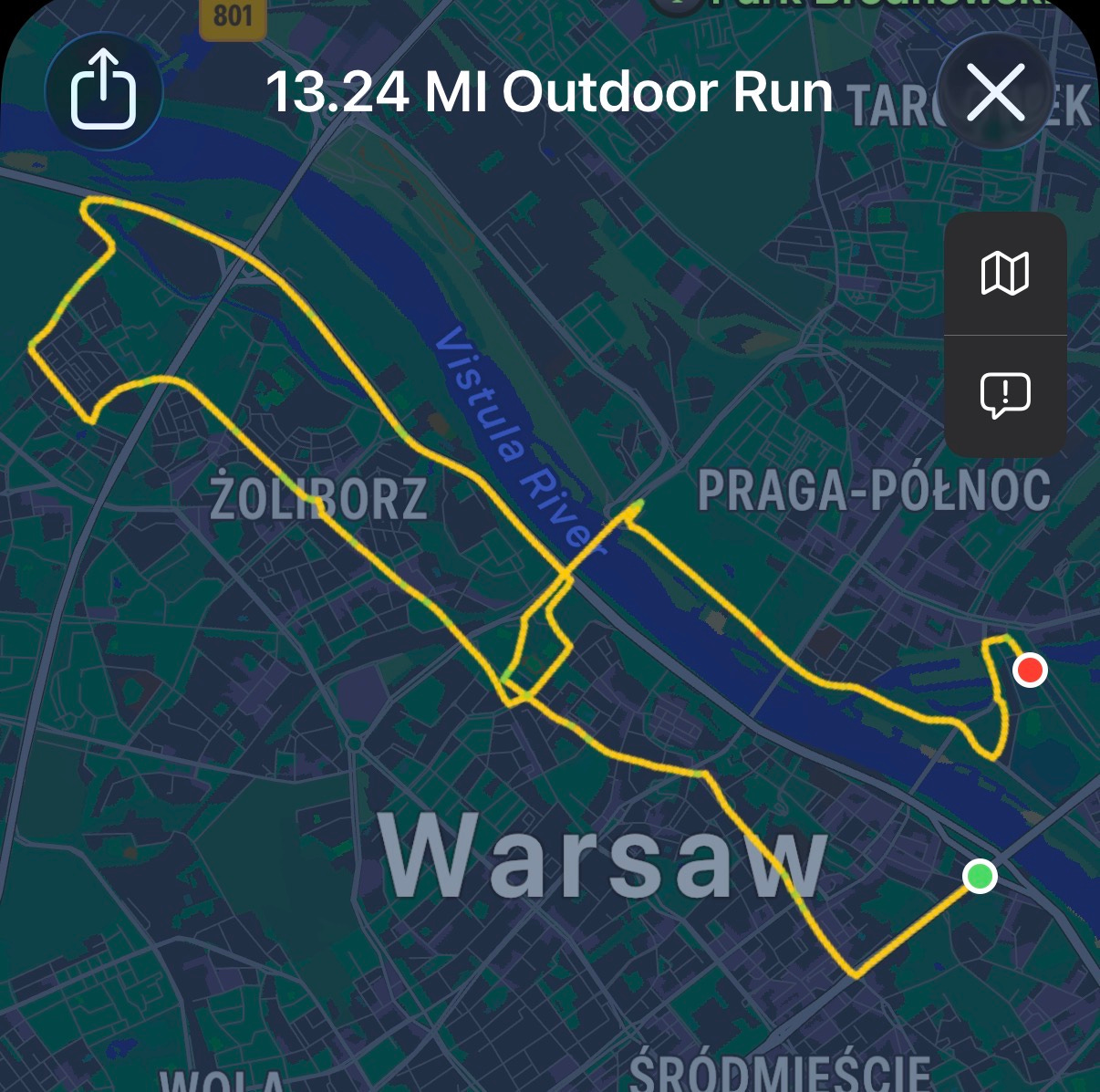
Loops provide variety without the logistical issues. But they are less common than you might imagine. They have larger footprints. So they can be a bigger ask if you are a race organizer trying to negotiate with a city to shut down its roads. But there are some places where certain races have something approaching an official status that gives them the clout to pull off expansive city-center loops. Warsaw is one.
The Warsaw Half Marathon race day experience
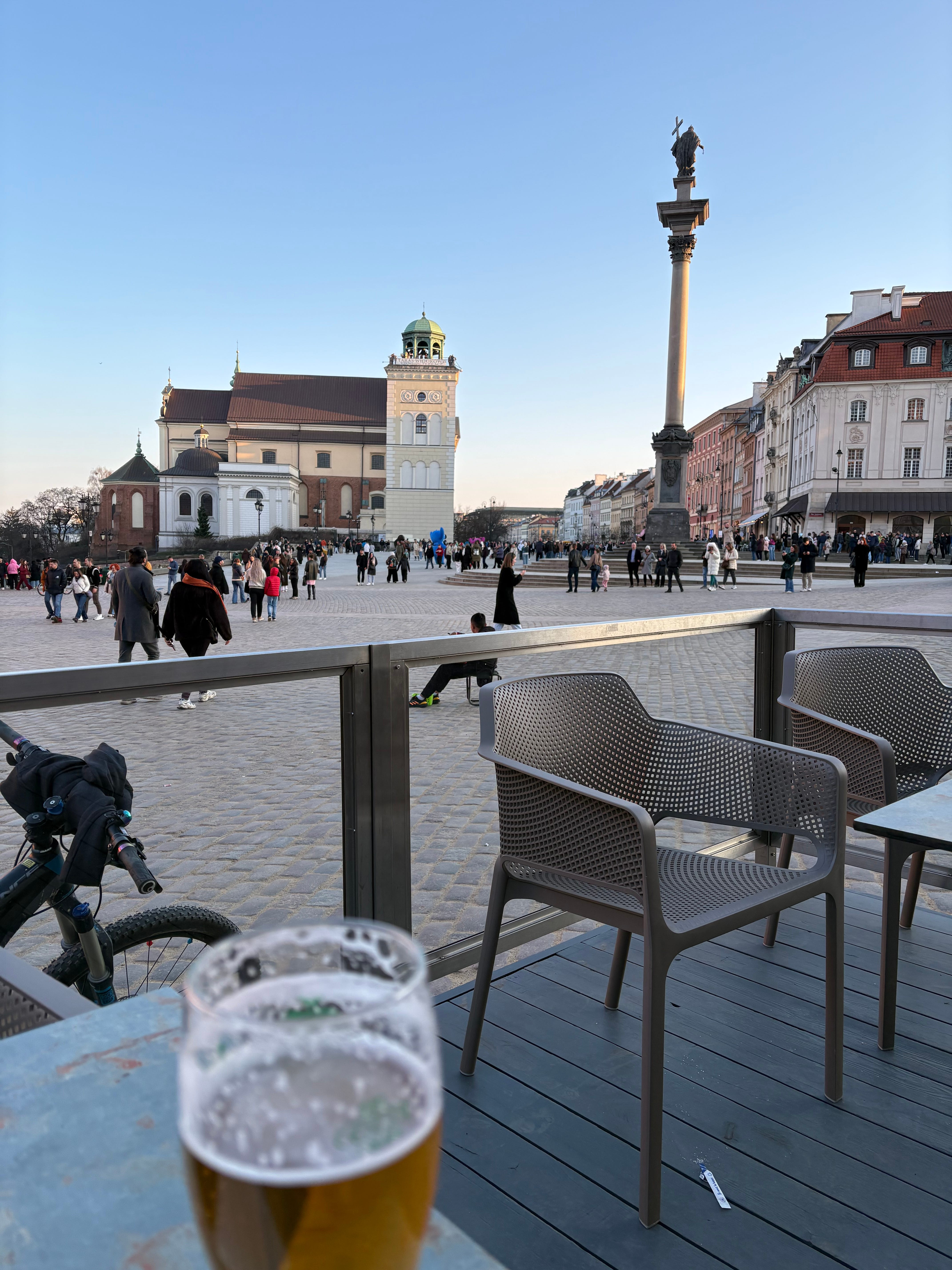
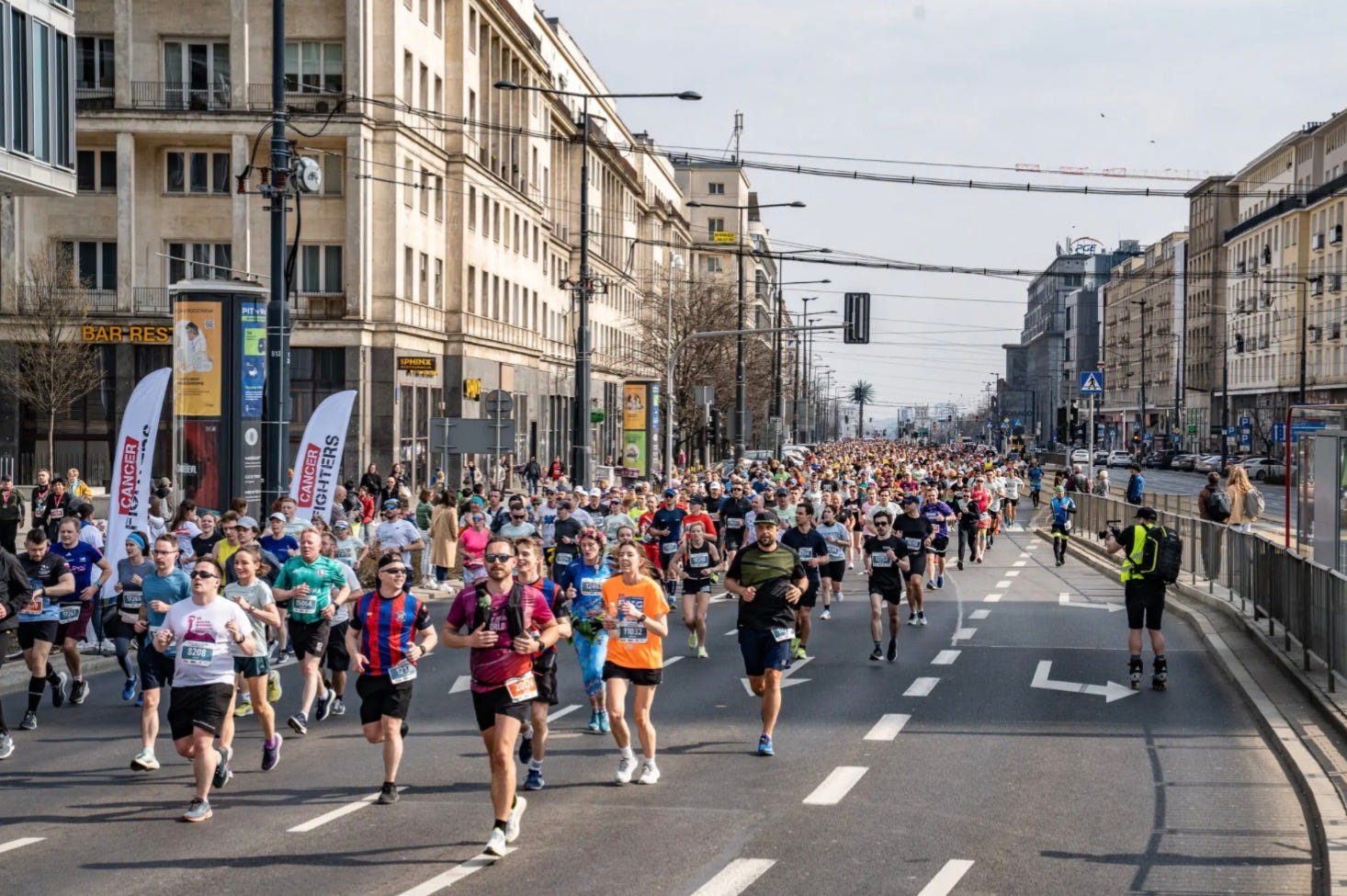
The Warsaw Half starts on a bridge over the Vistula River that cuts through the city. Most of it is on the west side of the city, including a section quite early in the race that takes you through the aforementioned restored Old City. It is quite a varied course overall, with other segments that could be labeled “residential,” “park,” “mixed commercial,” “highway,” and so forth. Toward the end, you cross over to the east side of the river and the race finishes next to the PGE Narodowy stadium. That stadium might not mean much to most visiting runners, but it is the national one, so it’s iconic to locals. However, this isn’t one of those races like Munich or Tokyo where the finish takes you into the stadium with a lap around the track.
I said the course was “more or less” a loop. The stadium is a short distance from the start on the bridge. Probably no more than a half mile. There’s a metro stop next to the stadium, and another not too far away from the bridge. Public transport is free on race day for anyone wearing a bib.
The course is pretty flat. Such inclines as are present are mostly to do with bridges and on-ramps and the like. The terrain itself is not hilly. If, unlike me, you are at a stage of your running career where you are trying for PRs — or PBs as the Brits tend to call them (“personal records” as opposed to “personal bests”) — Warsaw is promising territory. The combination of the course and the crisp March weather can make for optimal conditions.
The race starts unusually late at 11 a.m. The temperature this year at the start was 52 degrees Fahrenheit — around 11 Celsius — which was pretty perfect. Unlike the last half marathon I ran — in Taipei — this one had a staggered wave release. That meant I wasn’t running until 11:51 a.m. That’s a long time in the starting corrals, but the upside is that the first mile wasn’t crowded.
The advertised course limit is 3.5 hours. That sounds like plenty for all but the very slowest participants, but — unlike most races where the limit goes from the last runner crossing the starting mat — this one runs from the first.
So the last runners crossing the starting line would actually have under 2.5 hours to finish. That’s despite the fact that — if self-seeding works like it is meant to (but often doesn’t) — they would be the slowest.
I finished in a “leisurely” (although it didn’t feel it) 2 hours 24 minutes — which was around 3 hours 15 minutes after the start of the race. So that makes it seem that I finished with just 15 minutes to spare. But the course was still plenty active when I crossed the line. It didn’t feel like it was almost over.
I suspect the course is actually kept open longer than the advertised time. Even so, this isn’t an event to choose if you aren’t fairly confident of finishing comfortably under three hours. While there were walkers — even in the first couple of miles — I don’t know how the day would have played out for them.
Of the 75+ half marathons I’ve done, this one ranks close to the top in terms of the amount and enthusiasm of crowd support along the way. Combined with some course entertainment, I found it really helped make the miles go by. My favorite sign was one in English held by a young woman that read: “If you think this is difficult, try dating in Warsaw.”
Race logistics
There was a moderately sized expo. It was fairly central and a short walk from a metro station, but nowhere close to the race start and finish.
The race was priced very reasonably. At a time when some large marathons cost close to $200, I paid just $39 when signing up about four months before the event. The price didn’t include a shirt, which was hardly surprising for that amount of money. But these days, with my running drawer stuffed with too many “free” shirts, I’m happy to forgo them.
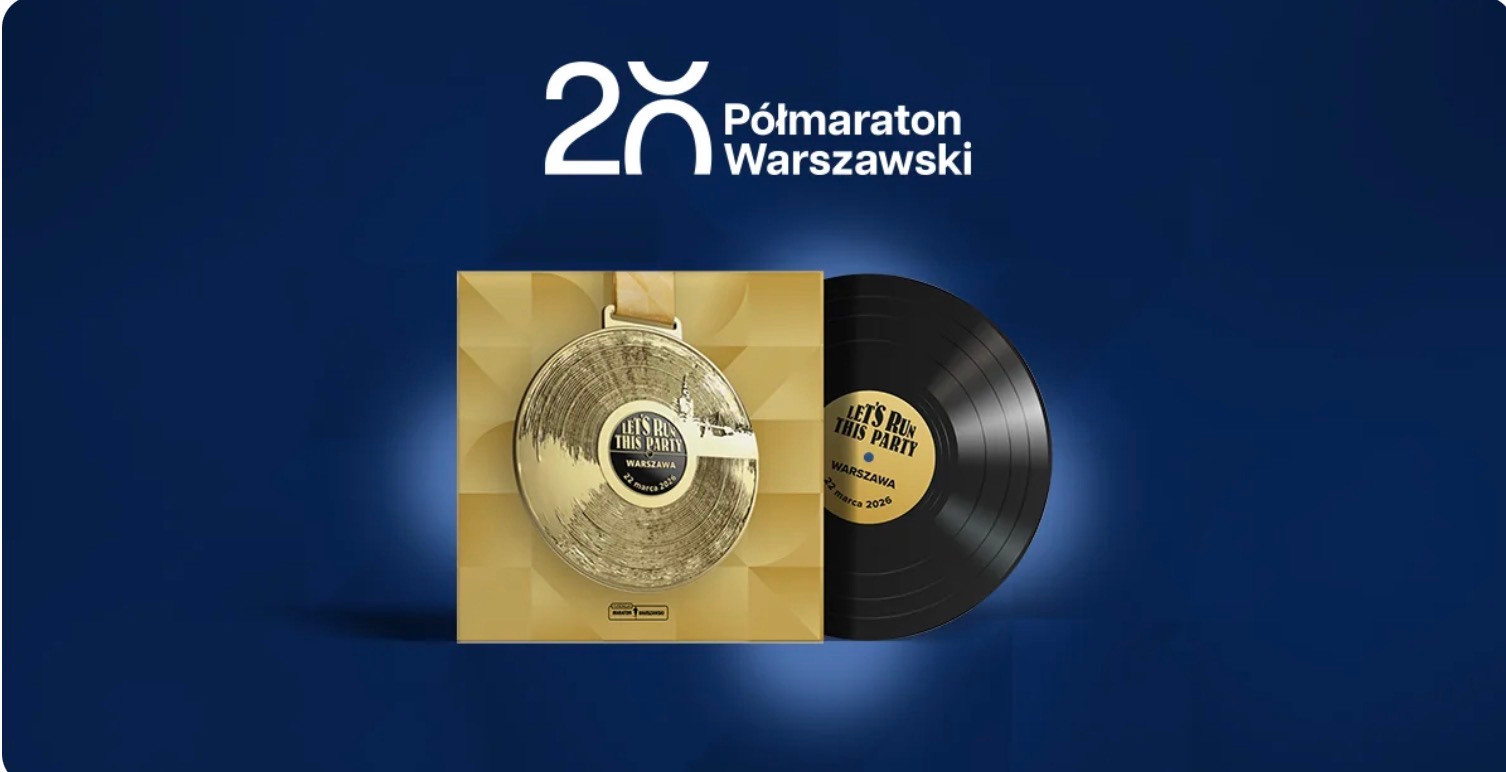
Had I purchased an optional shirt, it would have included the somewhat cheesy race slogan — “Let’s Run This Party” — which was much in evidence throughout the race. Consistent with that slogan, the race medal was styled as a miniature vinyl record. I’ve noticed that many races around the world adopt slogans in English even when just about everything else is in the local language. The race in Taipei had “Together, We Run Further.” Buenos Aires last summer had simply: “You Got This.” These race organizers should hire me as their English-language slogan consultant. But I suspect I would nix all their suggestions. I don’t think races need slogans.
All of the pre-race communications were in Polish. At the start line, however, there were a lot of announcements in English as well.
I stayed within walking distance of the start at the Hotel Indigo. I’ve got a certain fondness for the Indigo brand, which is part of IHG whose flagship brand is InterContinental (another of my favorites). The Indigo in Warsaw looks pre-war from the outside, but was doubtless reconstructed. Inside, it is modern with a lobby that makes you feel a bit like you are in a small town square. It was priced pretty reasonably — around $150 a night. Warsaw is not an expensive city. The hotel is close to a metro stop with a direct connection to the airport, so it’s a good pick if you are flying in for the race.


Flight in times of modern war — and remembering BA Super Club
I flew to Warsaw less than three weeks after the U.S. attacked Iran at the end of February 2026. I was struck by how the crisis in the Middle East affected air travel compared with how things were in the past. When I traveled to Warsaw this year, flights were pretty packed. Not just the nonstops between the U.S.A. and Poland — of which more shortly — but also those between the U.S.A. and hubs such as Frankfurt or London.
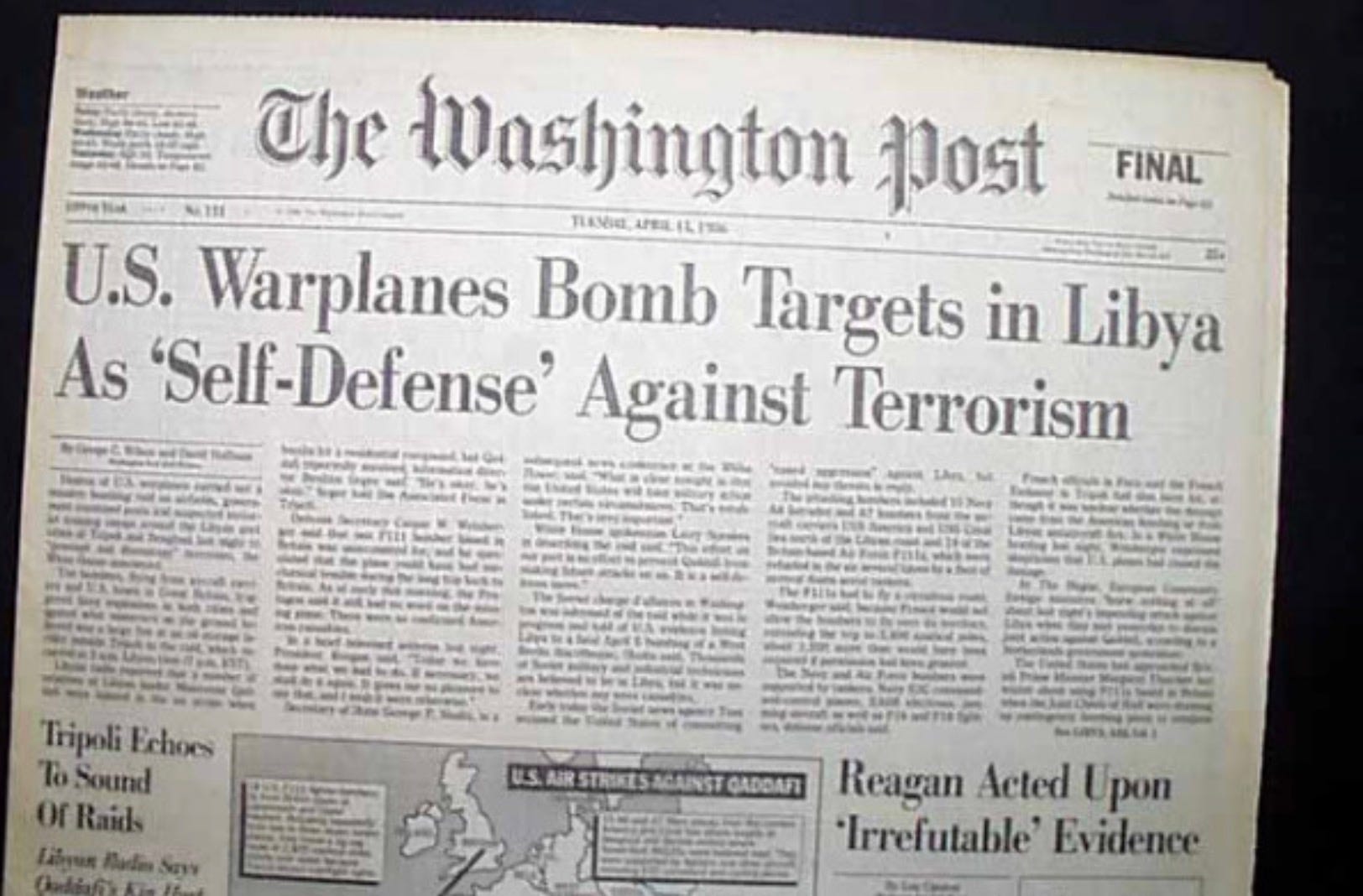
It was very different when President Reagan ordered the bombing of Libya in 1986 using F-111 fighter-bombers launched from a base in the UK. That was a time in my life when I was flying transatlantic round-trip at least once a month, usually between London and New York. After the Libya bombings, transatlantic traffic collapsed. People were afraid to travel. Airlines dangled all sorts of goodies to fill seats.
This was well before the Internet. And also before loyalty programs outside the U.S. really took off. It was in an age when coveted paper coupons and stickers were the currency for upgrades. I recall British Airways mailing me a space-available transatlantic upgrade coupon. I imagined it was for one-time use only. And I think that was the idea. But when I presented it at check-in, the agent assigned me the upgrade but handed the coupon back. So I used it again. And they handed it back again. And I kept on using it. There was always space available.
Business Class in those days didn’t involve lie-flat pods. But it was still pretty nice. BA called its version “Super Club” and my memories include wide orange seats on the 747 and plenty of Lanson champagne.
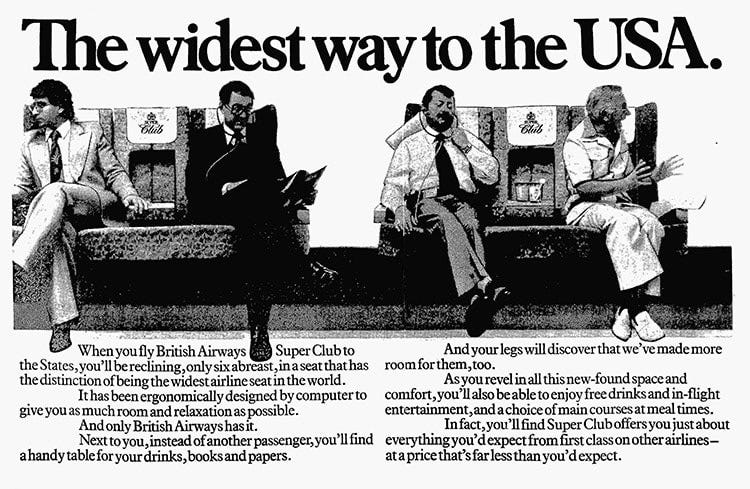
On about the fifth time presenting the increasingly tattered coupon one morning at Heathrow, the BA check-in agent told me to wait as someone wanted to meet me. My heart sank. I feared I was being nabbed for improperly re-using the coupon. But it turned out that in order to thank me for my frequent recent presence in Super Club, they were sending a VIP escort to take me through security. Annoyingly, however, the escort — charming as she was — kept the coupon after handing me my Super Club boarding pass.
U.S. interventions in the Middle East no longer have the same devastating effect on passenger loads between the U.S. and Europe. Maybe it is because of the normalization of strife and chaos. Maybe it is also the fact that for the past 20 or so years, air travel has felt somewhat safer from the threat of terrorism. The Libyan crisis occurred during a period when the threat seemed much more present. The fear level was not unfounded. The Lockerbie bombing — carried out by Libyan agents — came two years later.
That said, global airlines have, of course, been badly hit in another way by the 2026 Middle East crisis. Fuel prices. And potentially even fuel availability. So fuel, not fear, is the problem today.
A LOT of aviation history and much to like
The only way to fly nonstop between the U.S.A. and Warsaw is on LOT Polish Airlines. “LOT” is short for “Polskie Linie Lotnicze,” so you can see where the name comes from (i.e., the first three letters of the last word in the full name). It is by far the oldest Eastern European airline — with roots going back to before World War II. Today, it is the only Eastern European airline with significant long-haul operations and — as a Star Alliance member — the only one to be part of a global alliance.
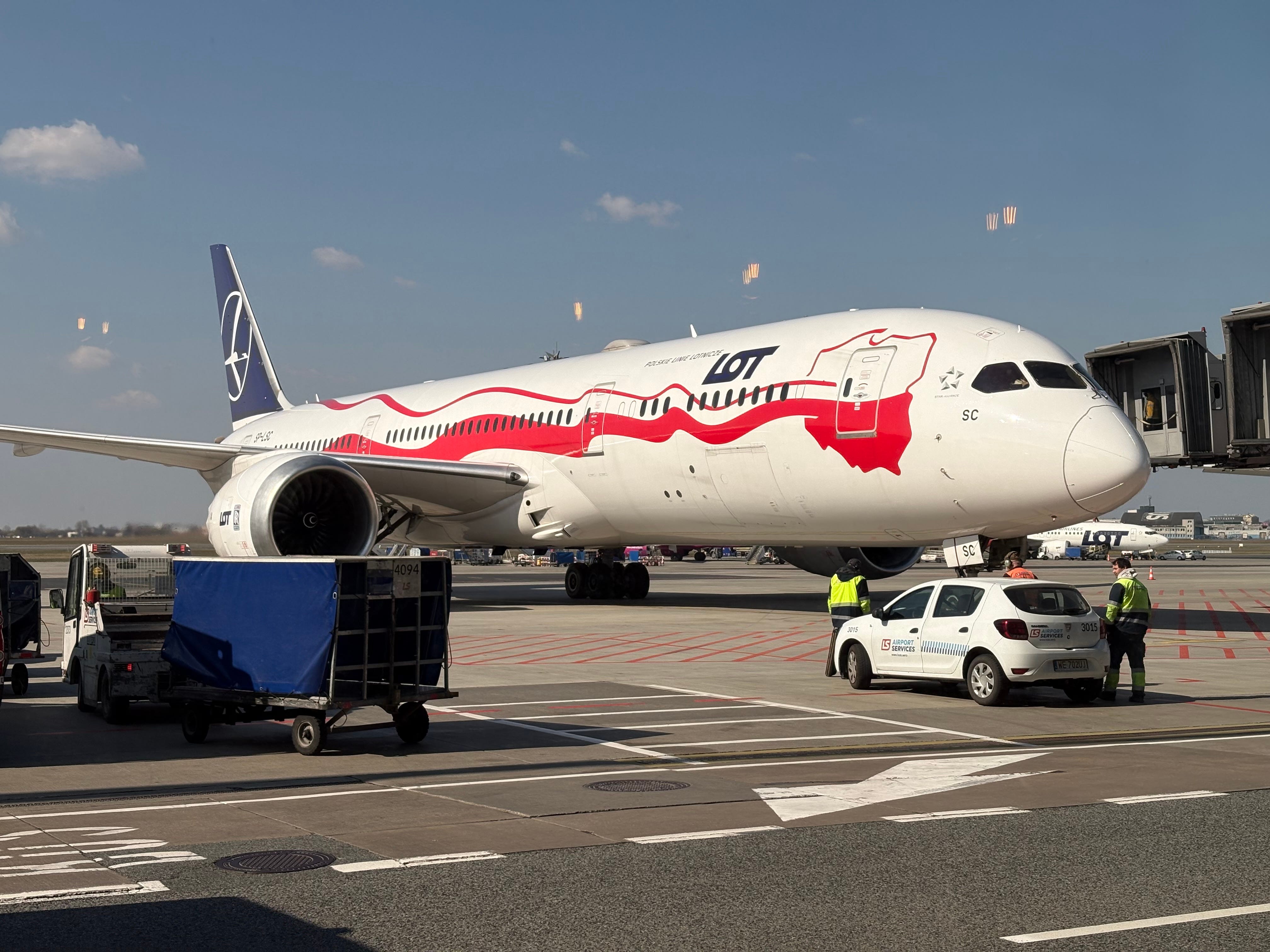
LOT is still state-owned. As with other state-owned airlines, the shareholding shows up in ways that are both good and bad for the passenger experience. State ownership can be evidenced by a lack of investment — meaning older aircraft and shabbier interiors — but also a lack of obsessive budgeting, meaning unexpected generosity in certain areas, such as food portions.
For a country of its size, Poland’s aviation footprint is relatively small. LOT has 84 active aircraft. That includes 13 wide bodies, all B787s. On a per-capita basis, Germany’s airlines have roughly four times Poland’s widebody capacity.
LOT was actually the first European airline to fly the B787. That might help explain why its 787 fleet today is a little tired on the inside. Its Business Class still has 2-2-2 seating. But it has announced plans to modernize its cabins over the next few years. A couple of new B787s will be delivered fairly soon, and I believe they will be the first with new interiors.
I non-revved from Los Angeles to Warsaw on the outbound and then from Warsaw to Miami for the return. I chose Miami the day before the flight based on schedules/loads and also because I could have dinner with my son, recently graduated from the University of Miami.
The outbound was in Economy with an empty seat next to me on a pretty full flight. Decent, but nothing remarkable. Although the quality of the announcements from the flight deck — which lasted much longer in English than in Polish (even though most of the passengers seemed to be Polish-speaking) — was outstanding.
On the flight to Miami, I got an aisle in Premium Economy — the only seat that was open at the front or front-ish end of the plane. I was very happy to get it, as the alternative could have been a middle at the back. Fortunately, I was the only standby. I was pleasantly surprised at how good it was. The hard product — the seats — was nothing special, lacking the enhancements you find on newer products (although with the same 2-3-2 configuration you find on almost all PE cabins on the 787). But the soft product was excellent — better than I’ve experienced on, say, American or United (as decent as I’ve found those to be).
Most Premium Economy products merge more into the back of the plane than the front in terms of the service. Here, however, all of the service came from the galley at the front. The overall level of attentiveness was what I’d normally expect only in Business Class. And the wine appeared to be the same as in Business Class. I enjoyed a pretty good Moldavian white wine. Other choices included a Polish white wine — a little sweet, but also quite good when I sampled it.
WAW and LAX lounge notes
They served the same Moldavian wine in the LOT Business Class lounge in the “non-Schengen” part of Warsaw airport for flights departing to outside the European Union. It wasn’t a stunning lounge by any means, but it had good views and wasn’t at all crowded. I was happy to spend a couple of hours there. There was a Priority Pass lounge right next door, which I planned to check out but ended up skipping. I suspect it would have been quite similar at least in terms of layout and comfort.
On the outbound journey, I visited the Star Alliance Lounge in the Bradley International Terminal at LAX. Just as I like hotels with balconies, so I like lounges with terraces. The best thing about this lounge is that it has two terraces. One is fully outdoors. And the other is interior, overlooking the concourse. I spent some quality time in each. I think the views are better from the semi-outdoor terrace at the LAX United Club, and that space integrates better with the indoor area, but that is several terminals away. However, views of any sort enhance the lounge experience.


Cool airline routes
I found my flight from Warsaw to Miami to be most agreeable. It’s what I call a “cool route.” Such routes are ones between interesting city pairs where you wouldn’t necessarily assume there to be service, let alone service you enjoy.
For example, Air Canada’s recently announced service between Vancouver and Sapporo, Japan, is definitely a cool route. Munich to Bangalore counts. Arguably, Honolulu to Osaka — a route I took last year — does as well. I can’t quite decide whether Alaska’s new Seattle to Rome service — which I hope to take soon — qualifies, but it might.
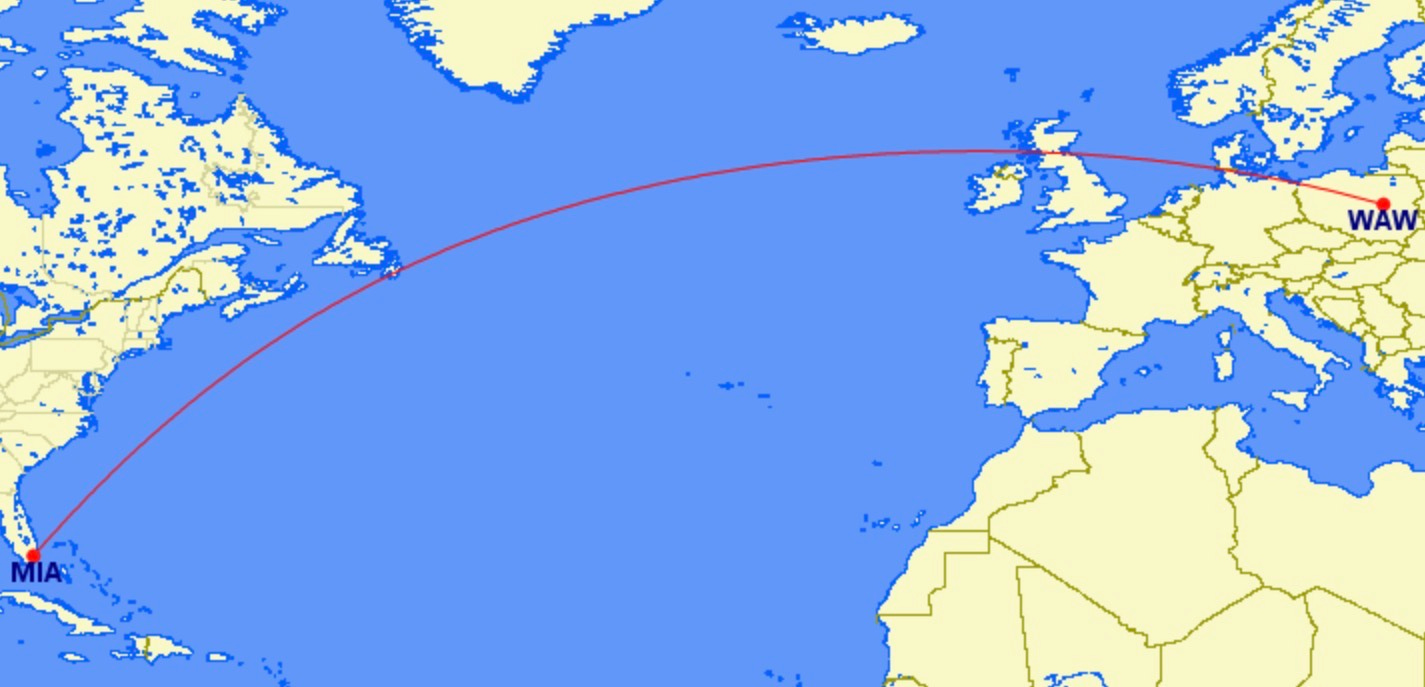
London to New York is at the opposite end of the spectrum. No matter how good the service might be, the route itself is dull.
Non-revving on LOT Polish Airlines
Non-revving on LOT is quite straightforward. But you can’t check in online, unfortunately. And the app does not give you any information to assess loads or standby lists. However, if the flight is sufficiently open, you may get a seat assignment right away when you present yourself at the check-in counter, even if it is still three hours or so before departure. That is what happened to me at LAX (although — once on board — the flight seemed fuller than I’d expected). At Warsaw, by contrast, they gave me a gate pass to standby airside until the flight boarded. So the good news is that LOT does not make you wait landside — which is the worst standby variety for anyone with lounge credentials. If your airline
If your airline’s agreement with LOT allows you to list for the front of the plane, you don‘t get a credit on your ZED fare if you end up in the back. But that’s not unusual.
One other important piece of non-rev information is that Warsaw seems to have some of the lowest taxes for flying out of Europe of any city on the continent. Normally — as I have explained elsewhere in this blog — the cost of non-revving into the U.S.A. is significantly higher than the cost of non-revving out, because of taxes. But depending on the route, the inbound premium from Warsaw to the U.S.A. can be less than $30 — far lower than on most routes out of Europe. So Warsaw makes a great departure point when leaving the continent . ✈️ 🏃
Return to the Table of Contents
Feedback? Email: flyrun@substack.com
If you’ve stumbled across this post, please consider subscribing to this blog using the button below. It covers the intersection of running, travel, and aviation. Subscribing costs nothing (and never will). You’ll get an email every couple of months or so with a new post. Please also share this post with anyone you think might be interested. You can see an archive of previous posts here.