
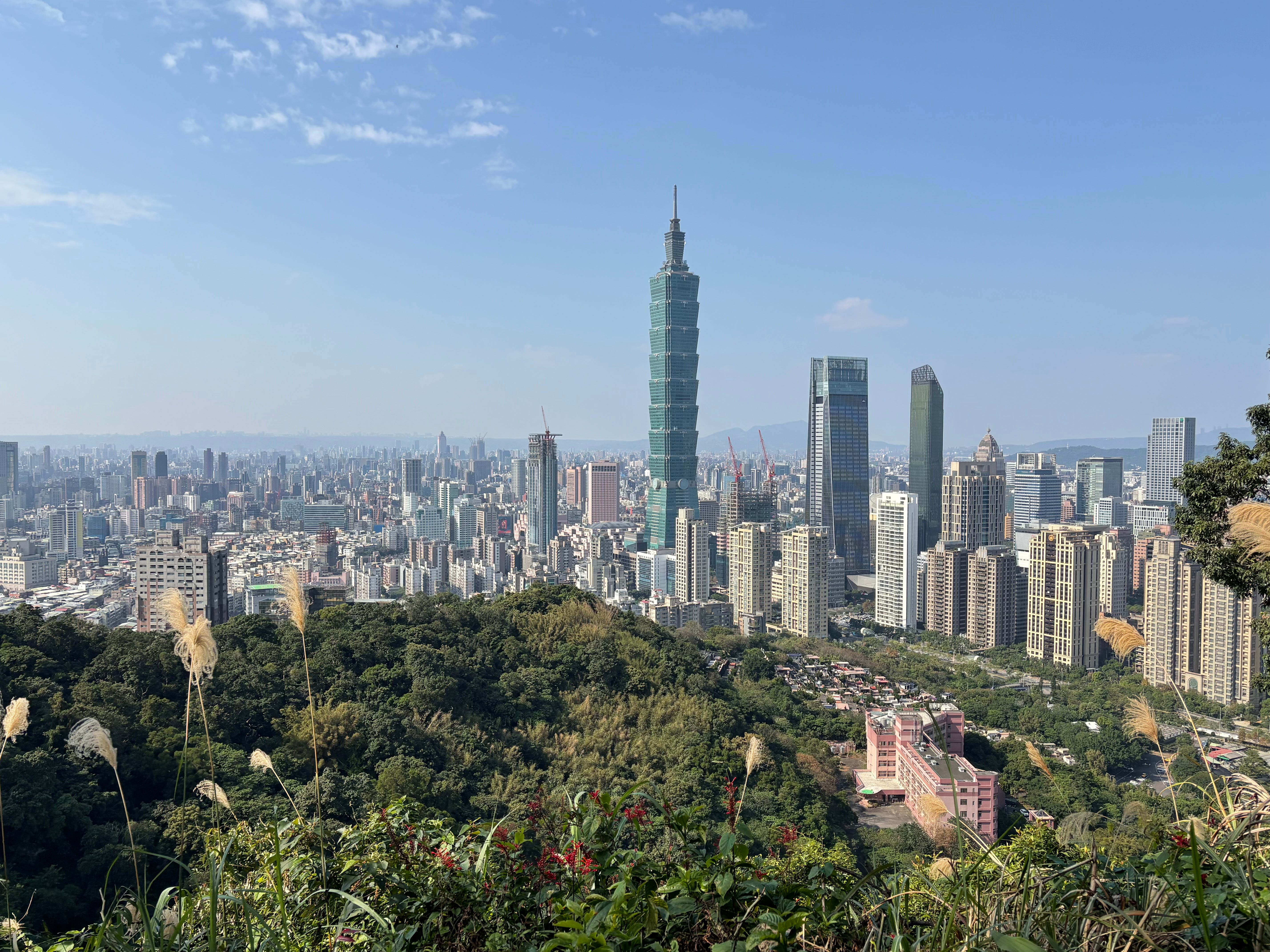
The Taipei Standard Chartered Half Marathon is part of a large event that also includes a marathon and an 11-kilometer run, the latter an unusual distance. I ran it in January. It was a short trip, with just two nights on the ground. I flew out of Taipei on the afternoon of the race and — thanks to the magic of the international dateline — was in bed at home in Santa Barbara, California, that same evening.
Table of Contents
The Standard Chartered race series (and how I might have been a bank manager in Karachi)
The outbound journey to Taipei: a cautionary tale of a wasted non-rev lie-flat
Taipei or not Taipei?
I came close to not going to Taipei. I have a protocol that unless I can perform a plausible 10-mile run within a couple of weeks before a half marathon, I’m not good to go. I act as my own examiner, trying to impress myself enough to obtain the sign-off. I don’t set the bar too high, but there are various criteria, including finishing with at least a modicum of strength.
This time it was a close thing. I hadn’t done a half marathon for over four months. And life had lately got in the way of my running. As the race approached, I was far from sure I was fit to run 13.1 miles. I somewhat dreaded putting myself to the 10-mile test.
I cut short the first 10-mile check-run, realizing it would not work out well. I finished the second, but it was very marginal. I thought of downgrading to the 11K distance in Taipei. But when I emailed the organizers, they told me it was too late to transfer registration. They said I was welcome to run the 11K course, but I wouldn’t get an official time or a medal.
The admittedly absurd allure of the medal
I get it that the allure of finisher medals is a little absurd. I can imagine the awkward conversation after I am gone about throwing out my collection. (“He’d totally get it. What are we meant to do with them? It’s not as though he did anything with them when he was alive!”)
But the prospect of no medal was enough to make me try the 10-mile run again with one week to go until race day. And this time it was just about okay. I guess medals do motivate. The Taipei medal, by the way, turned out to be a bit of a collector’s item — although not for the reasons that the organizers planned. More on that later.
So I gave myself the nod to fly to Taipei three days later. Still, my goal there was modest. It was simply to do a slow, steady run.
The Standard Chartered race series (and how I might have been a bank manager in Karachi)
Standard Chartered — the race sponsor — is a British bank with roots going deep into the country’s imperial past. When I was an undergraduate at a fancy university in the UK in the late 1970s, I reviewed their recruiting materials. In those days, career options literally came in thick catalogs. With wanderlust in my bones, I toyed with the idea of joining Standard Chartered’s retail banking operation in Africa or Asia as I leafed through the pages. Had I played my cards right, I might have become the manager of a branch in Khartoum or Karachi by my late twenties. Life took me in other directions, however.
I suspect that those who took the opportunity were ones who — a generation or two earlier — would have been recruited in the colonial service to become district commissioners in such places, civil servants sent from Britain to rule over swathes of colonial territory. For my generation of Brits, banks like Standard Chartered — and a couple of big trading companies — were a chance to try to hop onto the last colonial bus that had left the station but was still picking up a few stragglers on the outskirts.
Today, Standard Chartered, while no doubt having shed its imperial coat, is still active in the markets that defined it back in those days. And it is a major sponsor of running events in a number of them. There are Standard Chartered races in a bunch of countries, most of which were either British colonies or places where some imperial or trading footprint was planted — for example, Hong Kong, Shanghai, Kuala Lumpur, Singapore, and Nairobi. There’s even one in the Falkland Islands, Britain’s still-remaining outpost in the South Atlantic. Not to mention a 5K in London’s financial district.
A very brief history of modern Taiwan
Standard Chartered’s presence notwithstanding, Taiwan was never a British colony. But it was colonized by various powers — Holland, Spain, China, and — from 1895 — Japan. It was known to Europeans as “Formosa.”
Following Japan’s defeat in World War two, Taiwan was handed to the Republic of China. In the ensuing civil war, Chiang Kai-shek’s Kuomintang anti-communist forces retreated to Taiwan, establishing Taipei as the provisional capital of the entire nation of China. And the standoff between Beijing and Taipei has continued ever since, each claiming to be China’s legitimate seat of power.
For many years, Taiwan was ruled by a Kuomintang military regime. But in 1987, the Kuomintang lifted martial law and Taiwan began to evolve into a liberal democracy, culminating in the first direct presidential election in 1996. It developed cutting-edge tech industries and pioneered same-sex marriage in Asia.
The Kuomintang remained in power until 2000, when the Democratic Progressive Party was first elected and began to pursue a distinct Taiwanese identity, without formally giving up a “one China” position.
For many years, it seemed that China and Taiwan would, for practical purposes, coexist as separate “countries,” even though Taiwan has never claimed to be a “country” and is not internationally recognized as one. But with mainland China now adopting an increasingly aggressive stance, nothing in the future seems certain.
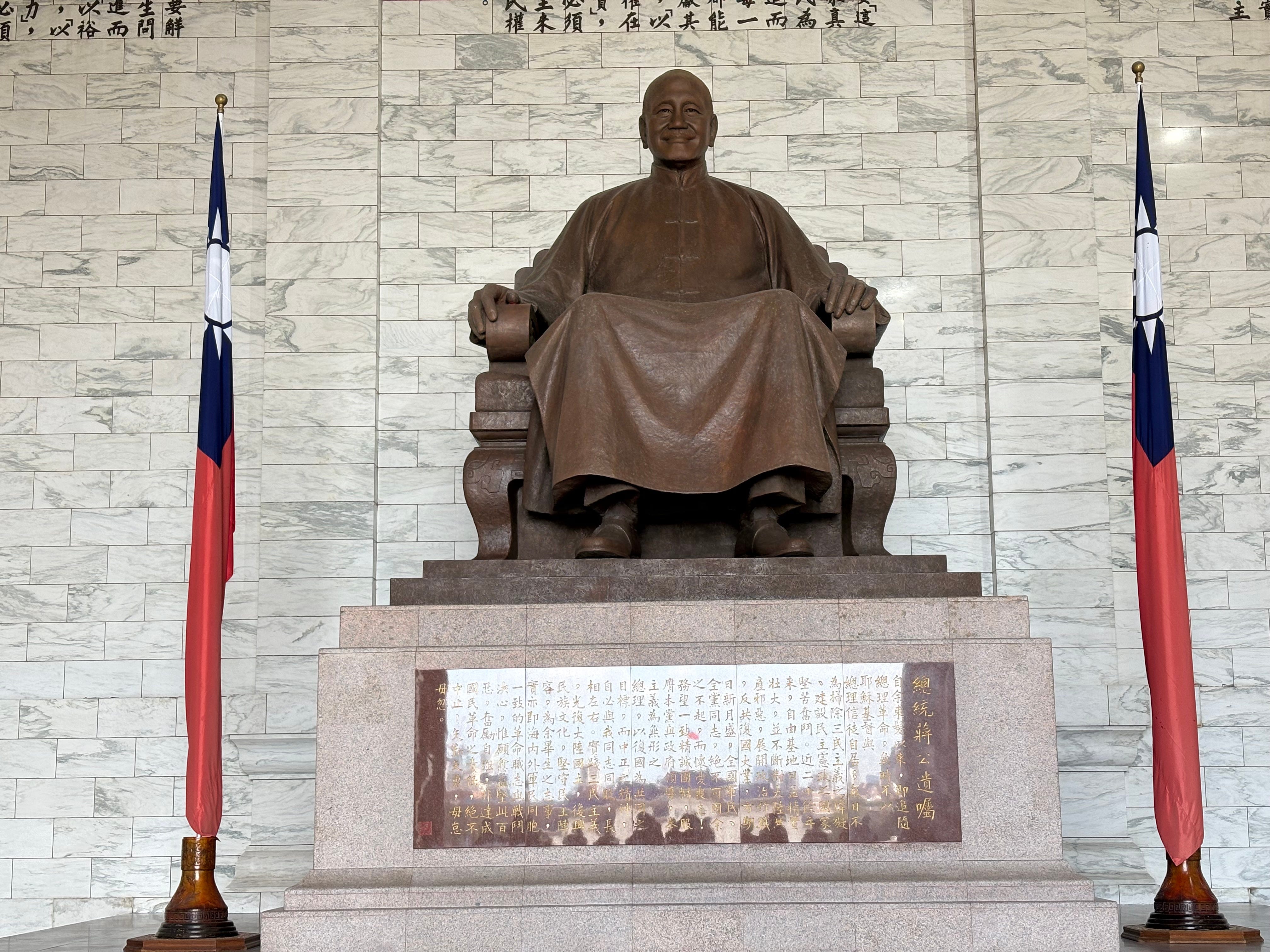
Today, the Chiang Kai-shek Memorial Hall in Taipei remains a flashpoint for debate, with some viewing it as a site of national commemoration and others as a symbol of authoritarianism. I stopped by the day before the race and happened to be there for the ceremony of the changing of the guards.


Registration and packet pick-up
There aren’t that many big January races in the world. In the Southern Hemisphere, it’s a bit too much in the height of mid-summer. And in the Northern Hemisphere, it can be too wintery or close to the holidays.
But the Standard Chartered Taipei event is a big one that takes place in the first half of the month. Between the various distances, it attracts around 26,000 entrants. Registration is inexpensive by international standards. I paid around $43. The registration window is tight, however, and generally takes place late in the preceding summer — so check out the race website carefully. It’s first-come, first-served, not the ballot system that you find in some large races in Asia.
Packet pickup took place over three days at an event venue called the Songshan Cultural and Creative Park in the center of the city, not especially close to the race start or finish. However, many — perhaps most — participants who live in Taiwan receive their bibs through the mail. So although there was an expo, it was quite small and low key.
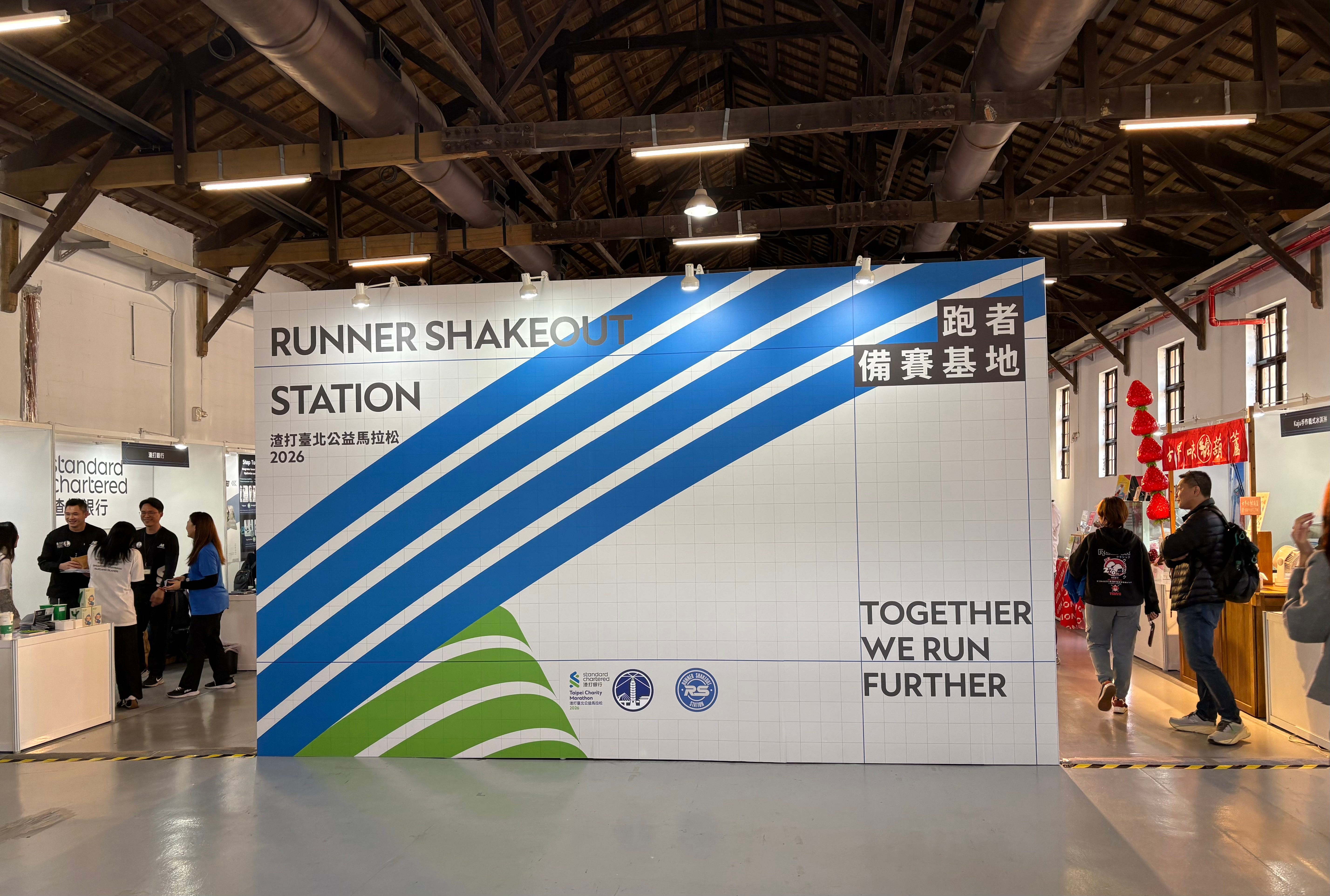
They called the pick-up venue the “Runner Shakeout Station.” That suggests some sort of warm-up run associated with it, and there was a small one the day before the race. But it seems to have been limited to around 20 runners, all from overseas. I only found out about it after the race.
Unusually, there were no race shirts — either included in the registration amount or for sale separately at the expo. Instead, runners got a singlet, a sleeveless substitute. Maybe singlets are good for those with more buff physiques, but I chose — in the public interest — not to take the one offered to me. (Oddly, participants in the 11K did get a shirt, although I’m not sure how good it was.)
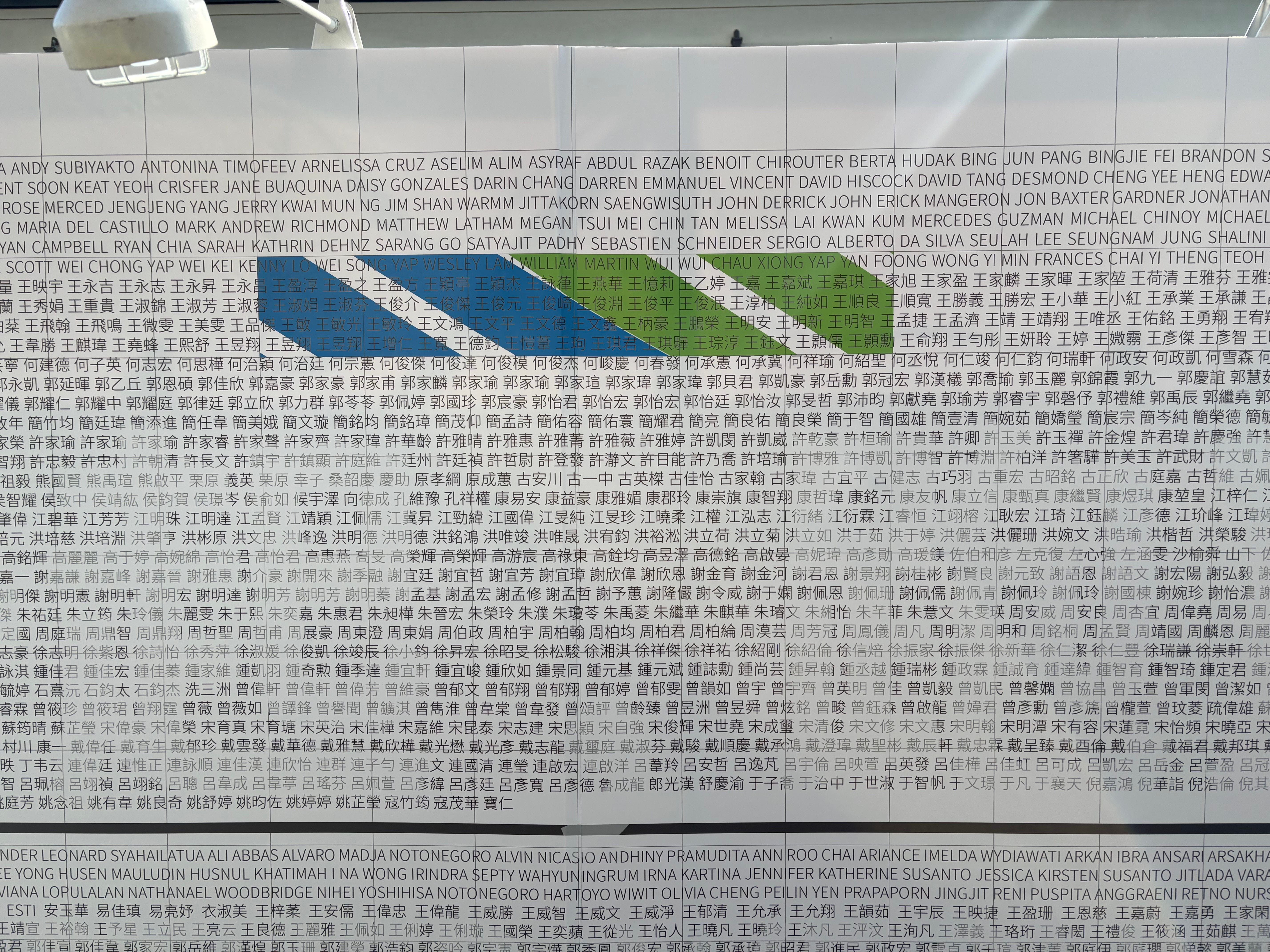
There was one of those display walls just outside the expo, where they list the name of every registered runner in tiny print. I was relieved to find my name included in the non-Chinese section of the display before entering the expo, as until then I had a nagging doubt as to whether my attempt at registering on the Chinese-language portal had successfully checked all the required boxes or whether I had mistakenly registered for something entirely different.
一切都是中文的
The race makes relatively few accommodations to English speakers. Although the front-facing website has an English option, registration involved navigating a Chinese-language site. It was a bit tricky, but translation tools made it manageable. All the pre-race email communications were also in Chinese. As were the signs and notices at packet pickup (except for the aforementioned “Runner Shakeout Station” sign).
There was, however, a PDF runner’s guide with some parts translated into English. And the race slogan was also in English — “Together, We Run Further.” I had mixed views about that message. Thirteen point one miles seemed plenty to me, without any “further.”
The general lack of English extended to race morning as well. None of the signs or announcements were in English — except for the “10, 9, 8, etc.” countdown as runners were released.
I was a little surprised at how little accommodation was given to English speakers. Taipei — in general — does make an effort in that regard. Helpful signs make it fairly straightforward to use the metro, for example.
That said, I can’t recall the last time I attended a race in the U.S.A. with announcements in Chinese. And I have never taken part in a race anywhere in the world where — whatever the language or other logistical difficulties — I was not able to register, pick up my bib, make it to the start line, and then run the race to the finish. Having everything be in Chinese simply underscored the travel experience of running a race in Taipei — which was the whole purpose of my visit. So I point out the language thing not to complain, truly, but simply to advise. If you don’t want to deal with not understanding the language, be careful about where in the world you run.
The race-day experience
The half marathon was scheduled to start at 5:45 a.m., and it went out on time. That’s before the sun rises in Taipei at that time of year.
There was a huge bag drop-off operation at the race start, with trucks lined up to take runners’ stuff to the finish line — one of the largest I’ve seen anywhere. I rarely make use of these, however. The effort in terms of lining up at both ends seems to outweigh the benefit, especially if I’m staying close to the race start and/or finish (as I almost always am). And on this morning, the weather, while crisp, did not require extra pre-race layers for the walk to get there and time spent lingering before the start.
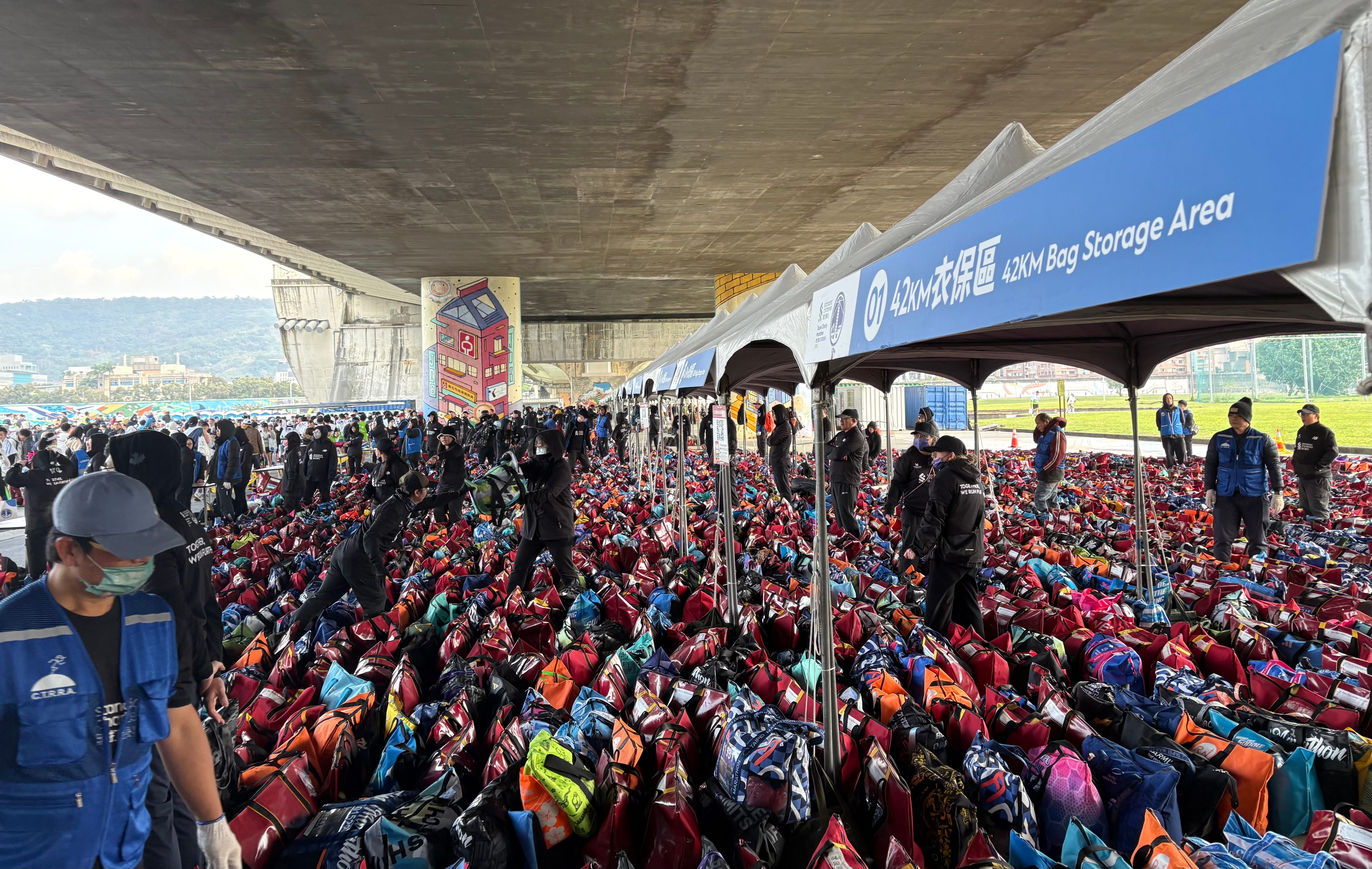
It took a while for me to locate the porta-potties and when I found some, the lines were very long. So I decided to skip that part of the pre-race ritual. But I did, conversely, take advantage of the well-stocked pre-race water station, something you can’t always count on at race starts.
What was missing at the race start was any type of corral system to separate runners of different speeds and meter the flow onto the course. Maybe there was an area right at the front reserved for elite runners. But, that aside, runners just gathered in a huge crowd and then — when the race started — pressed forward to the start line with no waves to ensure spacing.
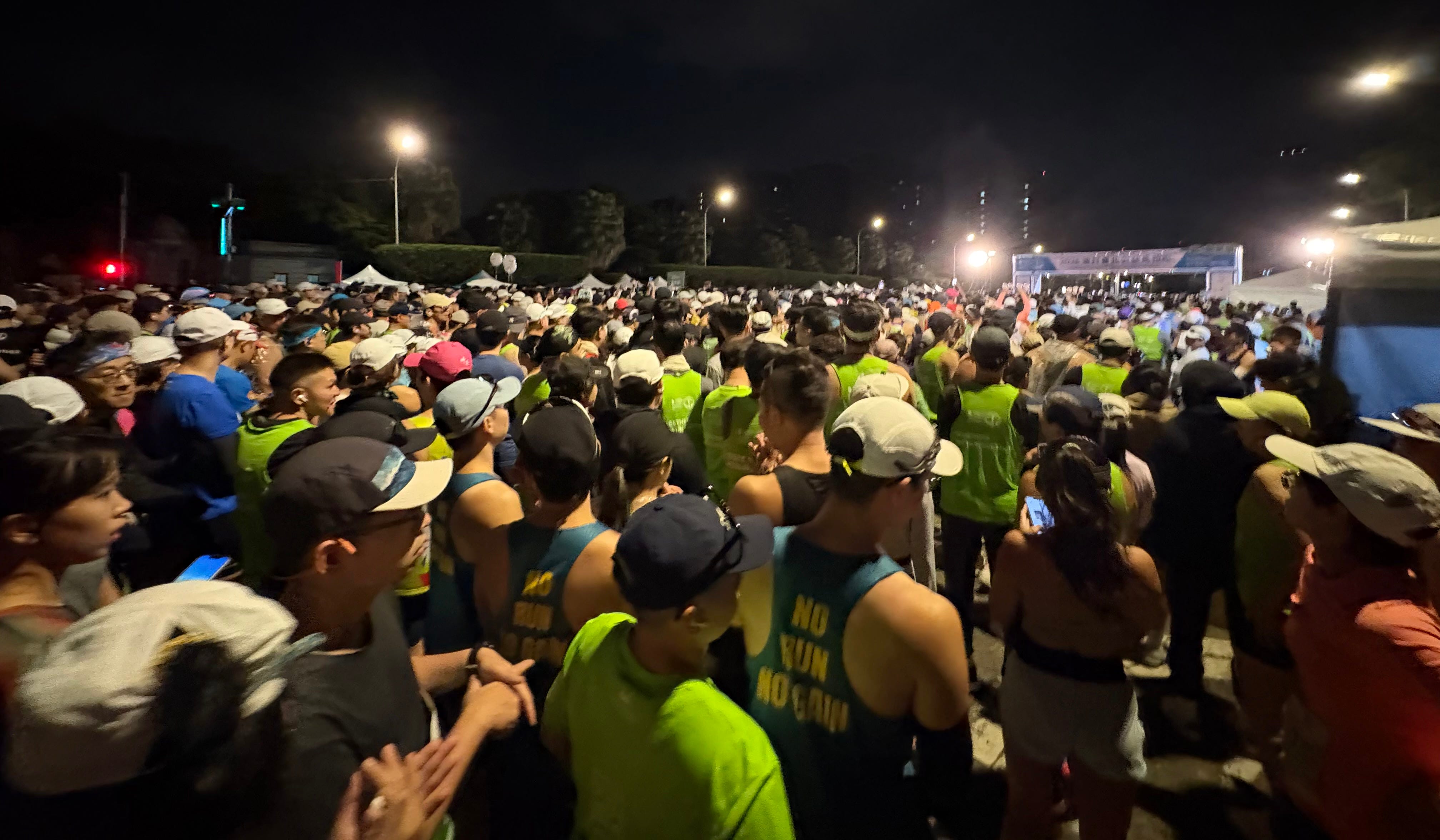
On the plus side, this meant there wasn’t much waiting. I wasn’t particularly close to the front, but I started running just a few minutes after gun time. They certainly got runners out quickly. In fact, they had got the entire full marathon — with somewhere in the region of 7,000-9,000 runners — out in very short order just before. That race began at 5:30 a.m., only 15 minutes before the half. They seem to have launched the entire full-marathon field in well under 10 minutes.
However, on the minus side, the unmetered flood of runners entering the course made for very crowded conditions in the first mile of the half. I wasn’t aiming for a fast race. But in the first mile, my pace was 11 minutes 32 seconds — slower even than my modest target. The density of the crowd meant that no one was moving faster in my part of the pack. And in the first half of that split, the pack moved even slower.
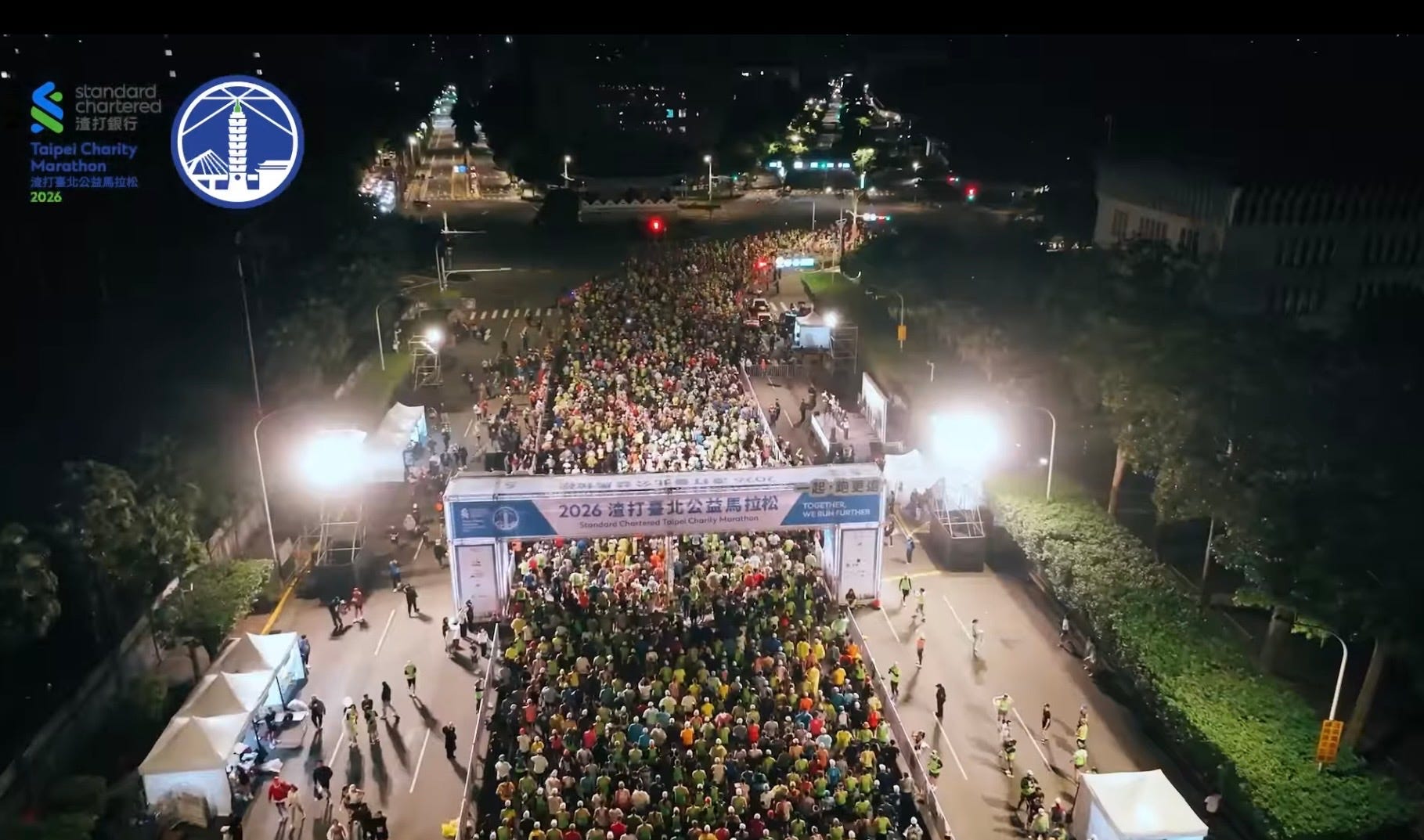
None of this really bothered me. It gave me a good excuse to be slow. And going out too fast can be a mistake in an endurance event. But the course is one that could lend itself to PRs. It is overall quite flat. And the race takes place at a time of year when temperatures can be ideal for running. So I imagine some runners might have been frustrated by the slow-moving pack until it started to spread out in the second mile and beyond. There is nothing inevitable about this with large races. I have run plenty of other races with comparable numbers where serious congestion was avoided, albeit at the price of more drawn-out starts.
The course is, overall, a point-to-point one, but with some out-and-back segments along the way. It starts in the heart of the city, close to the Chiang Kai-shek Memorial and Presidential Palace. It ends in a riverside park not too far from the city’s close-in, second airport.
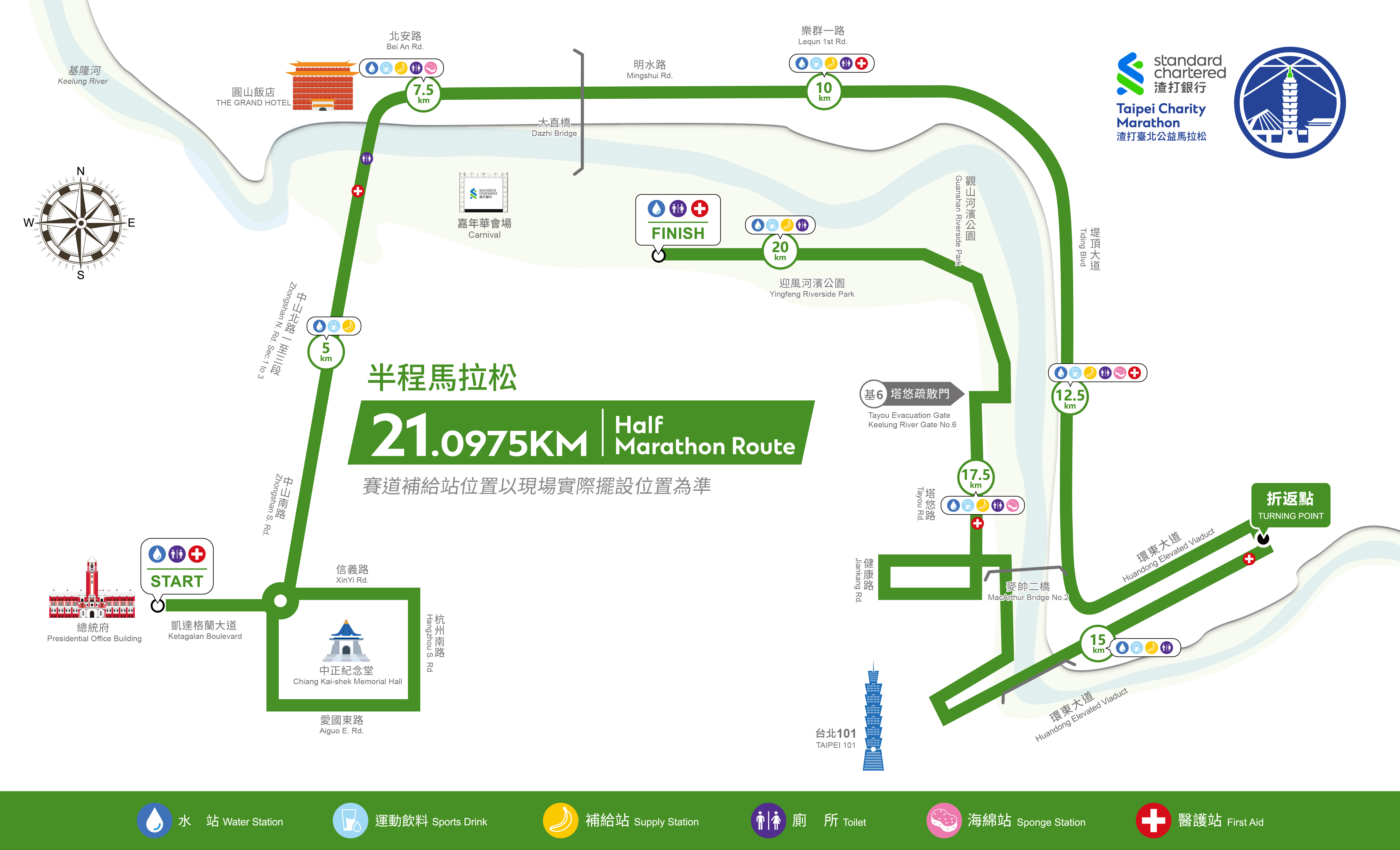
Taipei is a fantastic, world-class city in many ways, but it is not, candidly, an especially beautiful one at a street level. There seemed to be a lot of gray along the course. And there wasn’t a great deal of crowd support or course entertainment. So I wouldn’t say this half marathon follows an amazing course. But there’s enough to remind you of where you are. I never felt bored. There were plenty of water stations, all well organized.
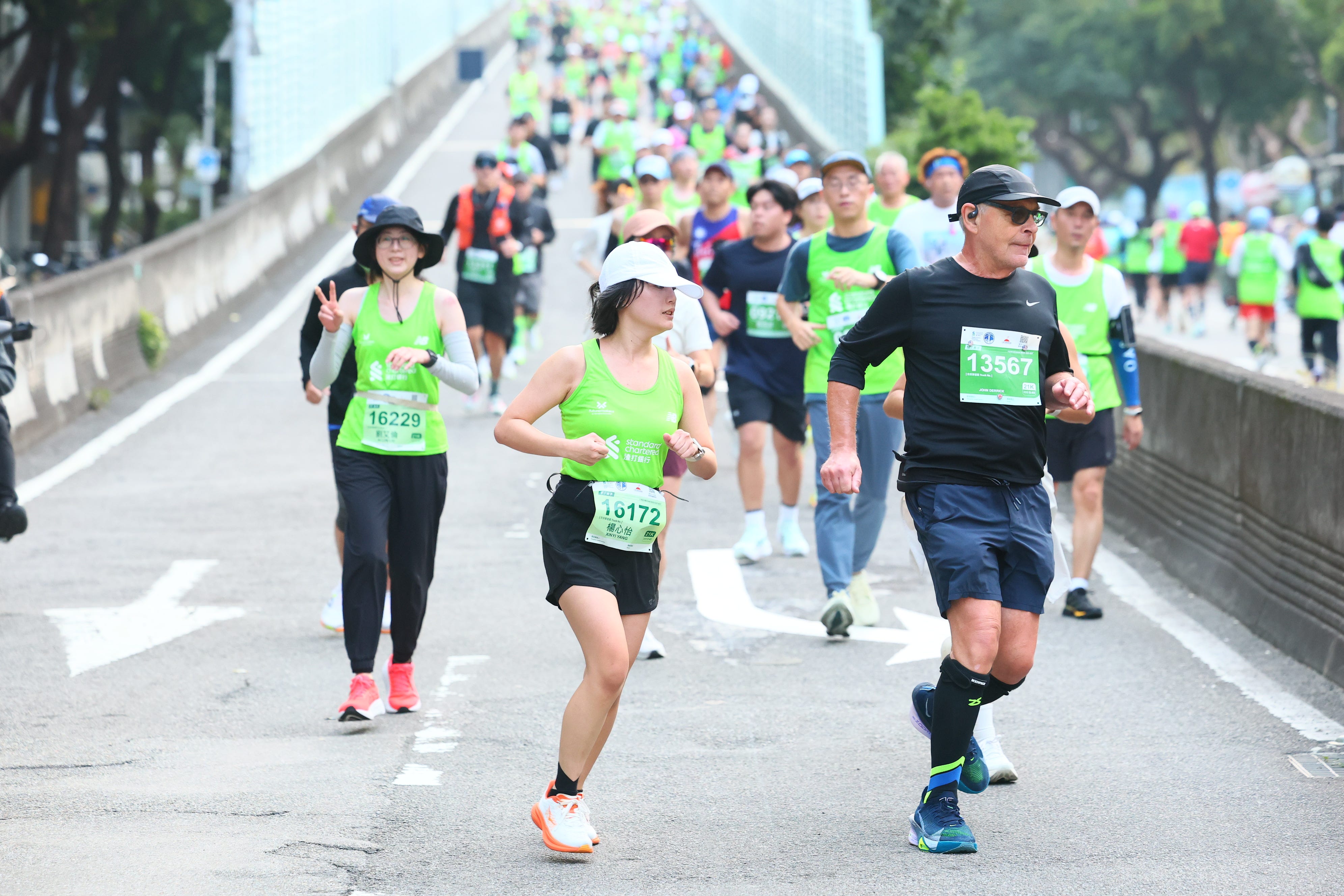
There was also a generous amount of nutrition at the end. And to make up for the absence of a race shirt, they did give out towels and tote bags. So I felt satisfied in the swag department.
I had some anxiety about how easy it would be to get back from the finish to where I was staying. I don’t feel great about getting into an Uber in sweat-soaked running clothes. (I sweat a lot when running.) And there wasn’t a metro station close by. Fortunately, it turned out that the race organizers had laid on a large fleet of buses to take runners to various places for free. It was a bit difficult to figure out where they were all headed, but I stumbled on one going to a station close to the start line from where I was able to walk back to my hotel.
How my finisher’s medal became famous
I succeeded in my modest goal of running the whole thing, finishing in under two and a half hours, and recording relatively even splits. So I felt I had earned my finisher’s medal according to those criteria.
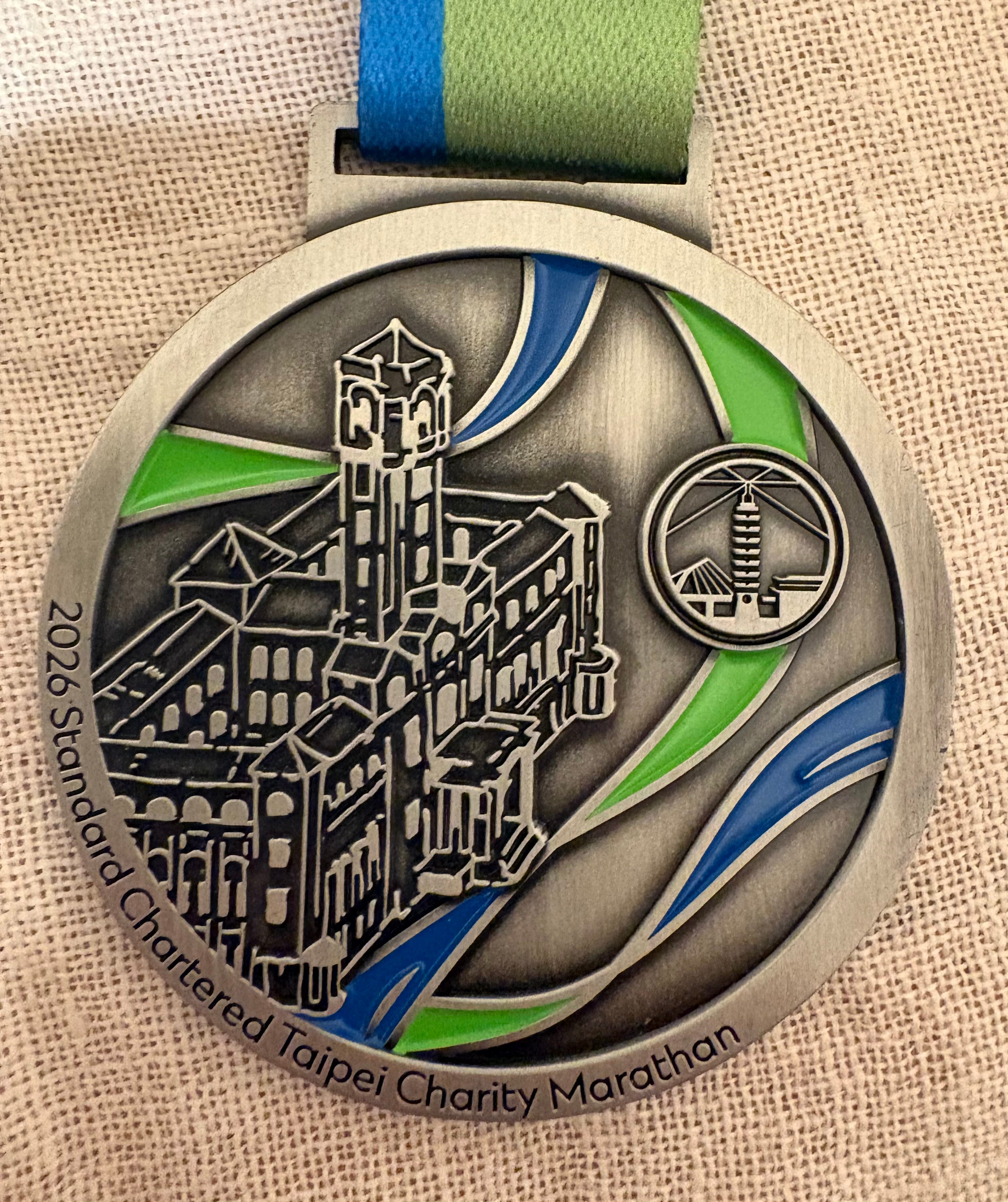
I mentioned earlier that the medal turned out to be a collector’s item. It actually got some regional press coverage. And the reason was a glaring typo. The medal spelled “marathon” as “marathan.”
The race organizers were reported to be very embarrassed. A few days later, indeed, I received an email from them — in English, actually — apologizing profusely and offering to send me a replacement with the error corrected. It was a nice gesture, but I did not take them up on it. I thought the flawed medal had character.
The medal glitch did make me wonder why they even used English. Nothing engraved on the medal was in Chinese. It’s odd, in a way, that English is used for certain purposes — not just in this instance, but all over the world — but not for others. What sorts of discussions go into deciding what gets to be in English and what doesn’t? Medals, apparently, need to be in English — the most international of all languages — perhaps so that those who receive them can hope for the widest recognition.
A short hike up Elephant Peak
I landed in Taipei around breakfast time on the Friday before the Sunday race. Since I was planning to fly out on the afternoon of the race, that meant that I had the better part of two days to explore Taipei. It’s a pretty walkable city and I covered a lot of ground on foot — I notched up 27,398 steps on the day I arrived, alone.
One distinctive thing about Taipei is that it has a lot of hiking very close in to the city. It reminded me of Cape Town in that respect (although the two cities don’t have much in common in others). The most famous close-in hike — Elephant Peak — is also the shortest. I did it — up and down — in around an hour. Some might call it a “walk,” more than a “hike.” But it’s quite steep with a lot of steps, so it’s a reasonable work-out — especially if you do it only hours after getting off a transpacific flight in a middle seat in the back of the plane (of which more shortly).
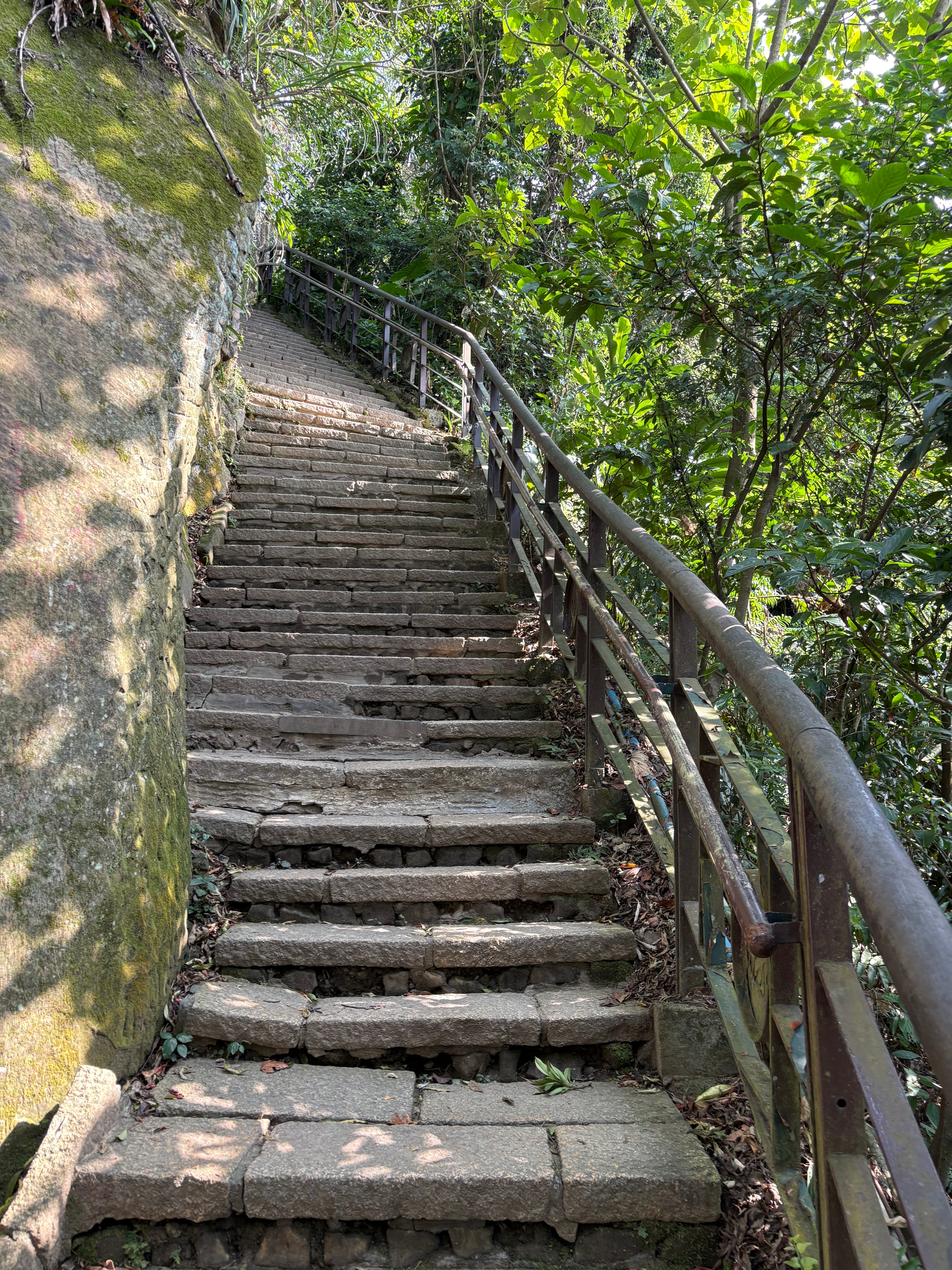
The trailhead is about a 15-minute walk from the Xiangshan metro station. Once you are on the trail, there are viewing platforms along the way, with great panoramas of the city, including the iconic 101 Tower, which for a period of six years from 2004 to 2010 held the crown as the tallest building in the world.
If you’re not vigilant, it’s quite easy to miss the spot that actually defines Elephant Peak itself, as this is really just the gateway to trails going much further as opposed to some obvious summit. After reaching the peak, you can either go back down the way you ascended or continue along the path and look for ways down. I did the latter and got a bit lost, but so long as you continue on a general downhill trajectory and vaguely in the right direction, you’ll be fine — even if you land in a place a little different from what you were expecting. This is not the wilderness.
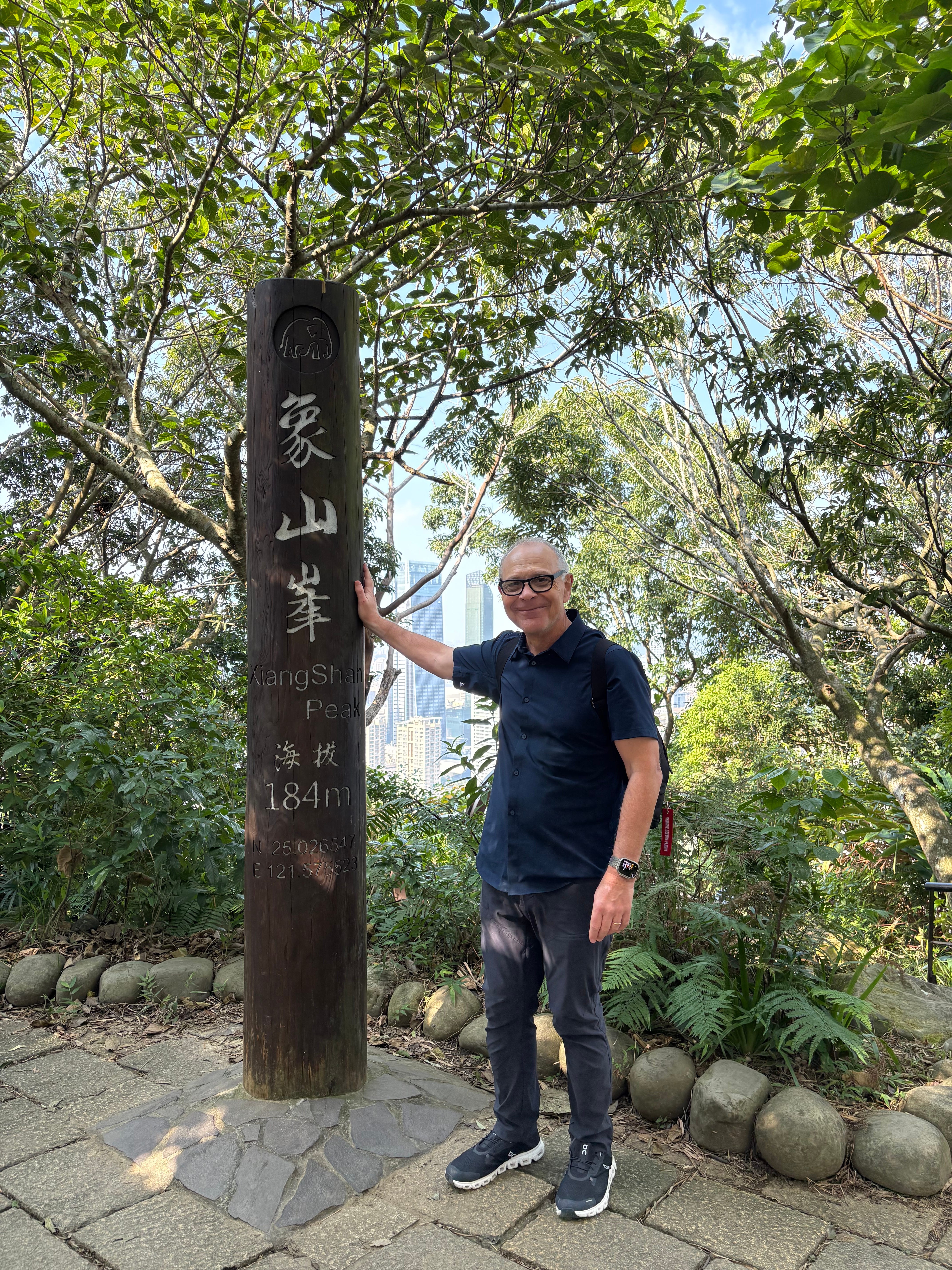
After the hike, I walked for about an hour or so through various non-touristy neighborhoods to the venue where packet pick-up for the race was taking place.
Night markets and 7-Elevens
Taipei has a strong food culture. Being on my own and focusing on a pre-race diet, I didn’t explore much of what it had to offer in the culinary department during my two-night stay in the city. I did, however, wander through Ningxia Night Market, packed with stalls cooking all manner of street food, including specialities such as “stinky tofu,” oyster omelets, and gua bao (braised pork belly in a steamed bun, also known as “Taiwanese hamburger”). There are a number of night markets like this in different parts of the city. I can imagine a fun Taipei visit with my wife involving hikes during the day and food adventures at night.


One place where Taipei residents often pick up prepared food is at 7-Eleven stores. Although you wouldn’t think it based on the reputation of the company’s U.S. stores, the takeaway food there is reportedly pretty good. There are around 7,000 7-Eleven stores in Taiwan, and a large number are in the capital. I think it would be no exaggeration to say that in the center of the city, you are rarely more than a five-minute walk away from one. I’ve noticed the same in Tokyo and Osaka. And the reason for this regional presence is that 7-Eleven is actually a Japanese company.
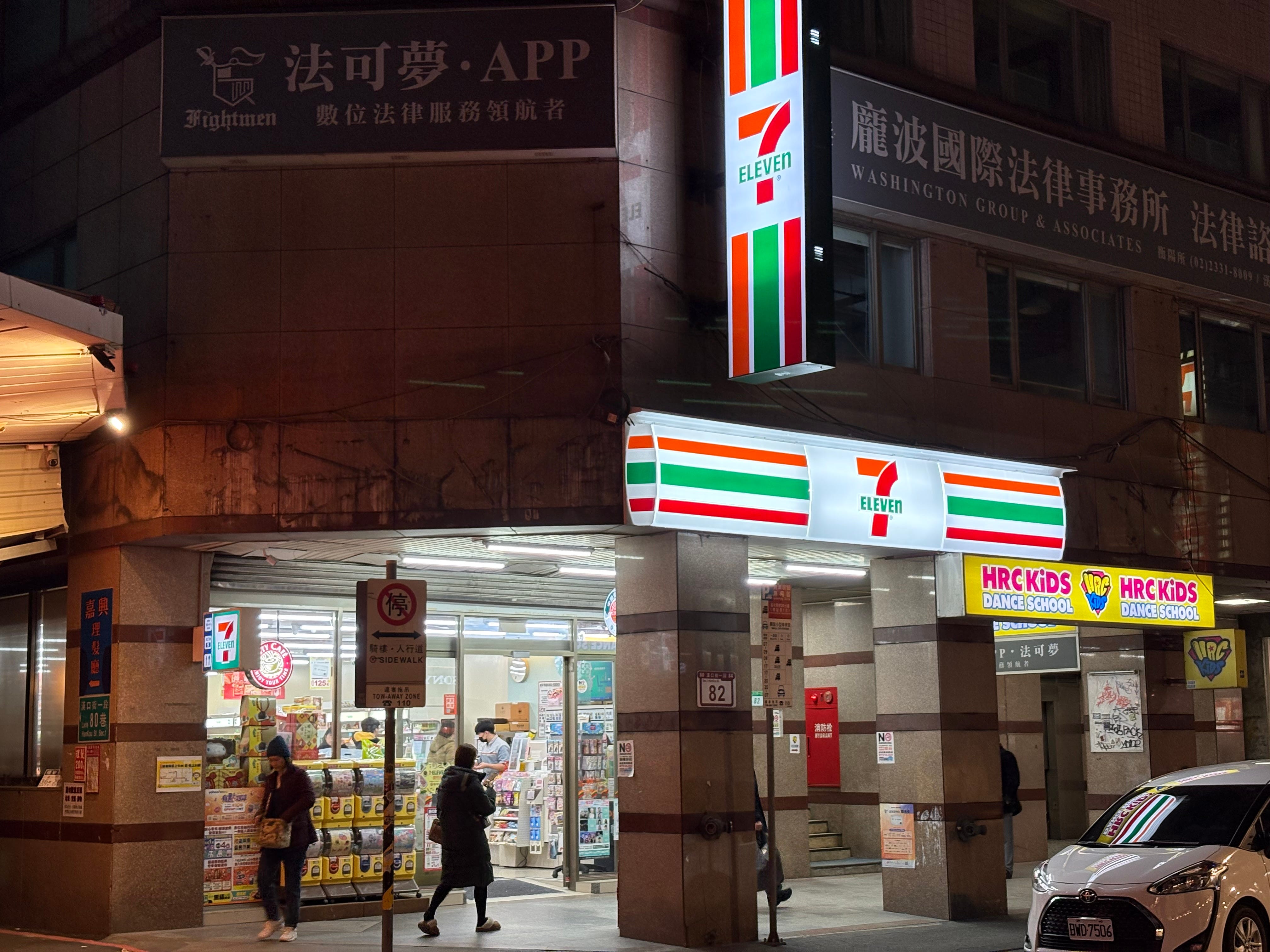
Its stores in Asia have a different feel from those in the U.S. They don’t have that slightly sketchy, gas-station vibe you often encounter in the U.S. Rather, they are wholesome neighborhood convenience stores used by local residents and commuters alike, and they manage to pack in an astonishing array of inventory into their crowded spaces. Another very similar chain with locations throughout the city — also Japanese — is FamilyMart.
While night markets and 7-Elevens might seem very different concepts, they are both very much part of the fabric of Taipei.
Taipei travel logistics on the ground
I didn’t take taxis or Ubers in Taipei. I managed to go everywhere by public transport and on foot. The train from the airport to the city center is excellent, incidentally, although it can get crowded. Just make sure you get on the express, which makes only a few stops, not on the commuter one that makes a lot more. You can tap-to-pay using Apple Pay or similar without getting a special app.
I stayed at the citizenM hotel. I’d chosen it as I wanted to be within a 20-minute walk of both the race start and the main railway station. citizenM — yes, it has a small “c” — started out as a German chain, but is now part of Marriott. It’s known for its ultra-compact, but well-designed rooms and modern, high-tech vibe. Although the citizenM rooms are small — think ship-cabin small — the beds are actually quite large. The properties all have comfortable public areas for sitting and working as well as a bar and a limited-menu restaurant.
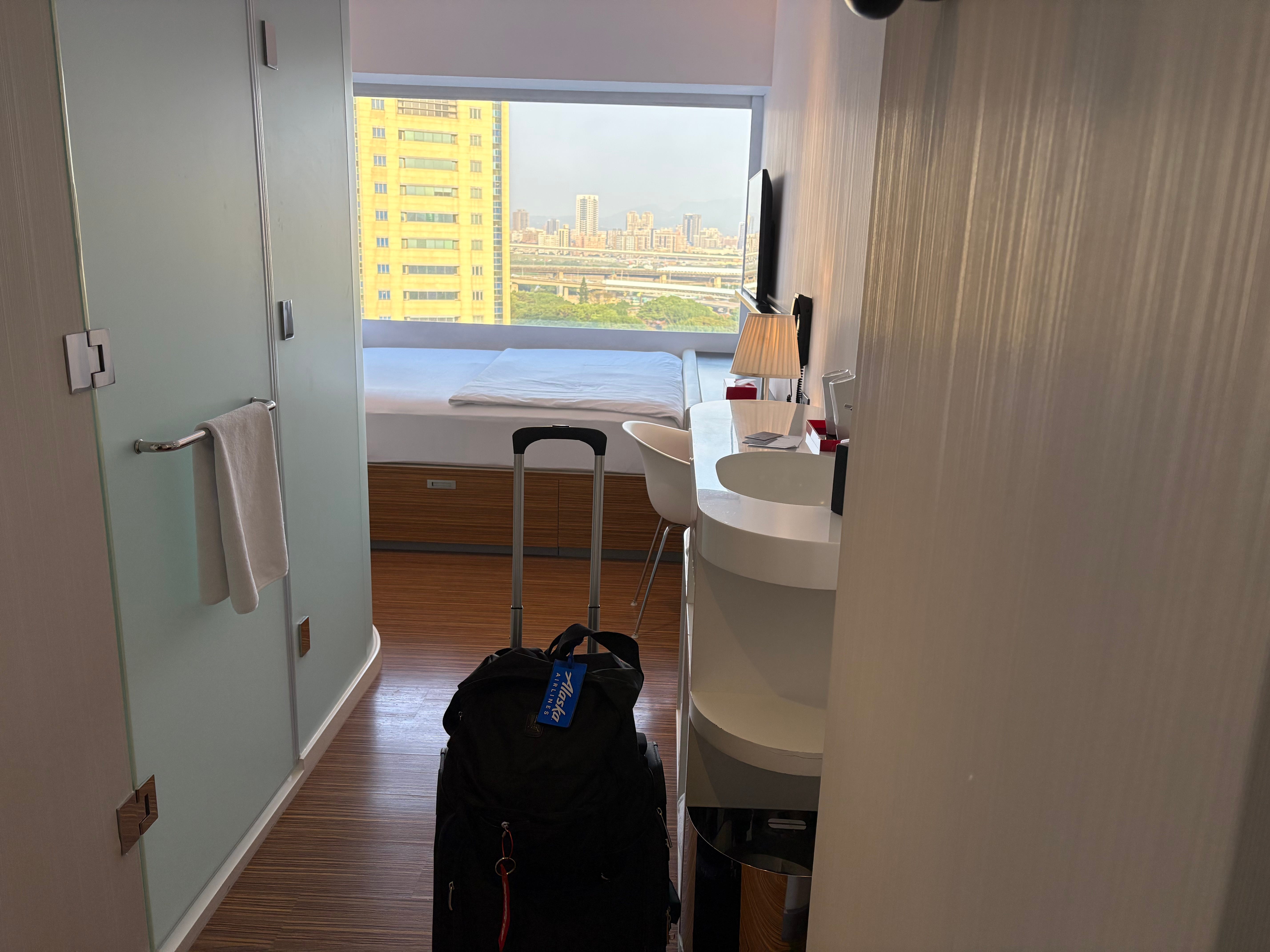
I’d previously stayed in citizenM properties in Los Angeles and San Francisco, and my room in Taipei — as well as the common parts — could easily have been copied and pasted from either of those. This is a very formulaic hotel brand. I may have missed out on some local Taipei atmosphere for that reason. But I was happy with my choice. Small rooms don’t bother me in the least if I’m traveling on my own.
The outbound journey to Taipei: a cautionary tale of a wasted non-rev lie-flat
For those who are not already regular readers of this blog, I fly standby — or “non-rev” — using travel benefits from my wife’s work for an airline. I wouldn’t count this trip as an epic win on the non-rev standby front. But it could certainly have been worse. Here’s what happened….
Because of a work commitment, I couldn’t leave my hometown of Santa Barbara, California, until late afternoon on the Wednesday before the Sunday race. California to Taipei is a very high-traffic route. There were five flights going out from San Francisco, alone, late that night, all within the space of an hour, and all of which would put me in early on the Friday morning.
I was reluctant to get on a Thursday morning flight, as that would cut into the limited time I had to explore Taipei. So it was a matter of picking the best of the Wednesday night options.
There are three Taiwanese airlines that fly from the U.S.A. to Taipei: China Airlines, EVA, and Starlux. But I set my sights on United out of SFO, as it was the only option where I qualified for standby Business Class and the loads weren’t looking too bad. As I got ready to leave home, I found myself wondering whether to pack pajamas for the trip or to rely on the Polaris ones I’d hope to be given on board United. And I debated whether to skip dinner on the ground as I’d have a decent meal on the plane. In other words, I felt hopeful about getting into a lie-flat pod. There were a dozen open ones upfront and, if all else failed, enough seats at the back. What’s more, there were only five other standbys. I was looking forward to the flight.
But by the time I landed in SFO, there had been a massive change. The number of Business Class seats had gone down to just a few. Worse, there were now no less than 27 other standbys — all United employees, and, therefore, with higher priority than me (my wife flies for a different airline). Not only did my chance of getting into Business seem hopeless, but there was a very real risk I wouldn’t get on the flight at all as there were more standbys than open seats in any class. And if I did get on, it would surely be a middle in the back.
That can happen with standby travel — passenger loads and standby lists can change rapidly, very often for no discernible reason, except for the tendency of airline employees in hub cities to swarm when premium seats seem to be available.
So I made a decision to abandon United and try instead for Starlux, which seemed the best of the other options. I had up-to-date load information and it seemed virtually certain I’d get on, even though it would be in the back of the plane. Starlux doesn’t allow online check-in for non-revs. I didn’t relish the prospect of exiting security and going to the check-in counters. So I remained in the United Club until when I figured the Starlux gate would open and then headed over to check in there. (I could legitimately use the Club having flown in on United from Santa Barbara, even though I was no longer planning on flying outbound on the airline.)
When I got to the Starlux gate, they accepted me on the flight immediately. But all they could offer me was a middle seat. It was not a total disaster, however. It was a middle in the first row of economy on the bulkhead with extra room in front — the best middle seat on the plane.
But there is a twist in the tale…. The United and Starlux flights went out within 10 minutes of each other soon after 11 p.m. And I couldn’t resist looking at the United app to see how the UA flight had played out. United’s app is industry-leading in terms of the information it gives, and — unlike just about all other airline apps — it continues to display the final seating chart while an aircraft is in flight.
I did not expect to see what I saw. I was shocked and amazed to find out that the United flight had not only gone out with empty seats in the back — including at least one aisle — but that there were two empty ones in Business. There must have been a massive no-show or desertion rate among standbys, as well as, perhaps, some revenue no-shows. Many of those standbys probably didn’t relish standing by at the gate that late at night and then not getting on. The fact that United’s flight to Taipei the following morning was wide open likely contributed to this.
The moral is the age-old one about standby travel — it isn’t over until the door is closed and, indeed, the aircraft has pushed back.
I still think I made a rational decision based on the information available, as I wanted to be sure of getting on a plane to Taipei that night. And standing by for both United and Starlux until the last minute was not a practical option since they were more or less at opposite ends of the large airport.
But it was kind of annoying. So I suppose another moral is that if you don’t want to be annoyed, don’t look back once you have made your choice. That might go for life in general.
Starlux in brief
The upside of this tale is that I got to fly on a new airline. I’ll keep my comments about Starlux brief, as this post is getting quite long. (“You think?”) Suffice it to say that it is a newish airline that only began operations early in 2020, weeks before the pandemic tore into global aviation. Today, it flies to five destinations in the western United States and numerous places in Asia. It isn’t part of any alliance, but it does code share with Alaska. I wouldn’t be surprised if, one day, it becomes part of Oneworld.
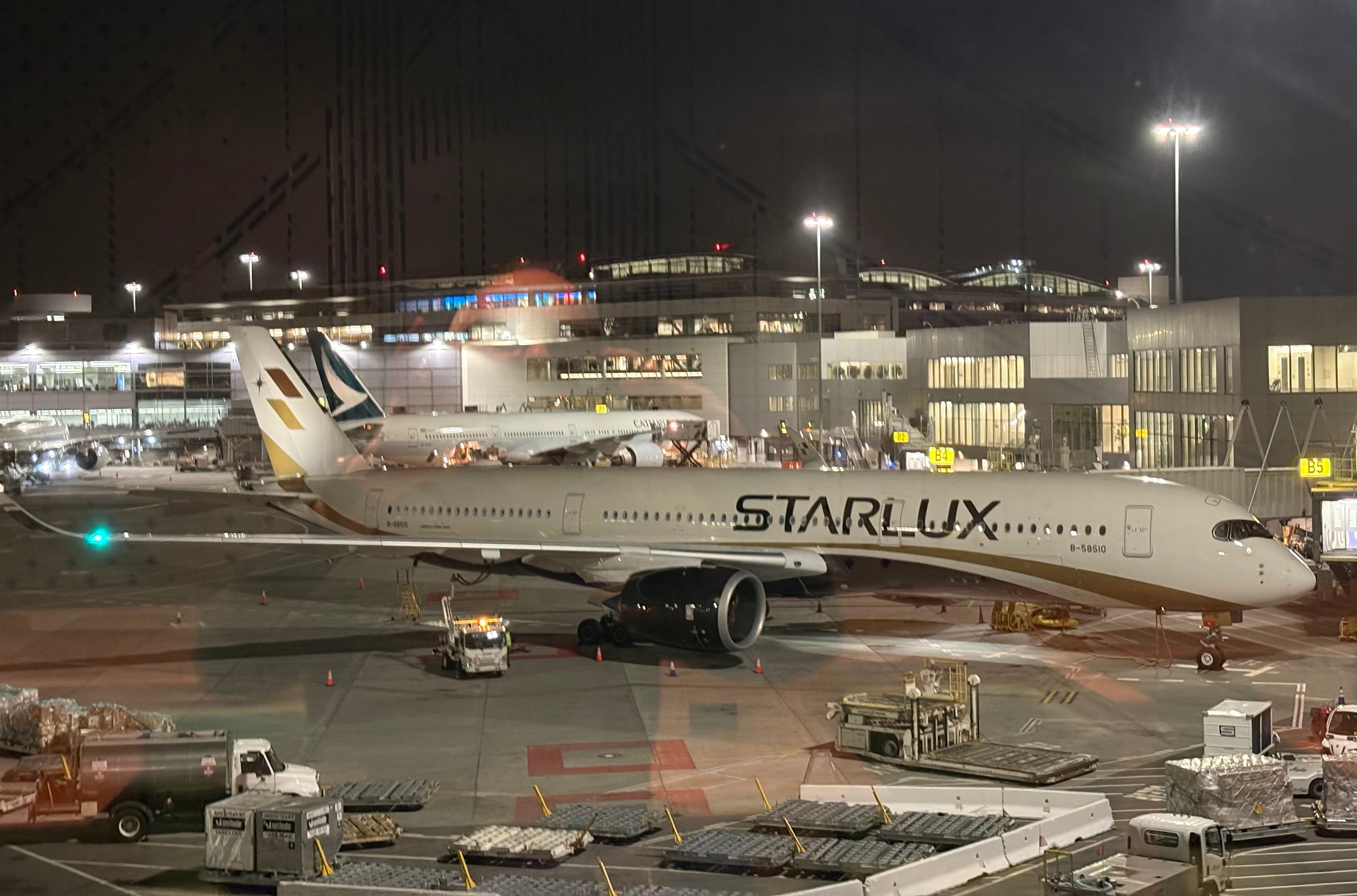
One of the nice things about new airlines is that they tend to have very new planes. My flight was fine, the middle seat notwithstanding. It was one of those odd situations where a couple had the window and aisle, but decided to keep those seats even with a stranger in the middle. I slept most of the way. I liked Starlux. My impression is that it is to airlines what the Toyota Prius is to cars. (And I say that as a Prius Prime driver.) Functional, almost appliance-like, not charismatic — but hard to fault. I’d definitely fly on them again.
Non-rev return: the last standby standing
Returning the following Sunday immediately after the race, the loads on all airlines were pretty dire. I had real concerns about not getting out. I thought of going through Tokyo, but the flights to Narita and Haneda were even worse. Hong Kong, Seoul, and other transit points didn’t look much better. I couldn’t even get loads for some of them, like Manila. I couldn’t delay my return by more than a day for work reasons and began to start looking at creative routes from Taipei to California, such as via Amsterdam or Dubai.
In the end, however, I found myself the only standby trying to get on United’s flight back to San Francisco that afternoon. The other standbys who had listed had all bailed. So this time — unlike the outbound — I was the last standby standing.
There is no standing by at the gate in Taipei, so I had to wait at check-in until the flight had closed. No lounge opportunities, sadly. The lead check-in agent could not have been kinder. The aircraft was weight-restricted for some reason — meaning not all seats could be filled — and the outcome seemed very uncertain. But at the very last moment, and after some phone calls, he gave me a window in Economy with an empty middle. So that was a decent outcome. ✈️ 🏃
Return to the Table of Contents
Feedback? Email: flyrun@substack.com
If you’ve stumbled across this post, please consider subscribing to this blog using the button below. It covers the intersection of running, travel, and aviation. Subscribing costs nothing (and never will). You’ll get an email every couple of months or so with new posts. Please also share this post with anyone you think might be interested. You can see an archive of previous posts here.