
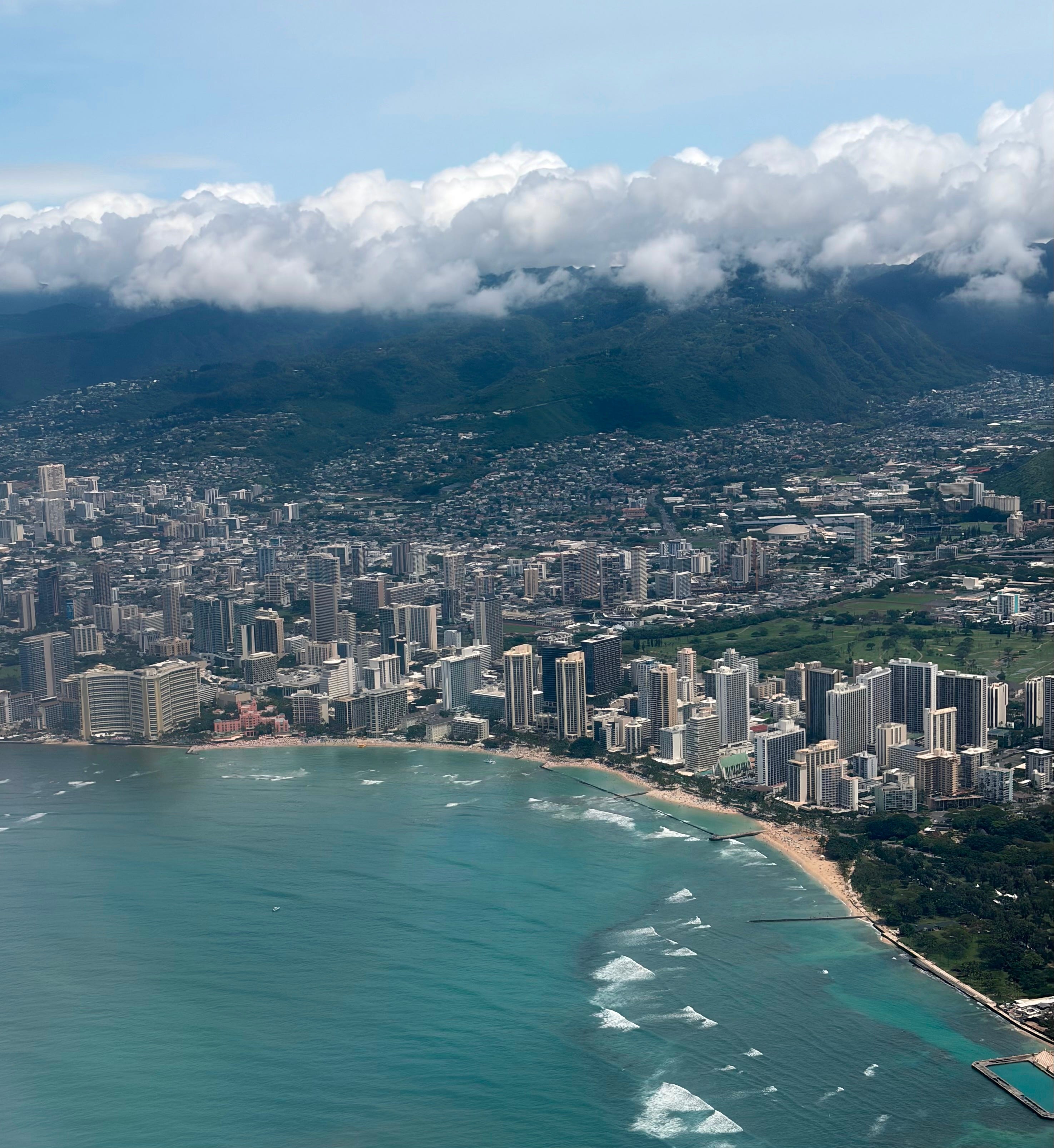
In this post: A new race option in Honolulu, why I don’t stop, a 10K around Tokyo’s Imperial Palace before a bullet train detour, and more.
Table of Contents
Introducing the Honolulu Hapalua
I’d had my eyes on running the Honolulu Hapalua Half Marathon for a while. It’s the largest race in the mid-Pacific. The race doesn’t sell out in advance, which is increasingly rare for a landmark event in a major city, especially if it’s a magnet for out-of-town runners. So it’s a good choice if you find it hard to commit far in advance.
The overall vibe of the race is to be inclusive. No runner left behind. Not only do they leave the registration door open until the eve-of-race expo, but they promise to leave the finish line open until the last participant has crossed. Partly for that reason, the race attracts people of a wide range of athleticism — including quite a large number who walk all or part.
With no compelling incentive to sign up early, I left the decision until quite late. Yes, registration fees can be lower with most races if you book early. But considering the risk of not being able to take part for one reason or another, the frequent racer is — on an actuarial basis — probably better off booking later rather than sooner when capacity is not an issue.
But as race day drew near, I didn’t quite have it in me to do the half. It’s not an easy race because of the climate and a hilly portion toward the end as the course heads in the direction of Diamond Head, the volcanic cone overlooking Honolulu. My half-marathon performance has lately been well off its peak, and I didn’t want to do this race and end up walking those hills. From what I’ve heard, a very large number of participants do end up doing just that.
My “don’t stop” strategy with running
I get it that interval walking can be a perfectly legitimate strategy in distance running. But as someone for whom running did not come naturally or early in life, I find that if I slow to a walk, I lose momentum for the remainder of the race. Rather than recharging my physical energy, walking saps my mental stamina.
If I had to encapsulate my personal running strategy into two words, it would be this: “Don’t Stop.” That goes both for forward running motion on any given run, and also for my espousal of the activity in general.
And, yes, I get it that stopping is sometimes advisable, such as when you don’t feel right. Blah, blah, blah. My point is a more general one, not a literal advisement never to stop — or slow to a walk — when running. Trust me, I do stop when necessary. It’s just that this is not part of the plan when it happens. It’s like an aircraft that has to divert. It doesn’t lead to the intended outcome. But that’s just me.
Why Iki in Waikiki?
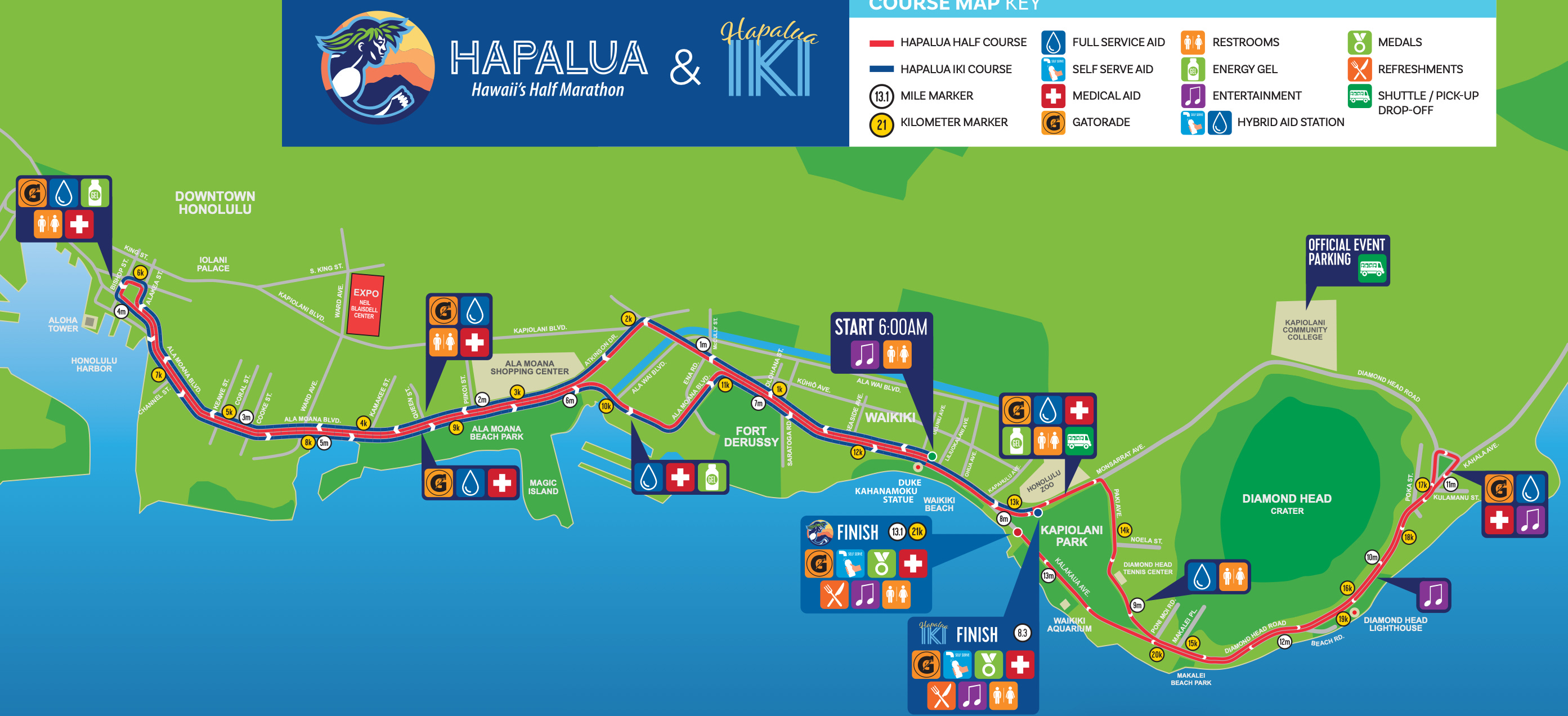
In 2026, however, the organizers of the Hapalua event introduced a new variant, an 8.3-mile one called the Hapalua Iki. This follows the same course as the half marathon, but breaks off to an early finish line shortly before the uphill begins. So I decided to do that.
The Iki runners still finish in the same place as the half runners. This is because the last 4.8 miles of the half course — the part with the hills — is an out-and-back segment that takes the half marathoners back to where Iki runners break off.
An 8.3-mile distance is, of course, a nonstandard one. There’s a reason why most races follow standard distances, and that is that they enable comparisons. But the good news is that if you run the Iki for the first time, you will almost certainly achieve a PR for a race of that distance.
The Hapalua experience
The Hapalua is a large race. In 2026, there were 9,153 finishers in the half. Of those, close to 3,000 finished in over three hours — underscoring that, although there are fast runners in the event, it is one in which people of a wide range of abilities can take part. The Iki is much smaller than the half. In the 2026 inaugural Iki, there were 896 finishers. The fact that I finished in the top third overall — not just in my age group — speaks more to the overall field than to my prowess on the day.
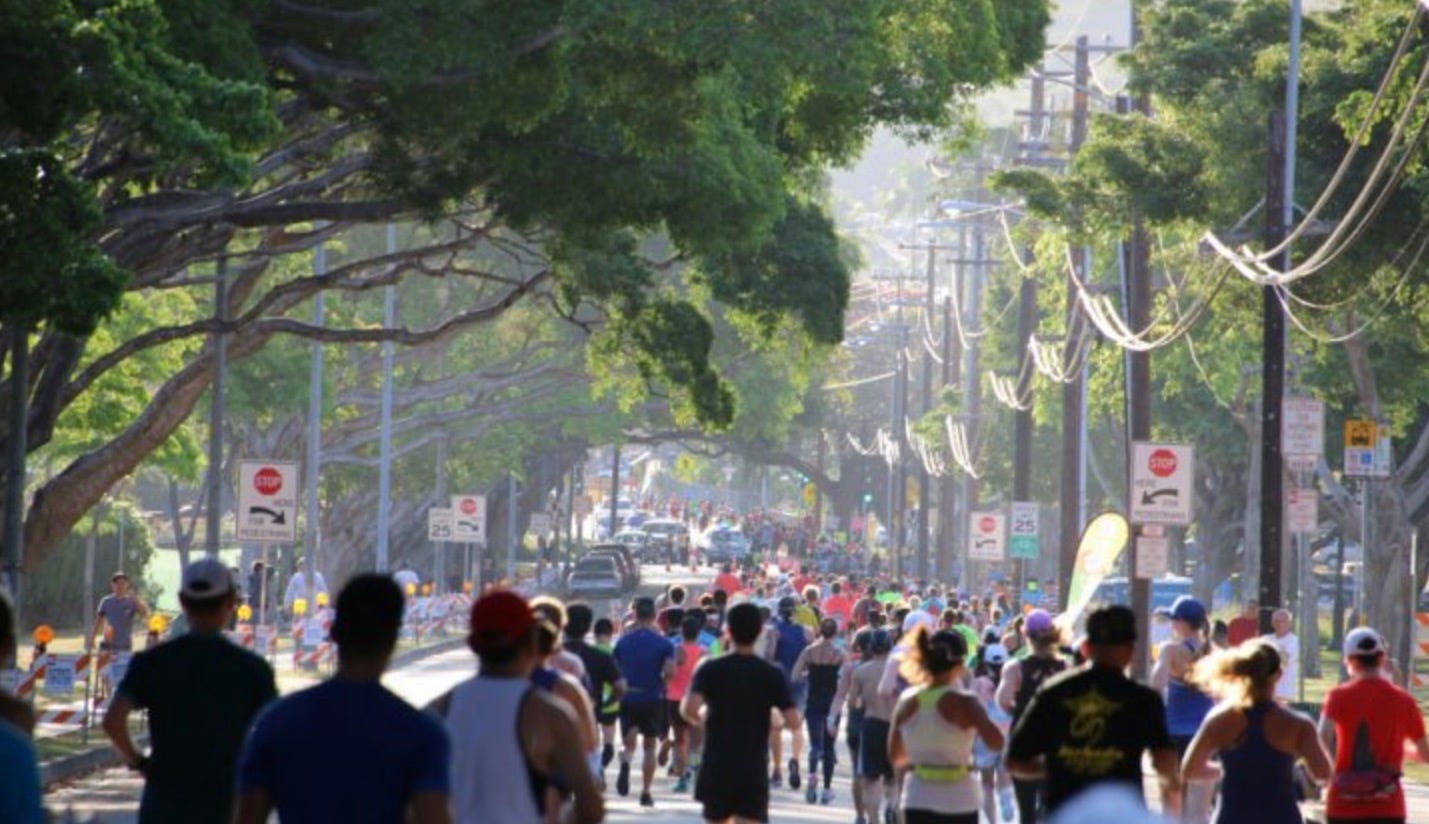
There were heavy rains in the week leading up to the 2026 Hapalua, with flooding in parts of the islands. And, after a brief respite late in the week, the forecast called for rain to resume on the morning of the event.
Running in the rain in cold weather can be a miserable experience. I remember feeling near hypothermic at the end of the Boston Half Marathon some years ago. But it’s not necessarily so bad in warm weather. I brought a disposable poncho on my trip to Honolulu, although only to wear at the race start. If you run while wearing a poncho, you can get pretty hot after a mile or so. I learned that during the Tokyo Legacy Half Marathon a few years ago. Also, getting wet is far from the end of the world. It can be quite refreshing, in fact. Sometimes, indeed, I pour cups of water over my head at hydration stops during warm-weather races.
As it turned out, the rain never actually happened that morning — even though the forecast called for it right up until the start. But that actually made conditions harder. There was so much humidity in the air, with water begging to be let out, that a downpour would have been a relief. The humidity with the temperature in the seventies meant that even an 8.3-mile event over a relatively flat course was not easy.
Iki runners start at the same time as those in the half. Until you get to the 8.3-mile turn-off, there is no difference in the race experience whatsoever. Other than the color of your bib, there is nothing to mark you out as an Iki person.
The course starts on Kalākaua Avenue — right on Waikiki Beach — and then heads west/northwest toward downtown Honolulu before turning around just before the four-mile mark to head back toward the start. So this part is largely an out-and-back, but there are some deviations.
After you run back past where you started, you continue for a half mile or so before you get to the Iki turn-off point at Kapiolani Park where the overall event ends. And the half-marathon runners continue on for their gnarly hilly loop for the remainder of the course (although since that segment ends where it began, it contains as much downhill as uphill).
Other than right at the start at Waikiki Beach, and then for the final segment passing by the start as you approach the finish less than a half mile away, you barely see the ocean while running the Iki. So this is primarily an urban race with a modest side of ocean, rather than the converse. I don’t consider that a drawback. Honolulu is not simply a beach destination. It is a vibrant metropolis. And this course shows you a slice of the real city. If you want to run a race where the ocean is in your face for considerable periods, I can recommend a number of others (including my hometown half marathon).
Hapalua registration and packet pickup
Pricing for the Hapalua Iki runs from $85 to $125 depending on how far ahead you register (or $200 if you leave it for the expo). That’s a little less than the pre-expo pricing for the half, which runs from $95 to $145. The price includes quite a good running shirt and you also get a tote bag.
Packet pickup is at a mid-sized expo at an event center quite close to downtown and not too far from the westerly end of the course. Japan Airlines — a major sponsor — was very visible at the expo. There are a significant number of runners who fly in from Japan for the event.
Honolulu travel notes — and the lure of the cheap hotel
I do not know Honolulu well. I’ve changed planes at the airport a bunch of times. But I had only once before been into the city. That was on a micro-trip to hike up Diamond Head on New Year’s Eve in 2023 — the subject of one of my first-ever posts in this blog. I referred to that as a “day trip” to Honolulu, as I was in and out of the island on the same day without staying a night, welcoming in the New Year on a red-eye back to the mainland.
My two trips to Honolulu — the day trip and this one (on which I spent one night in the city) — make me want to spend more time there. Wandering around, you can momentarily forget you are in the U.S.A. One block can make you feel you are in some hard-to-specify Pacific country. But reaching the next, you can find yourself doing a double-take as you are reminded you are not.
Not surprisingly, the most touristy parts are the most “mainland.” Strolling along Kalākaua Avenue, close to Waikiki Beach and at the heart of the tourist area, reminded me of being in parts of Miami or Las Vegas.
There are some big resort hotels there. They would have been convenient for the race. But I wasn’t in the mood to put down $500+ a night (plus annoying “resort fee”) for something that would not even be all that special. All the more so as I would be out the door by 5:30 AM for the 6 AM race start and then headed to the airport soon after getting cleaned up.
Instead, I found a small place called the Waikiki Central Hotel, less than a couple of blocks from the beach — more or less behind the Hyatt Regency — and ideally situated for the race start. It was a simple place, but clean, and it cost only $140 a night (which is cheap by Honolulu standards). I would stay there again. The room was a reasonable size and it came with a kitchenette. It even had a small balcony (although fumes from a barbecue restaurant below limited the time I spent there). I probably wouldn’t pick this hotel for either a family vacation or a romantic getaway (not that I’d go to Waikiki for either of those purposes), but it suited me well for my solo trip to run the Hapalua Iki. And if you are in Waikiki on vacation and wanting to spend some time on the beach, they do loan out towels, chairs, and boogie boards, etc.
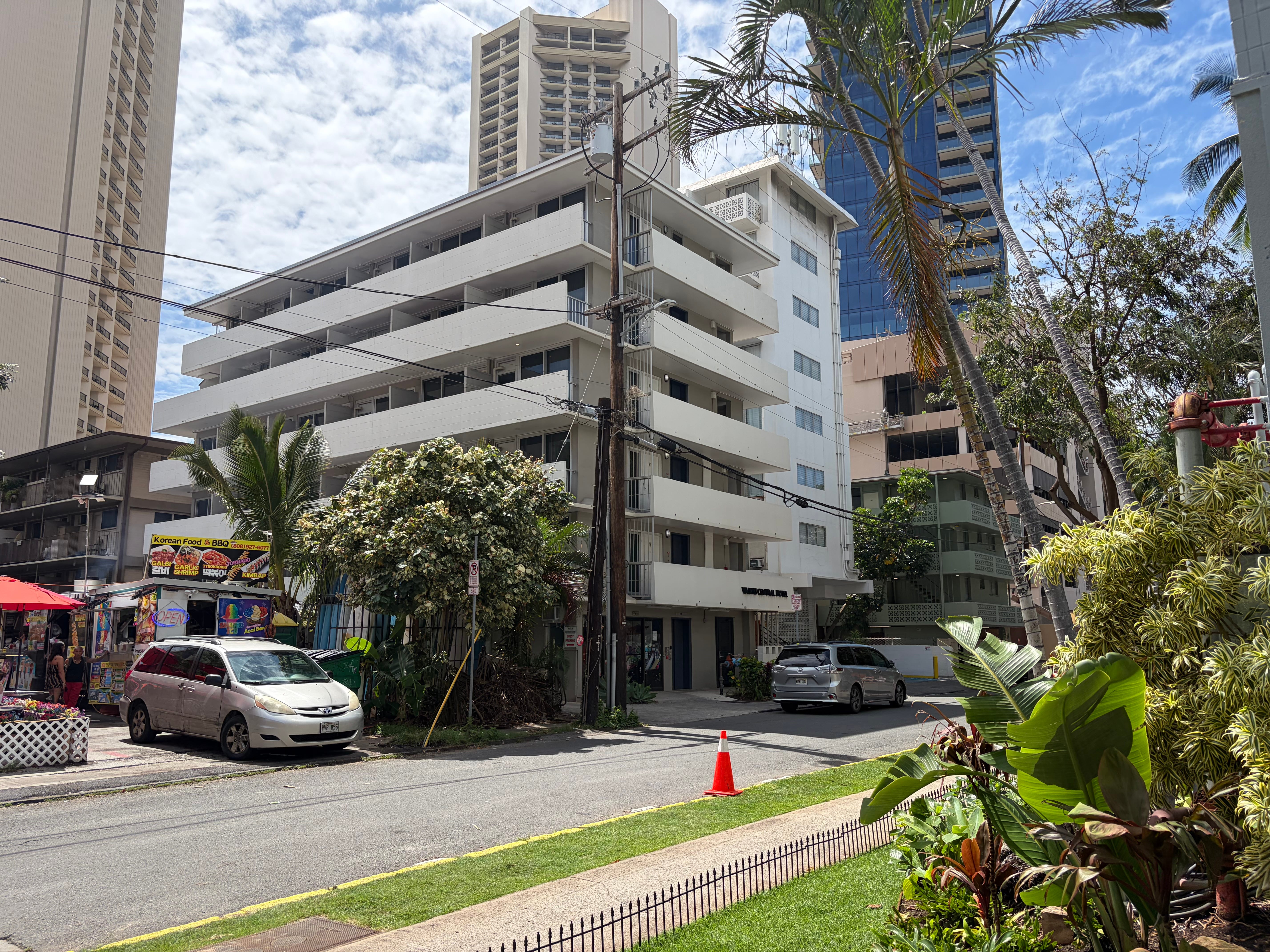
Why do I choose to stay in a place like the Waikiki Central Hotel on a trip like this? It’s not that I couldn’t afford a $500-a-night place. And I don’t think it’s because I’m “cheap” (although others might disagree). It is that I find enjoyment in seeking value when traveling and in keeping things in proportion. On a wholly elective, short trip on my own, I just don’t particularly want to stay in a fancy place. And doing so would be out of sync with the zen of flying on non-rev benefits.
Public transport in Honolulu
For much the same reasons, I took public buses throughout my short stay in Honolulu — from the airport to the expo, from there to my hotel, and then back to the airport the following day. Other than that, I walked (when I was not running).
Arriving, some of the buses go straight from the airport. But with others, you get on a train that takes you to where you can get on a bus for the rest of the way. The train doesn’t go all the way into downtown or Waikiki, so if you are going to where most visitors want to go, you’ll almost certainly need to use a bus either alone or in conjunction with the train.
You can’t tap-to-pay with your phone or a credit card on public transport in Honolulu. Instead, you need a HOLO card, a transit pass you can recharge at vending machines or with an app. I bought a 24-hour pass in a vending machine for $9.50 — but $2 of that was for the card itself, which I can use again when I’m next there, so the actual fare for my entire stay worked out to $7.50.

You can also pay with cash on buses, but not on the train from the airport if you need to take that. Cash can make it easier to get a senior discount if you qualify, if the driver thinks you look your age, as there are some hoops to go through in order to get senior rates on your Holo card. But the buses are cheap enough that even the most value-minded senior visitor might not want to stress too much about that.
The Honolulu buses seem fairly reliable in terms of when they come and go. They are clean. There is nothing not to like about them, unless you have a thing against buses in general. They can get crowded, but that is in the nature of public transport.
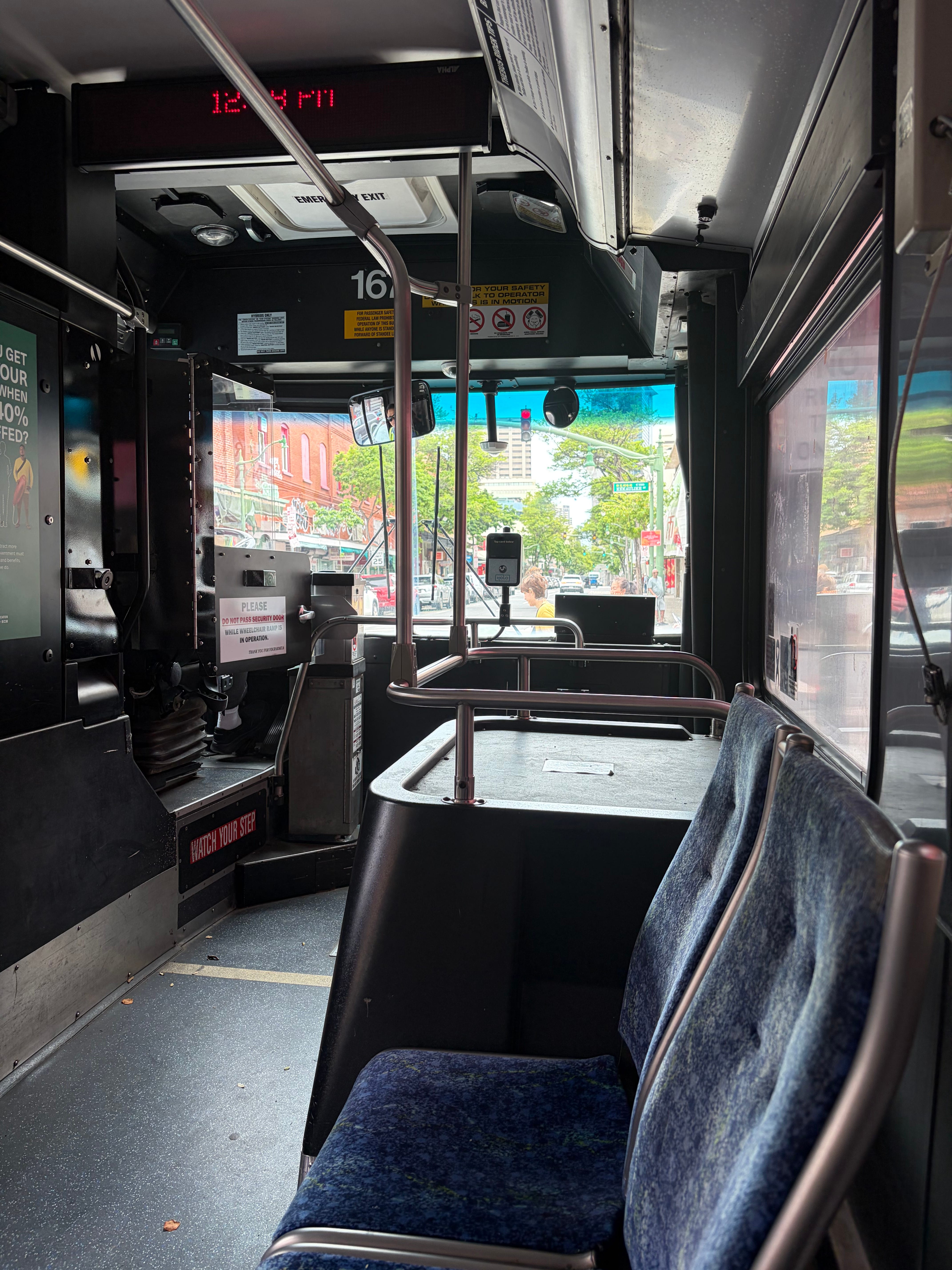
I did check the Uber/Lyft pricing. I would have paid about $35 to get from the airport to the expo and then I’d still have to get to my hotel. Returning the next day, it would have been around $100 from Waikiki to the airport — the fares were much higher then, perhaps because the rain was at last beginning to set in. So I felt good about my bus fare, which worked out to $3.50 a day.
If you’re on a short trip to some place, your opportunities to bond with the local life are inevitably constrained by time. Jumping into rental cars, taxis, or Ubers/Lyfts takes away from what time you have. So focusing on public transport from the moment you arrive makes sense when it is a practical option, as it certainly is in Honolulu.
The Japanese connection
The Japanese presence at the Hapalua race, which I mentioned earlier, is a reminder of the close connections between Honolulu and Japan, which started over 150 years with labor migration. Over 20 per cent of Hawaii’s population identifies as Japanese or part-Japanese. Elements of Japanese food, language, and culture are foundational to everyday life in Honolulu.
Another micro-trip to Tokyo: a 10K around the Imperial Palace
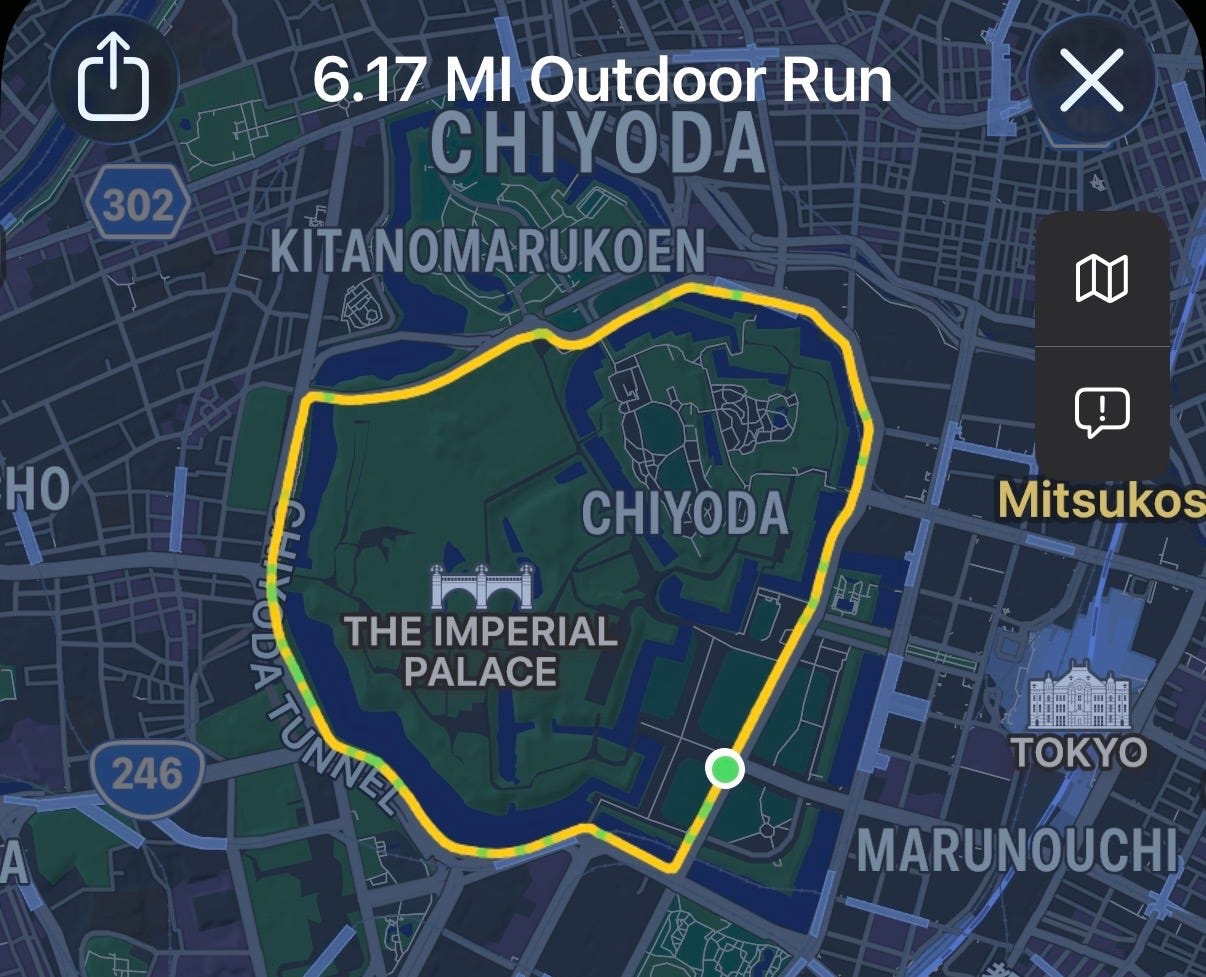
I was back in Honolulu about three weeks after the race, passing through the airport on a micro-trip to Japan — roughly 24 hours on the ground — with a mission to do a couple of laps around the Imperial Palace in Tokyo. That’s a little over six miles in total, or roughly a 10K. I’ve posted about that run before (and in more detail) — although last time, I did only one lap, or a 5K.
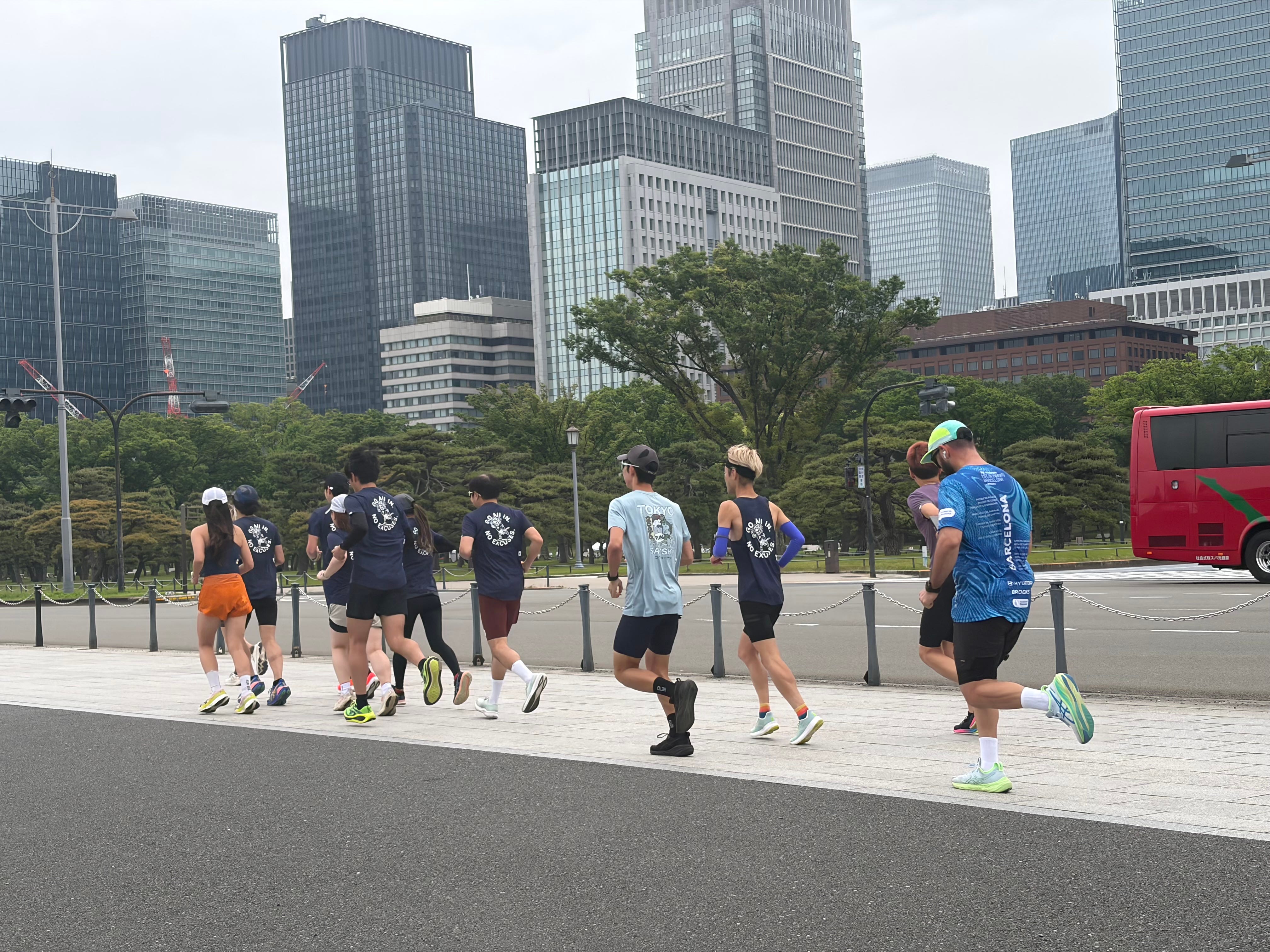
Unlike the last time, this was on a weekend. And, from a running atmosphere perspective, that’s a better time to go. There are a lot of runners out there on weekends, especially if you go early. Not so many that the path is at all crowded. But enough so you might feel a bit of the vibe of a race — the energy that comes with a large number of runners committed to the same course. Some run alone, some in groups. Either way, there is something about everyone being in the same loop that creates a sense of common purpose. That’s especially as, by convention, runners all go in the same anti-clockwise direction. It’s a fun thing for any runner to do in Tokyo.
Flight notes
All my flights on these two trips were on Alaska and Hawaiian. I experienced the ups and downs of non-rev standby travel, ranging from First Class between Los Angeles and Honolulu to not getting on a flight back to the mainland a few hours after the race (resulting in a scramble over to Maui to catch a redeye from there to San Francisco, but then having a row to myself).
There was a difference between the flights I took for the Iki run and those on the Tokyo trip. In the intervening period, the integration of the Alaska and Hawaiian operations that had begun following Alaska Air Group’s acquisition became complete.
So it’s now officially one airline, with two brands (as opposed to two operationally separate airlines under common ownership). And Hawaiian is now part of the oneworld alliance, as Alaska has been for several years.
So, for example, if you have oneworld Sapphire or higher status, and are traveling on Hawaiian internationally (or domestically if your status is from a non-U.S. airline), you can use the Sakura Lounge in Honolulu. That is the slightly offbeat (but agreeable) lounge that’s jointly operated by American and Japan Airlines (which is also accessible to Admirals Club members when traveling on Alaska or Hawaiian regardless of oneworld status). I’ve written about that lounge before (here). I used to praise the chicken curry that was its hallmark. On these two trips, there was beef curry instead, which wasn’t as good — so I hope that is only a temporary thing. Hawaiian’s existing lounge options in HNL are not great, but major upgrades are in the works.
The Honolulu airport continues to be among my favorites, even though it is not especially flashy or new. I like its breezy, semi-open walkways and the garden in the middle, which the lounge overlooks. Plus the overall mid-Pacific feeling. While many might consider going from the U.S. mainland to Asia via Honolulu to be a clunky way of getting there, I find it quite chill. Two shorter flights, with time to decompress in between.
Integration notwithstanding, the Alaska and Hawaiian brands still have their own distinct personalities — as well as liveries — and there remain differences in the products. For example, you still get the free rum punch in coach on Hawaiian flights between the islands and mainland, but not on Alaska ones. But Hawaiian is doing away with the free hot sandwich on most of those routes in favor of upgraded pay-for-food options (although they say this wasn’t because of the merger and it would have happened anyway).
On the other hand, you now get free alcoholic drinks in the premium seating in Hawaiian economy, as you already did on Alaska (not to be confused with the type of “Premium Economy” cabin with wider seats you get on many airlines’ long-haul flights — neither Alaska- nor Hawaiian-branded aircraft yet offer that, although it is coming).
It’s an exciting time for Alaska, as the airline recently started service from Seattle to London, Rome, and Reykjavik, in addition to the Tokyo and Seoul routes they launched from SEA last year. I’ll be writing more about those in future posts.
A quick trip on a bullet train
What prompted me to do the Tokyo trip — traveling standby as a non-rev — was noticing how wide-open the flights were on a particular day. It seemed a shame to let the seats go to waste. But, as one tends to, I focused less on the return than on the outbound. One thing at a time.
After arriving in Tokyo, the loads heading back weren’t looking that great. I probably would have gotten on, either through Honolulu or nonstop to the mainland, but there was a significant middle-seat-in-the-back risk. Loads from Osaka to Honolulu were looking good, however, as were the onward connections from there. So after my run, I decided to do something I’d been meaning to do when the opportunity arose — I took the “bullet train.”
The Tokaido Shinkansen — as it is more properly called — connects Tokyo and Osaka, covering roughly 320 miles in about two and a half hours on the fastest Nozomi services. Remarkably for a service like this, trains run as frequently as every few minutes during peak periods — in other words, with the frequency of a metropolitan subway service. I know of nowhere else in the world where high-speed, inter-city trains run like that.
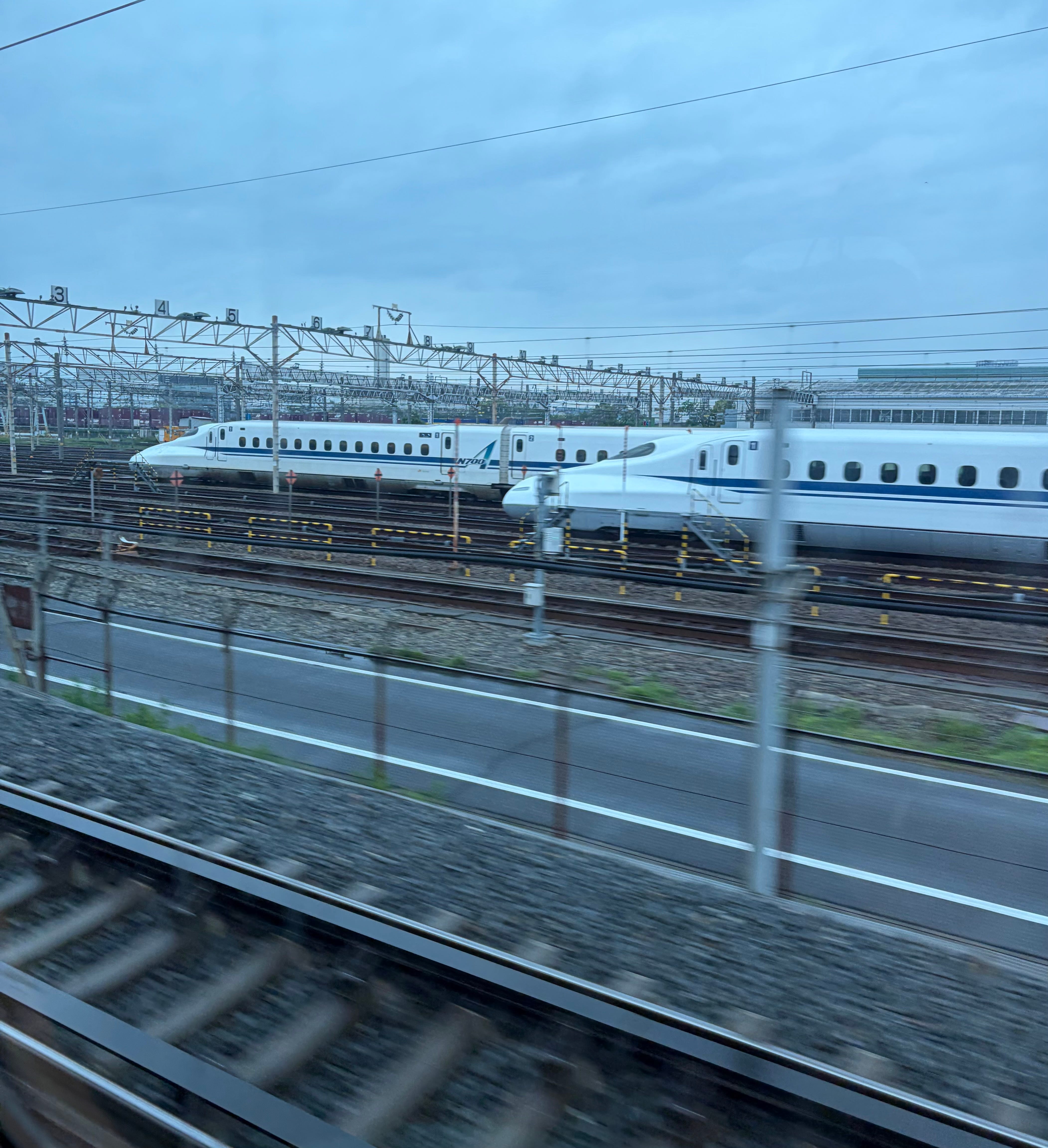
The train departs from Tokyo Station — one of very many in the city, but the main one — and arrives at Shin-Osaka Station, with stops at Yokohama, Nagoya, and Kyoto along the way. Speeds reach around 175 miles per hour. If you are on the right hand side of the train traveling in that direction, you may get good views of Mount Fuji. The Fuji-friendly seats are priced at a modest premium. I had one, but sadly clouds obscured the mountain that afternoon. I had hoped to post a from-the-train-Fuji-photo in this blog.
The ticket wasn’t cheap, as I booked at the last minute and it was the tail end of a major Japanese holiday — Golden Week. I paid around $156 for a seat in Green Class, which is a First Class equivalent. I’m not sure Green is worth it generally on that route, but it was the only option available. And keep in mind that in regular class, the seating is 3-2 — so there is a chance of being stuck in a middle on a busy day. Green, by contrast, has 2-2 seating (as well as more legroom). I believe regular class tickets outside of peak periods can go for around $85.
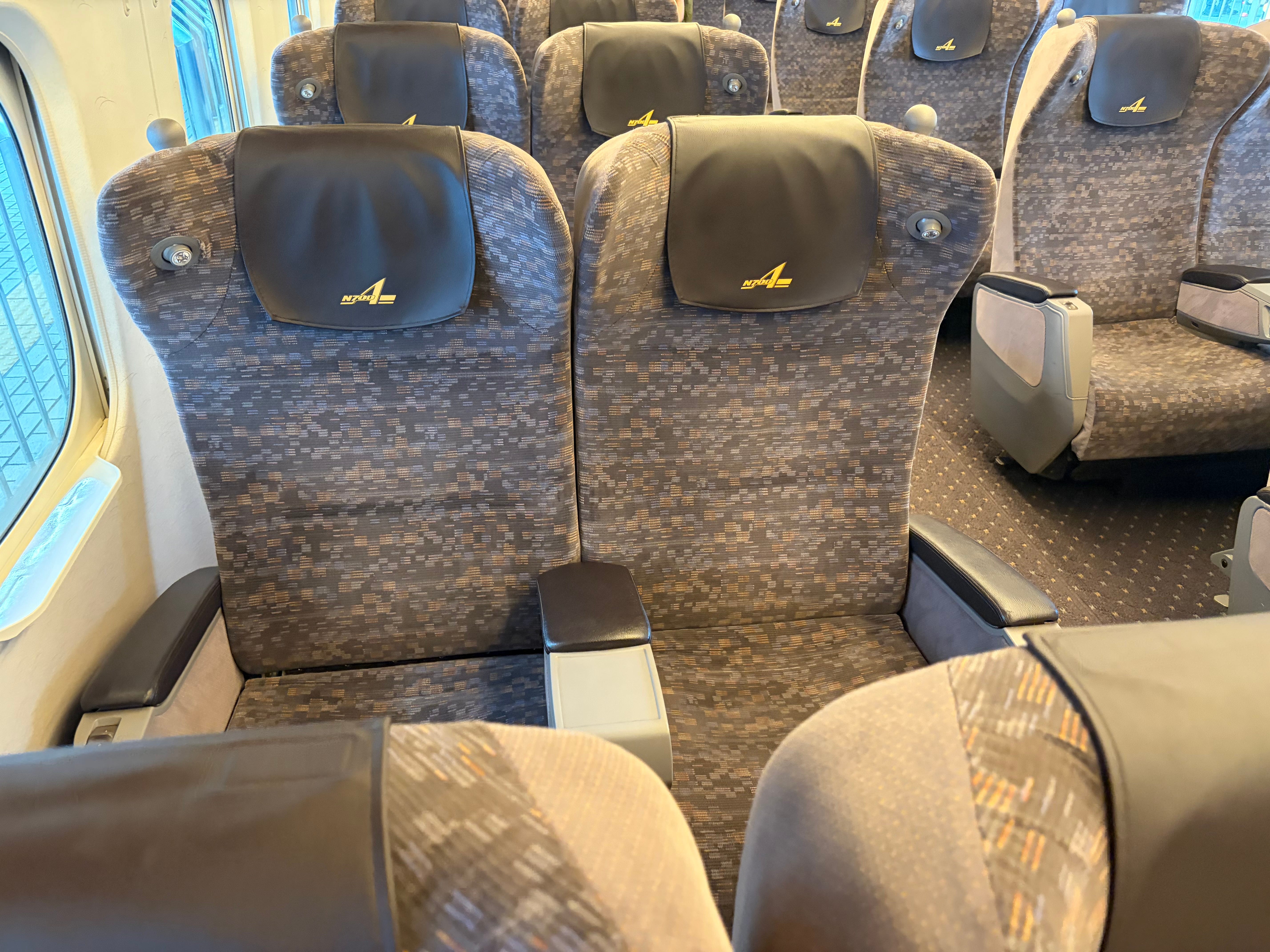
I booked via an app called Klook, which made it pretty easy if you are an English speaker without a Japanese credit card. If you are planning ahead and intend to visit various cities, you should check out a Japan Rail Pass for unlimited travel. These start at around $320 — give or take — for seven days, although prices can vary a bit depending on where you buy and whether the pass is priced in dollars or Japanese yen. Also, you apparently have to pay a supplement on the very fastest of the bullet trains, such as the one I traveled on. I could definitely see myself binging on Japanese trains for a week trying to extract maximum value out of one of those passes. I love trains. But I might spring for Green Class, which would add about $130.
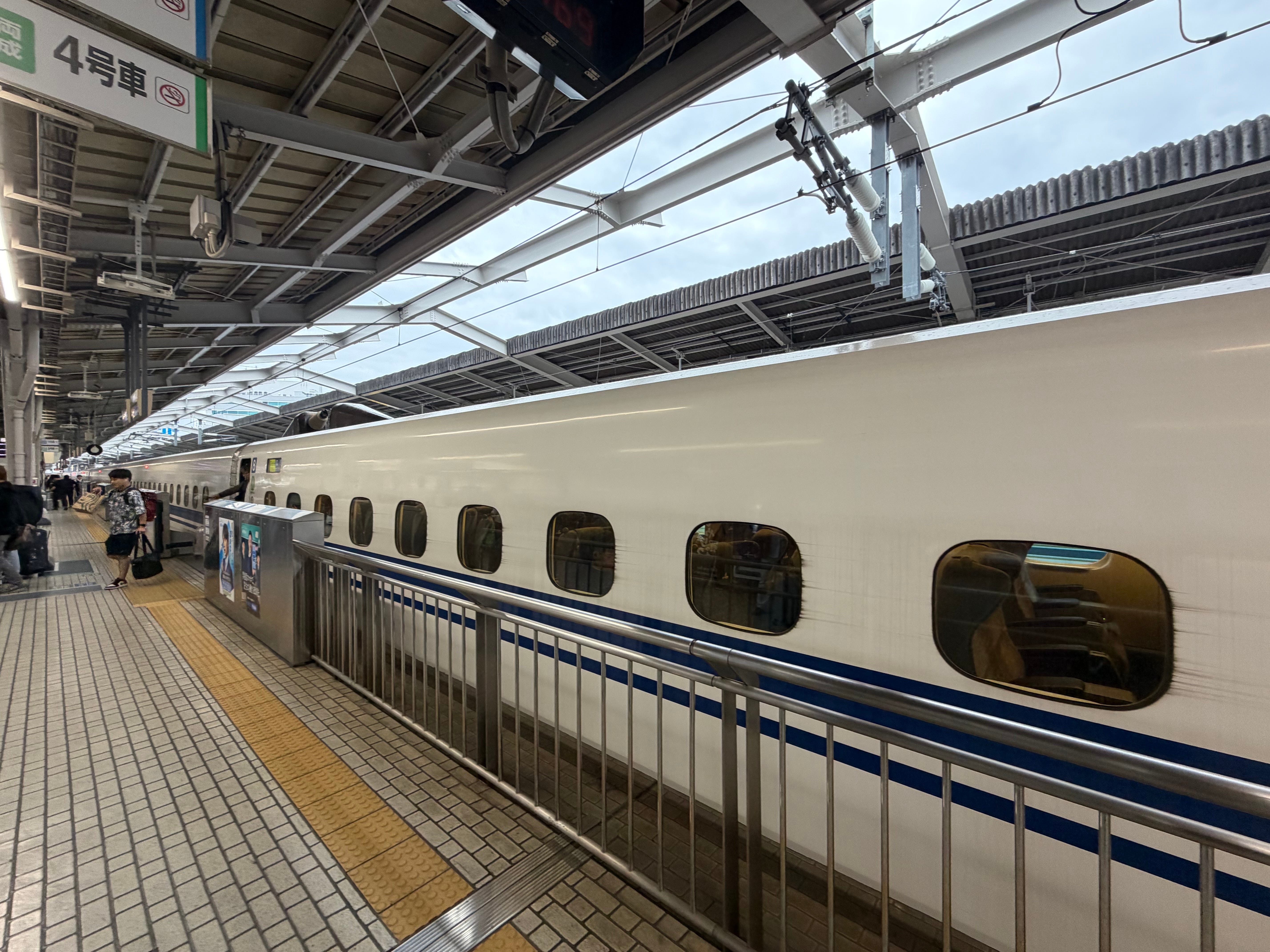
Tokyo Station is a destination in itself. It is huge and you should allow plenty of time to figure out where you need to go. Tokyo, as a whole, holds the title for the city in the world with the highest volume of daily train passengers. Its rail networks reportedly handle 10 to 20 million passenger journeys per day across the mix of subways, commuter rail, and bullet trains.
There are masses of places to eat within the station and nearby. It was very crowded when I was there, with long lines at the most popular eateries. But that was doubtless because of the holiday.
The onboard bullet train experience isn’t all that different from being on a high-speed train in Europe. Onboard catering has been cut back, apparently, and there are no carts from which to purchase food or drinks. There were some QR codes, but it was unclear whether they worked. However, there are shops located on the platforms at Tokyo station from which you can buy sandwiches and bento boxes, as well as drinks, including beer, so taking care of your catering before boarding is easy.
My next trip to Japan might be to run the Narita Pop Run, a 10K in November. This is held in the town that lends its name to Tokyo’s nearby older, but iconic, airport. It sounds like a fun race. We’ll see whether I make it there. ✈️ 🏃
Return to the Table of Contents
Feedback? Email: flyrun@substack.com
If you’ve stumbled across this post, please consider subscribing to the Flyrun blog using the button below. It covers the intersection of running, travel, and aviation. Subscribing costs nothing (and never will). You’ll get an email every couple of months or so with a new post. Please also share this post with anyone you think might be interested. You can see an archive of previous posts here.