
Chicken or the pasta? I like airline meals. It’s not that I always see culinary merit. But I generally enjoy the vibe of eating while flying. More often than not, I find the food isn’t actually bad, whatever the class of service. But I’m easy to please.
However, even at the front of the plane, the food is nothing extraordinary. I never count on a long-haul Business Class meal being better than what I’d get with a ready-made meal from a fancy supermarket (especially U.K. supermarkets, which have long mastered ready-mades in a way their American counterparts never have). It’s fair to say that hardly anyone chooses an airline because of the food.
A fixed-price airline in the sky
There was a time, however, when that wasn’t the case. Until about 40 years ago, U.S. airlines were not permitted to set their own fares. Instead, domestic fares were laid down by the Civil Aeronautics Board, a precursor to the Federal Aviation Authority. There were also international agreements that fixed what airlines could charge between different countries. So in those days, all airlines flying a given route had to charge the same. The rationale was that if they competed on price, they would cut corners, thereby compromising safety. Maybe there was validity in that concern back in the days when aviation was still a fledgling industry. But the result was that aviation was priced beyond the reach of many.
Unable to compete on price, airlines competed heavily on service — and food was a major battleground. Meals could be impressive, especially in first class. That was long before the era of lie-flat jet travel. In fact, it was long before the onset of what we today call “Business Class.” Then, First Class passengers — even on long-haul flights — enjoyed comfortable and wide recliners, but nothing like today’s semi-private pods that convert into beds. The food, however, was something else. Think, for example, roast beef carved and plated in front of you from a cart (or “trolley” as the Brits would say), lobster, caviar, and the like. Airline regulation made for, literally, a fixed-price menu in the sky.
Much of the culinary luxury was in First Class. But passengers in the back sometimes also experienced things they could only dream of today. For example, TWA and Continental — much later absorbed into American and United, respectively — had stand-up bars with lounge seating in coach on some of their 747s. And free meals in economy were the norm.
How deregulation changed the menu
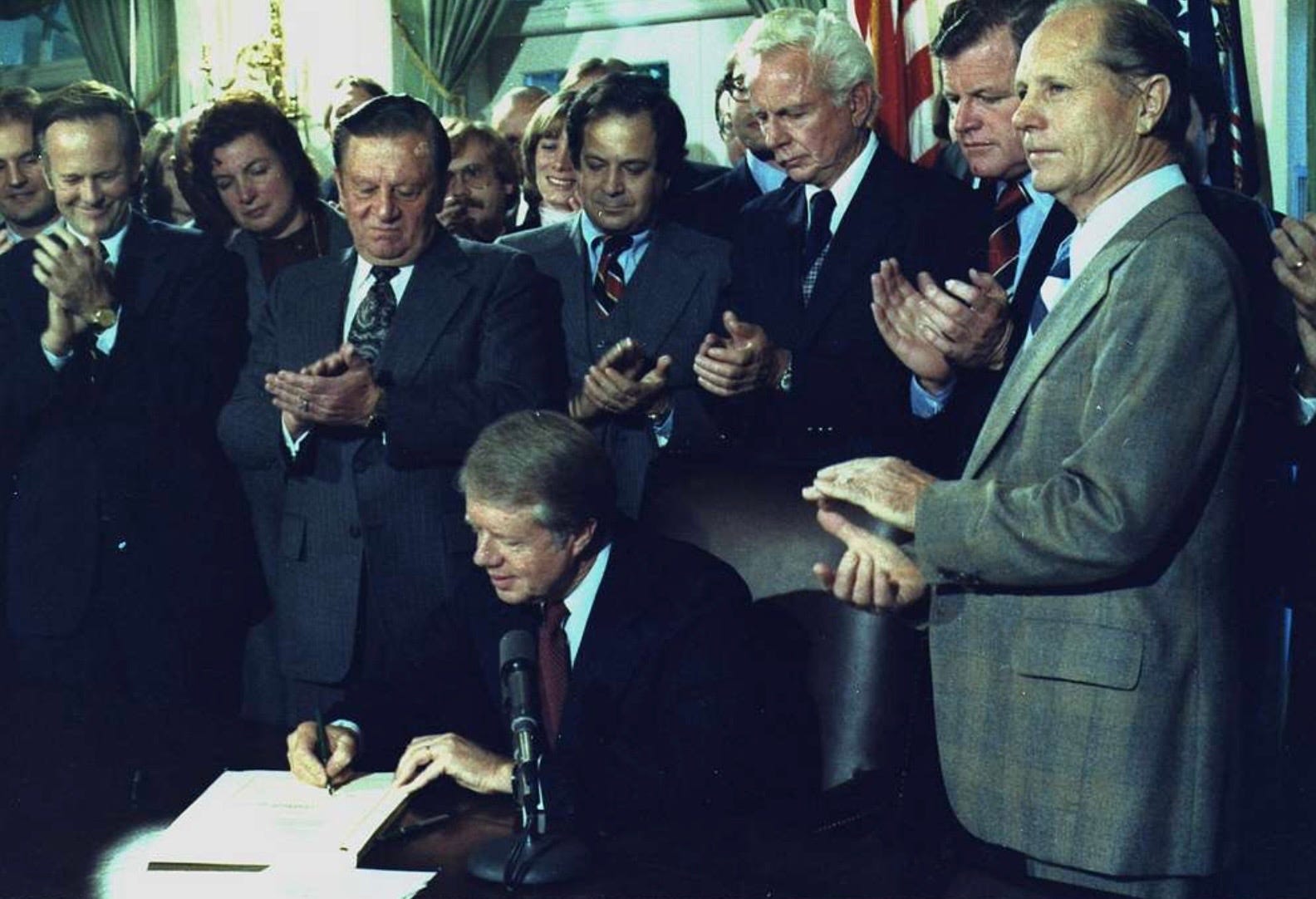
All that changed with the U.S. Airline Deregulation Act of 1978, signed by President Carter. It phased out the Civil Aeronautics Board’s control over routes and fares, with the process complete by 1985.
Some might find it surprising that it was Carter — often looked back on these days as on the left of U.S. politics — not Reagan, who defeated him after one term, who deregulated the airline industry. But Carter was a Southern Democrat who ran partly as an outsider and budget hawk. He was not ideologically aligned with the pro-regulation wing of the Democratic Party. He believed in market efficiency and was skeptical of bureaucratic bloat. Plus, deregulation was not simply pandering to the airline industry. It opened up aviation to the masses. It was as much an egalitarian move as a capitalist one. It is hard to overstate how much deregulation changed the airline industry — food, included.
A celebratory dinner at PDX
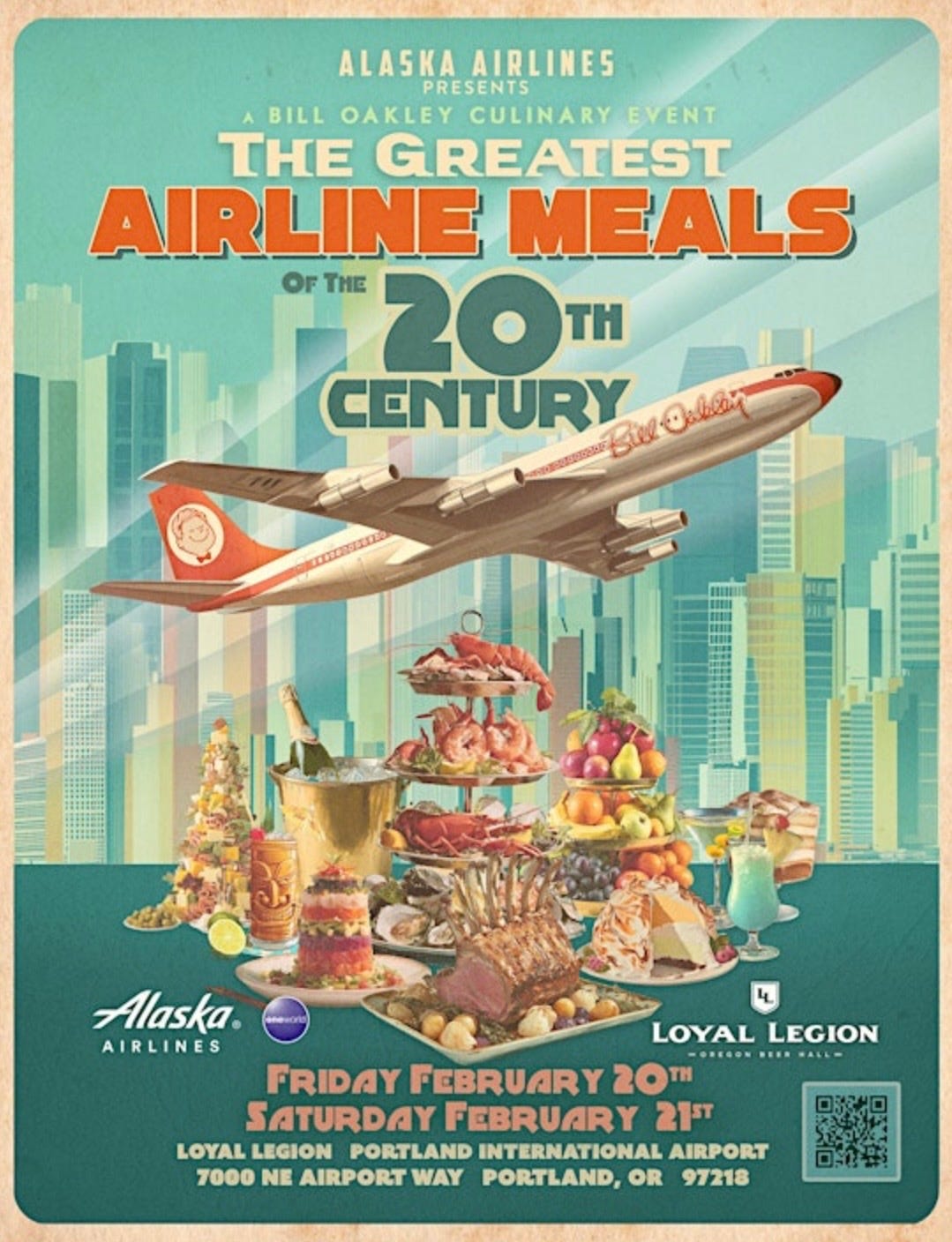
An event caught my eye recently that sought to revisit the glory days of airline meals. It was a ticketed dinner that took place in February at the Portland International Airport titled: “Greatest Airline Meals of the 20th Century.” Portland was not a particularly prominent outpost in the “glory” days of pre-deregulation aviation — even though today it has, at least on some criteria, the best airport in the USA (more on that shortly) — but it happens to be the home of the person behind the event, Bill Oakley.
Oakley is best known as a former writer and producer for The Simpsons, the iconic animated American TV comedy. These days, Oakley has a following as a foodie and also has an interest in aviation. Combining his talents, he put together this dinner that ran on two consecutive evenings, seating around 75 people each time — many of whom flew in specially. It took over Loyal Legion PDX, a pre-security beer hall at the airport.
Both nights sold out quickly after word got around on the aviation blogosphere and the Portland foodie-sphere. No tickets were available when I found out about it, but I checked obsessively and snagged a couple after a cancellation.
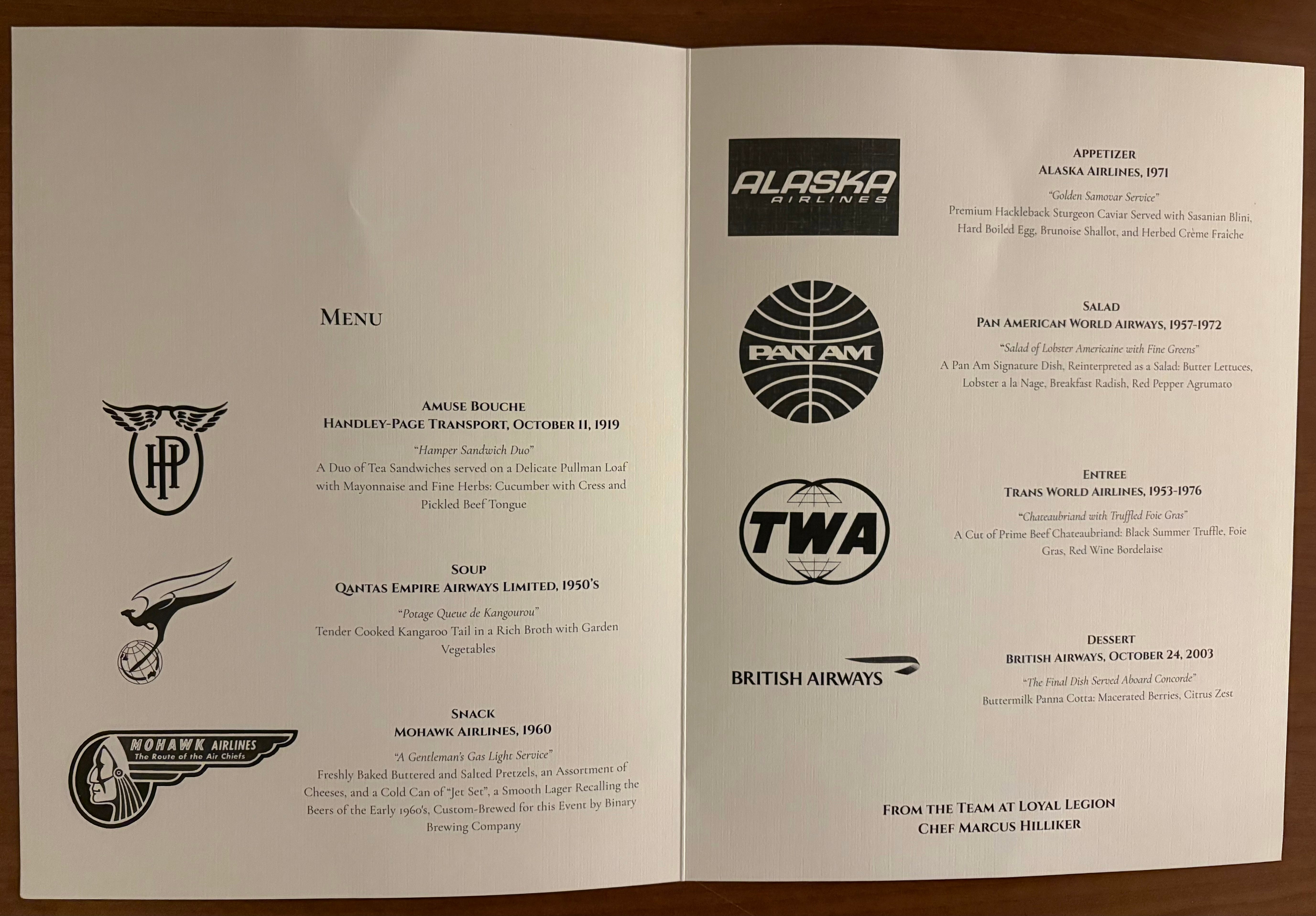
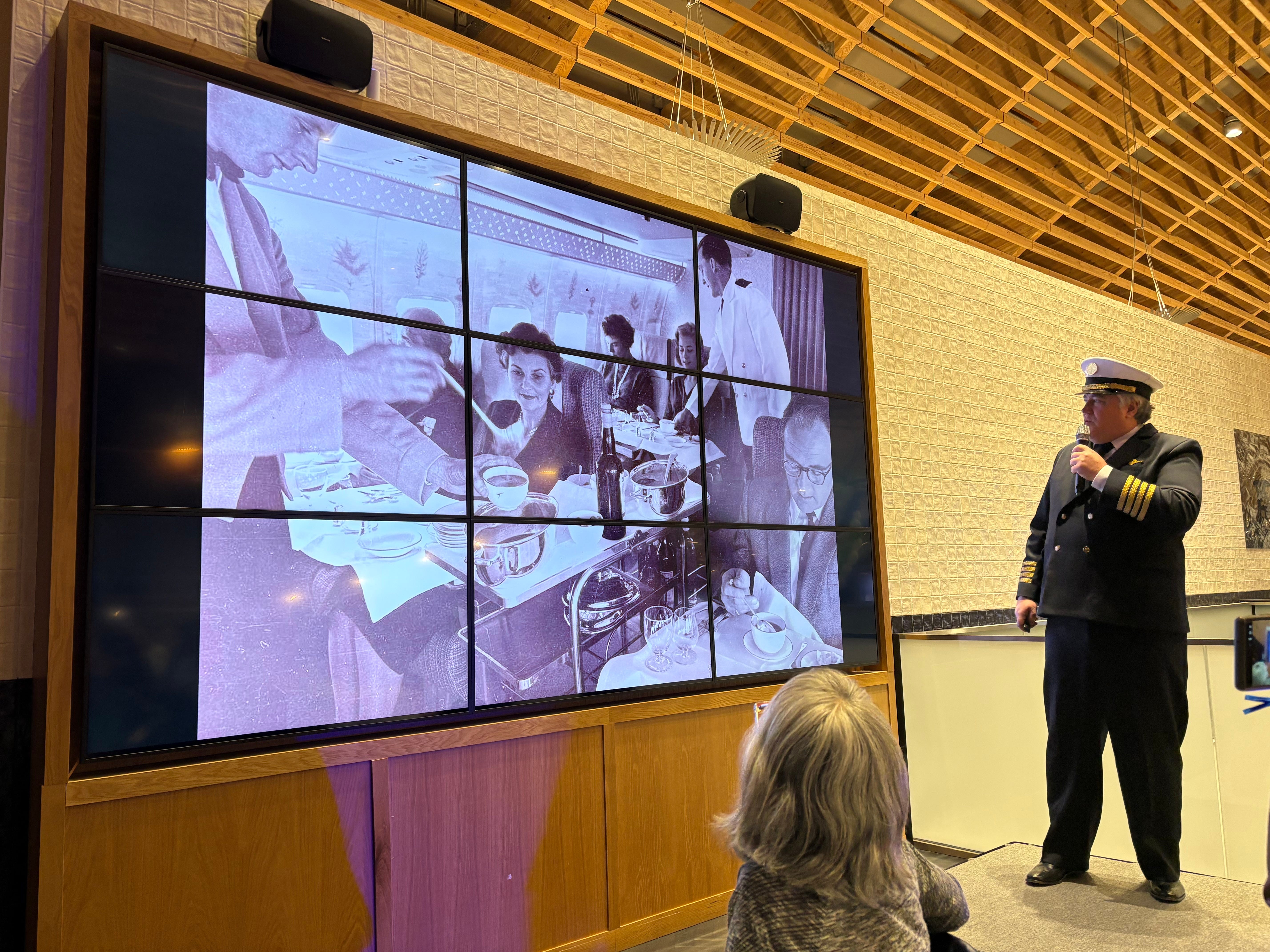
The dinner involved a seven-course meal drawn from airline menus at various points in the 20th century. It was more of a tasting menu than a veritable feast. But it was a valiant culinary effort and was accompanied by an entertaining presentation by Oakley himself who — outfitted as a Pan Am captain — introduced each dish with vignettes about the aviation era from which the course was drawn. An optional curated flow of themed cocktails accompanied the meal.
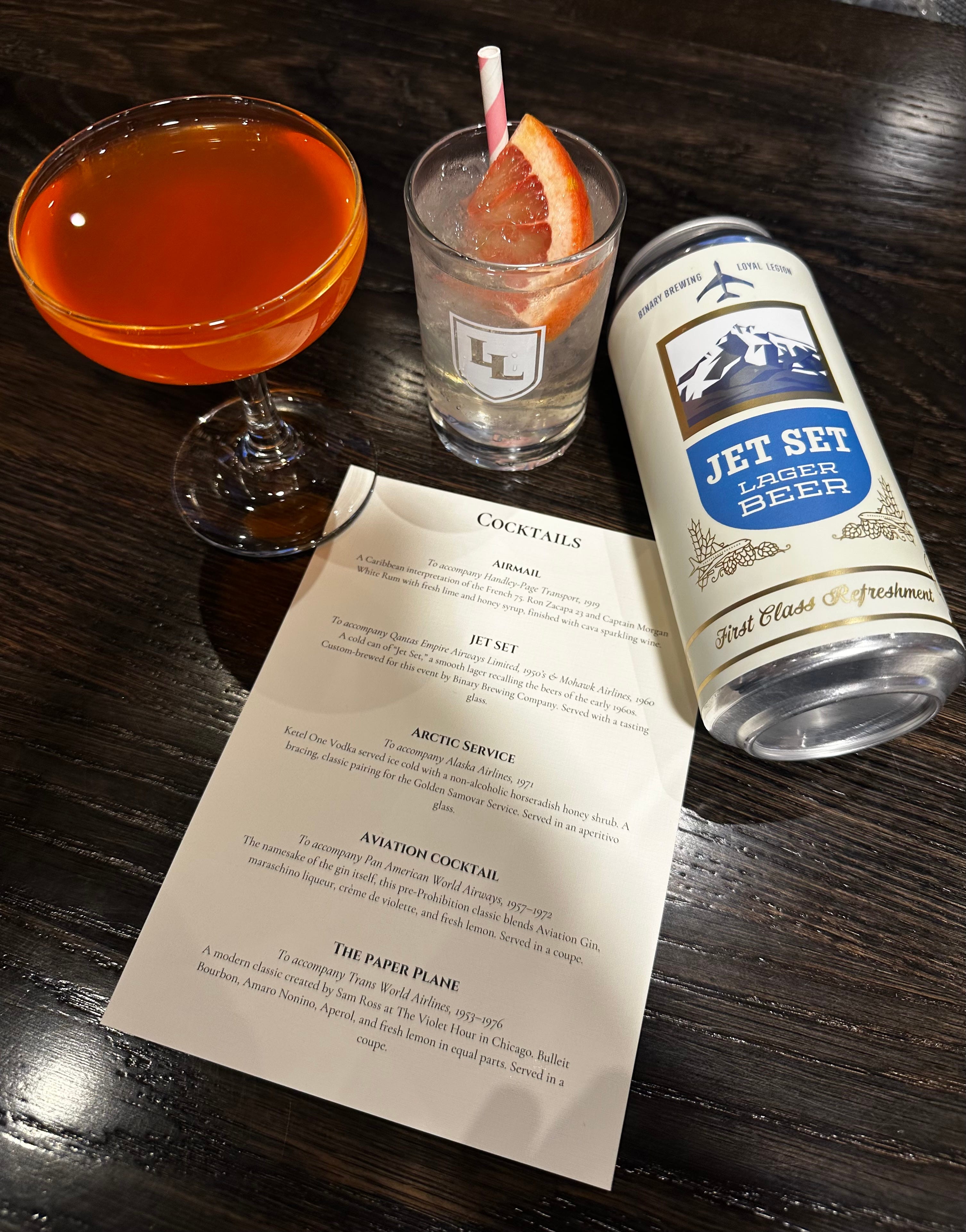
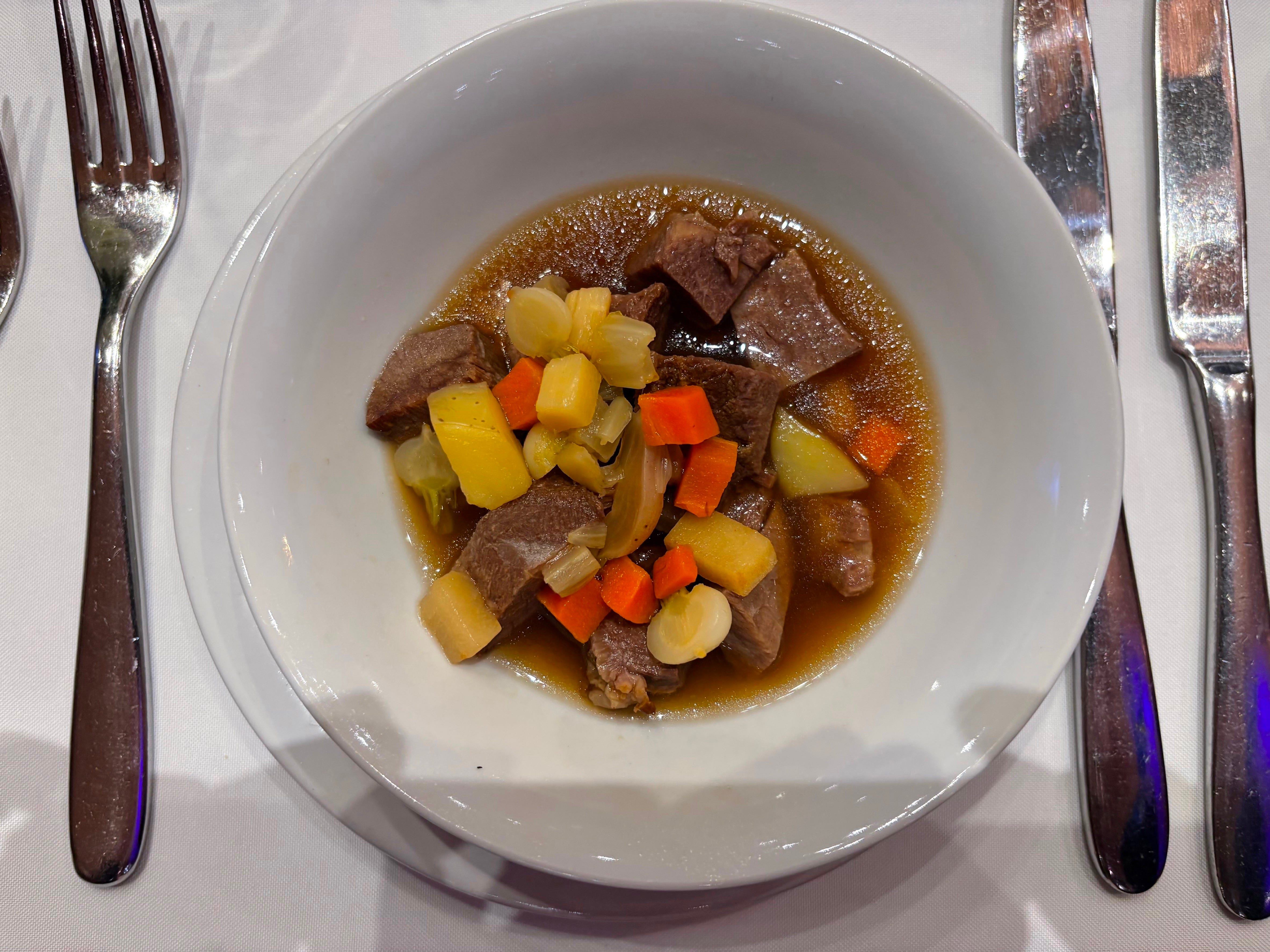
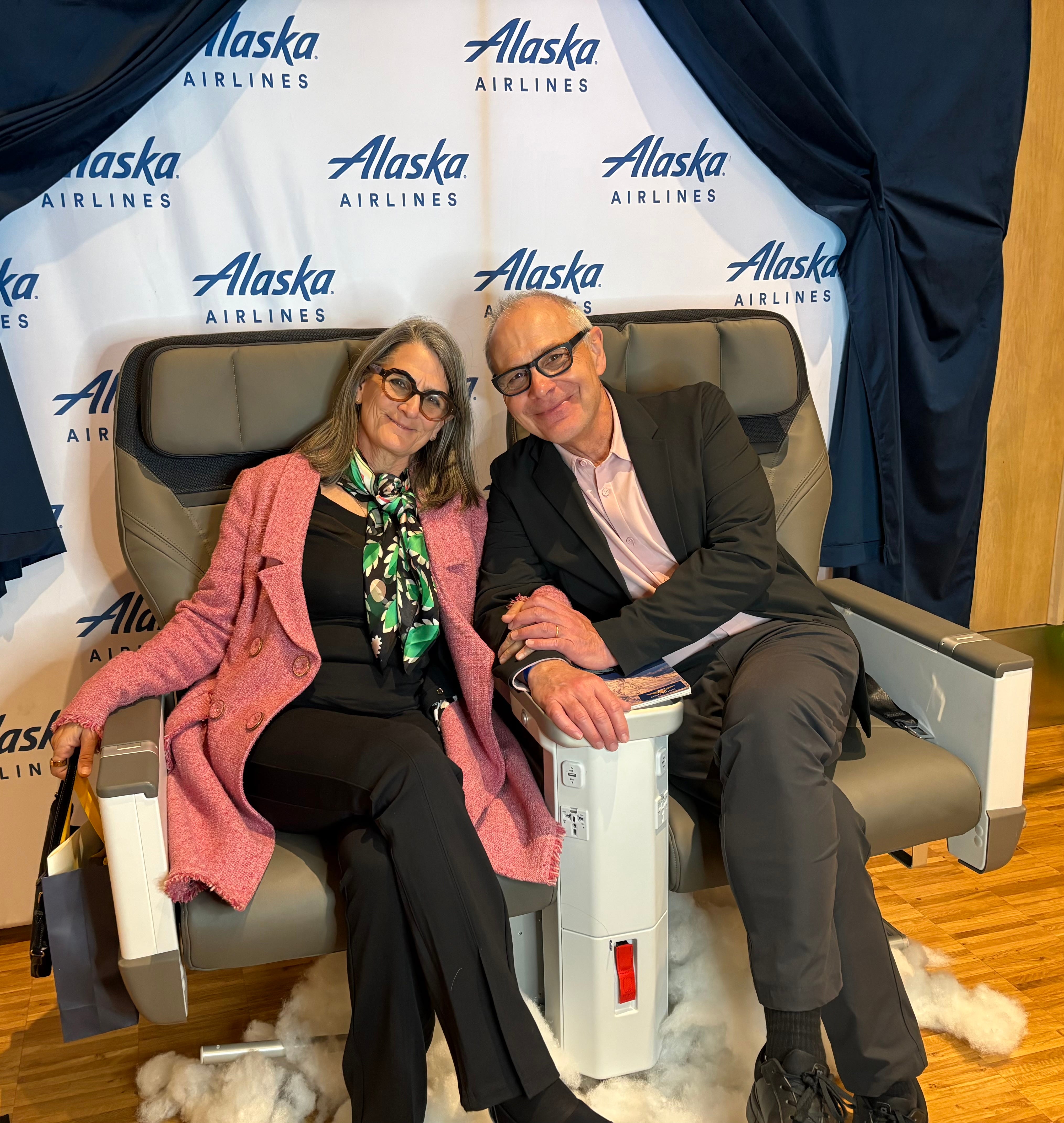
Among the more interesting dishes were kangaroo soup — served by Qantas in the days when London to Sydney was a multi-stop route traveled over days — and caviar and blinis, with shots of vodka, served by Alaska Airlines in the days when they ran charter flights to Russia. Alaska was the main sponsor of the event, incidentally. There was also Pan Am lobster salad. The penultimate course was a TWA steak. And dessert was copied from the British Airways Concorde.
A brief supersonic and North Korean detour
I flew on Concorde a couple of times. Fortunately, other people were paying. I don’t recall the dessert. But what’s remarkable looking back is how the hard product — the cabin seating — was nothing special. The seat in the single-class cabin was no more spacious or comfortable than the LOT Polish Airlines Premium Economy seat on which I’m sitting while writing this flying to Miami after running the Warsaw Half Marathon (of which more in a later post — although, spoiler, LOT PE is surprisingly good as the service merges more into the Business Class end of the plane than regular Economy).
Supersonic long-haul passenger travel might be making a comeback soon with Boom Supersonic’s promised narrow-body Overture aircraft, on which some airlines — American, United, and Japan Airlines included — have options. But whether they’ll go lie-flat or take the view that the shorter flight times inherent in supersonic travel obviate that need remains to be seen. Concorde did not fly any red-eyes, as I recall — so the upright seating gelled with the model.
Oakley’s presentation also highlighted what he thought might be the worst airline meal of the 20th century — a somewhat gray slab of meat served on North Korea’s Air Koryo. I’ve only flown on Koryo once — traveling with my then teenage daughter from Beijing to Pyongyang in 2008 — but I recall being given a ham and cheese sandwich that wasn’t bad. It was more than I’d be given on a U.S. domestic flight today.
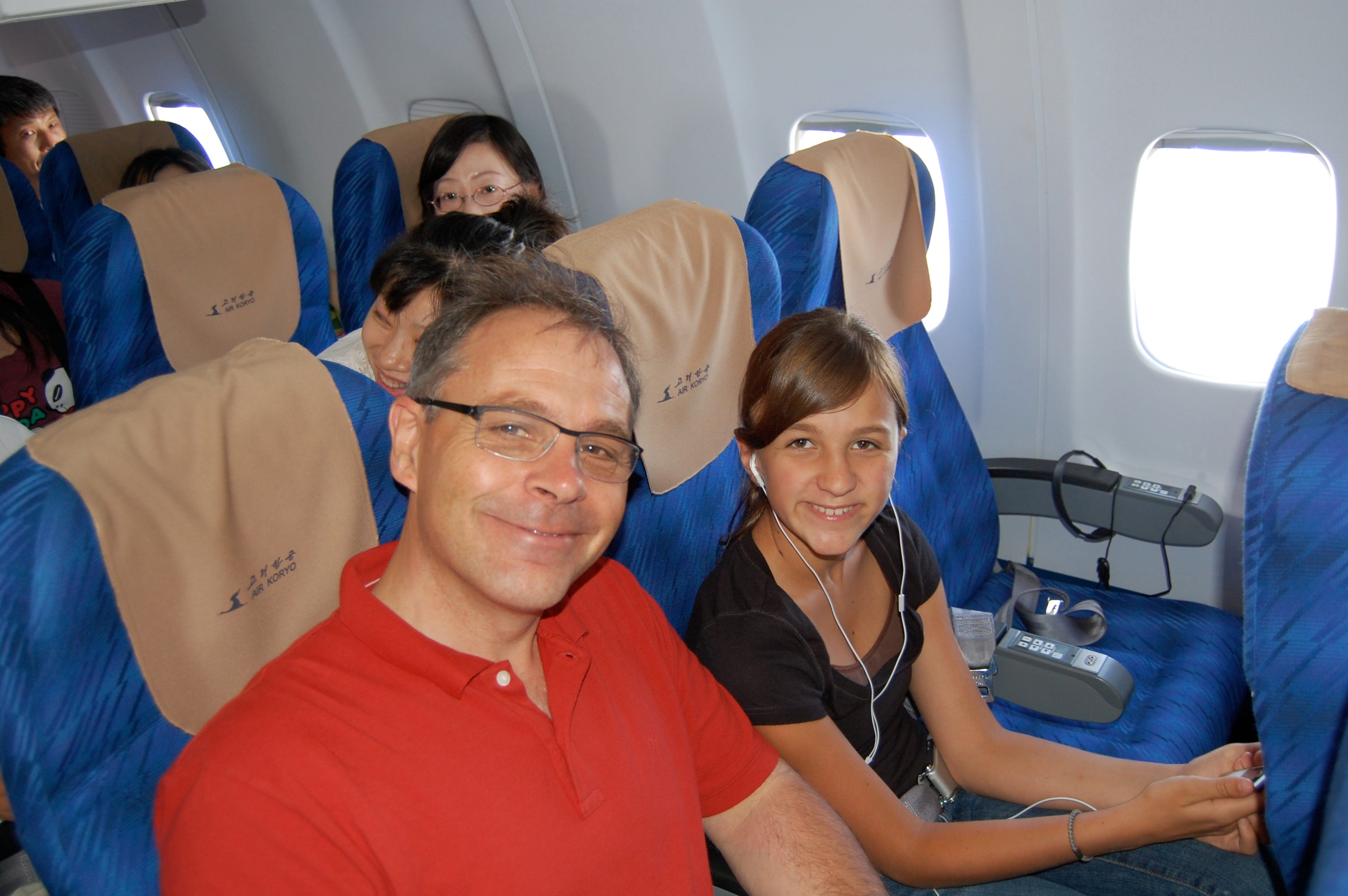
This past New Year’s Eve, my daughter — now an attorney — posted a short TikTok video as a flashback on that North Korea trip. For reasons I do not fully comprehend, it went “viral” and has, as of this writing, had over 8.5 million views. That’s more than 0.1% of the world’s population. I wish this blog garnered similar attention.
The race to the bottom
After U.S. deregulation, price competition in passenger aviation became paramount. And cutting costs became essential to airline survival. Food was an easy target. The race to the bottom began gradually. Throughout the 1980s and 90s, meal quality declined steadily — portions shrank, ingredients cheapened, and hot meals began disappearing on shorter routes.
Then came 9/11 and the airline downturn that followed. What remained of the free meal in economy on longer domestic routes soon disappeared. The buy-on-board era, such as it is, arrived.
Culinary life at the front of the plane remained better, of course, but only up to a point. I can only recall one flight in recent years with food plated from a trolley, and that was while non-revving in Royal Jordanian Business Class from Chicago to Amman four years ago.
Sexualization and gender in aviation
Oakley’s presentation reminded diners of something else that existed pre-deregulation. That was the sexualization and objectification of flight attendants, or “stewardesses” as female cabin crew were known in those days.
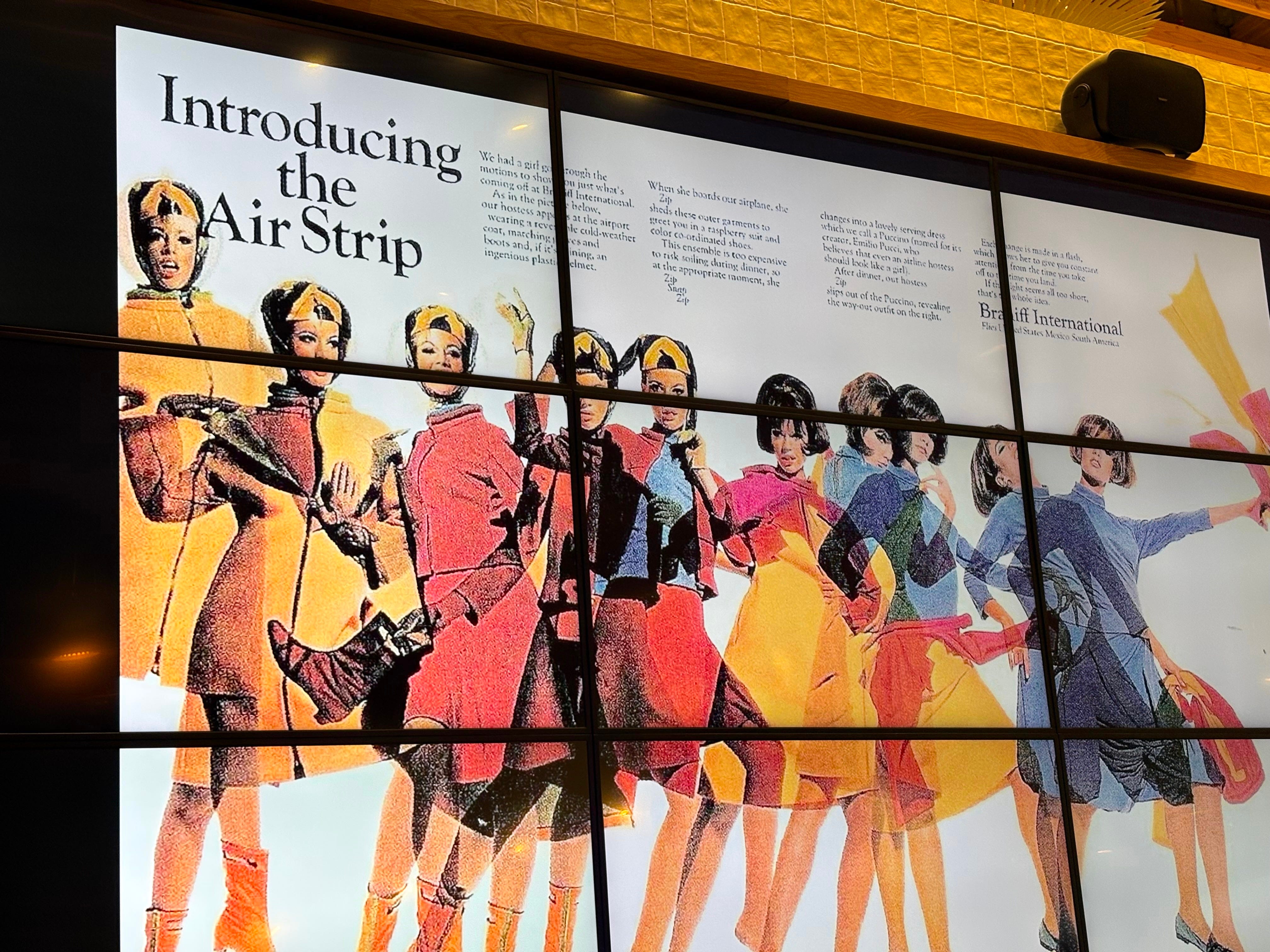
Airlines had strict rules on the appearance and age of stewardesses. Braniff — a Texas-based airline (which briefly partnered with BA to fly the Concorde subsonically between Dulles and Dallas as a continuation of flights from London) — was known for its stewardesses in “hot pants” and go-go boots as well as its “air strip” service. American, Pan Am, and others required stewardesses to be single. United even ran men-only flights between New York and Chicago, on which stewardesses would offer to light passengers’ cigars.
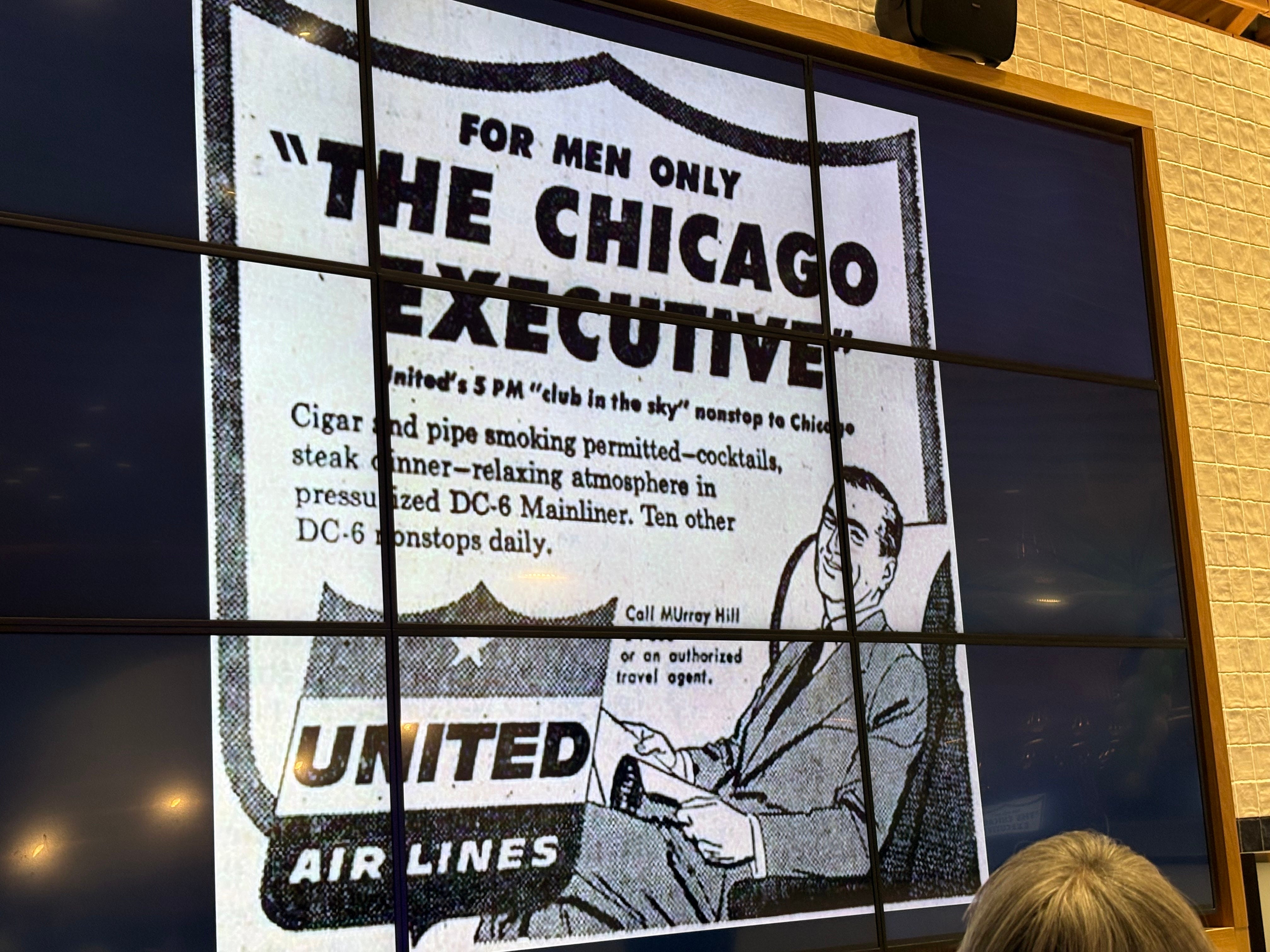
One can debate the extent to which all that came to an end because of the economics of deregulation, or because of changed societal norms. No doubt it was a combination. But that era was all part of a male-focused airline industry that emphasized indulgence combined with sexual innuendo. In parts of the world — especially Asia — some airlines continued to promote female cabin crew as a “service feature” for much longer.
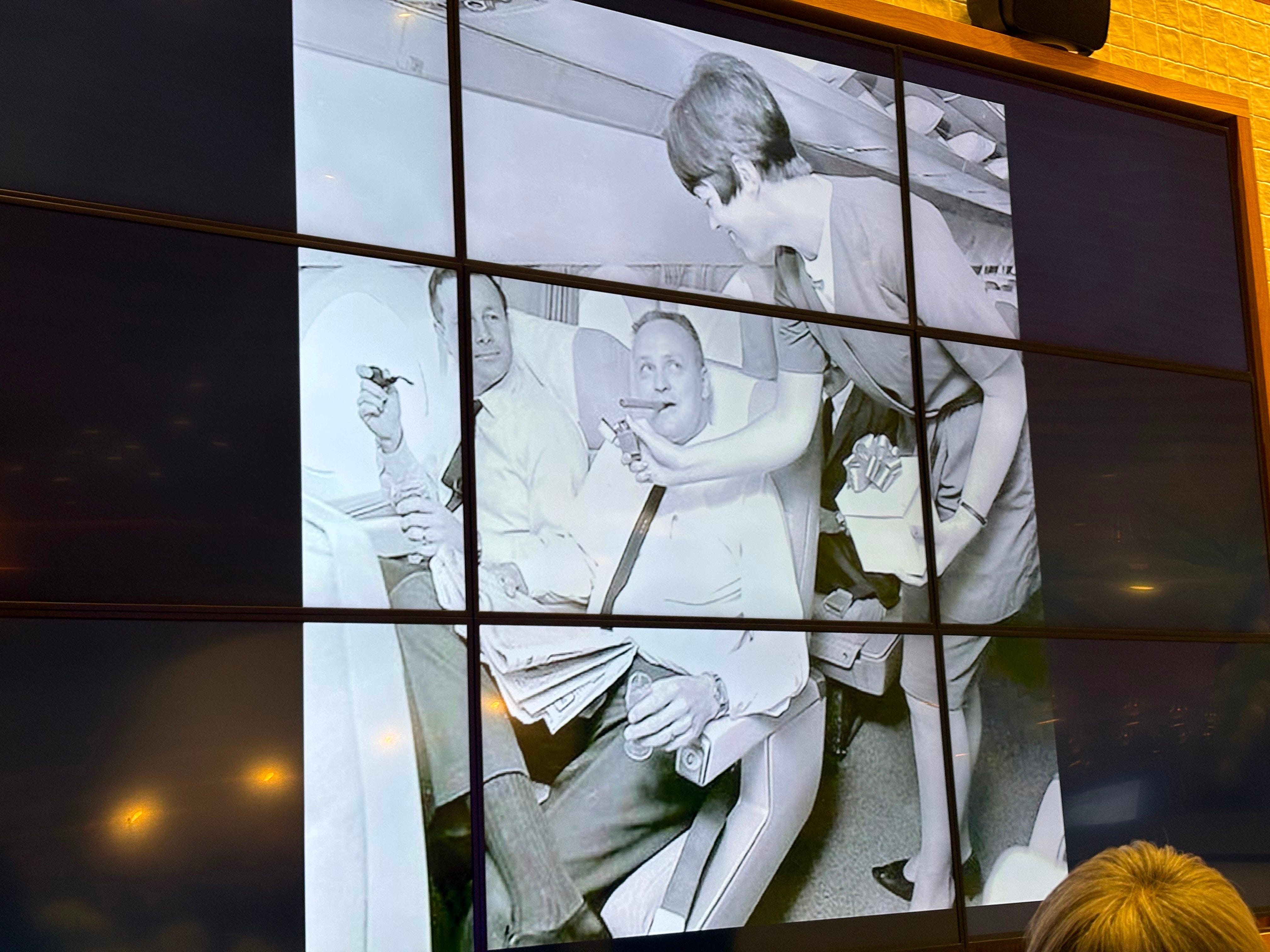
With the assumption that flights attendants were female went one that pilots were male. That has not yet gone away. My wife, an airline captain, still quite often encounters situations where people assume she is a flight attendant.
Post-World War Two, not a single female pilot worked for a U.S. scheduled passenger airline until 1973. That was five years before deregulation. And it was 13 years before my wife got her pilot’s license. It wouldn’t have occurred to her to pursue that, but for the fact an aviation course sparked her interest while browsing a college catalog.
The passenger jet era began in the late 1950s. And just as the flight deck was, for practical purposes, off limits to women for many years, so too were flight attendant positions to men. But in 1967, a man called Celio Diaz Jr. sued Pan Am after being denied a job as a flight attendant because of his gender. Pan Am argued that feminine traits were better suited to the job, and that passengers preferred women. Diaz’s lawsuit went to the U.S. Court of Appeals, which ruled in 1971 that limiting the role to women violated Title VII of the 1964 Civil Rights Act. The court found that a flight attendant’s gender was not a bona fide occupational qualification and hiring men did not hinder the core, safe operation of the airline.
Diaz’s win opened up the profession to men (and likely also helped open up the flight deck to women). But sadly, by the time the case was won, he was no longer eligible for the position with Pan Am due to age restrictions in place at the time. It took a bit longer for that barrier to be raised as well.
A journey
Passenger aviation is on a journey. As much as people complain, it has — overall — changed for the better over the years. It is safer, more affordable, and more inclusive (both for passengers and crew). Depending on where you are sitting, it is not necessarily less comfortable. Men no longer run the show on their own. My wife talks of her “unmanned flights” where all the crew — flight deck and in the cabin — are female.
Where that journey will go is far from clear. There’s evidence, for example, of a substantial increase in turbulence caused by climate change. What would happen if turbulence became so prevalent globally in future years that meal service became impractical? Or if the skies became so unfriendly as to make passenger aviation untenable?
The aviation industry is barely 100 years old. In the context of human civilization, it is not even a blip on radar. I’d be curious to know what aviation in the 22nd Century will be like. Maybe there will be a dinner in 2126 harking back to today. Or maybe not.
In praise of PDX
I flew into Portland on the morning of the dinner. There is usually only one flight a day between Santa Barbara — my hometown — and Portland, and it currently leaves very early in the morning. That gave me a long time to kill at PDX before meeting my wife who was getting there in the early afternoon after coming off a work trip. But I’d been meaning to check out the airport, which I hadn’t been to since its recent massive upgrade.
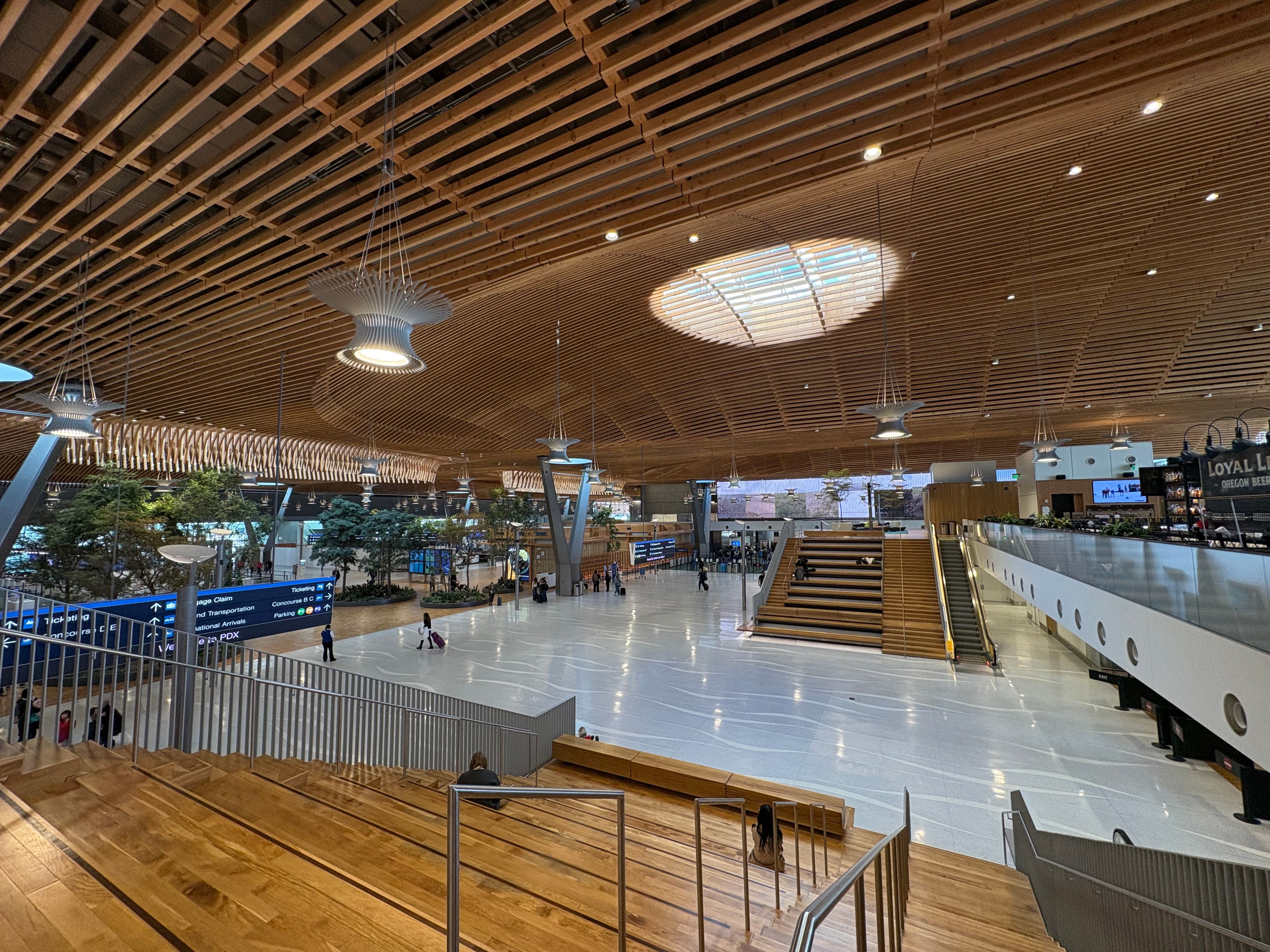
A $2-billion renovation has made PDX into what is visually probably the most stunning airport in the USA. The centerpiece is a vast timber roof covering nine acres — apparently the largest of its kind in the world — made entirely from wood sourced within 300 miles. Two 120-foot video walls above security display an electronic art installation featuring Oregon-inspired scenes that shift with the time of day and weather.
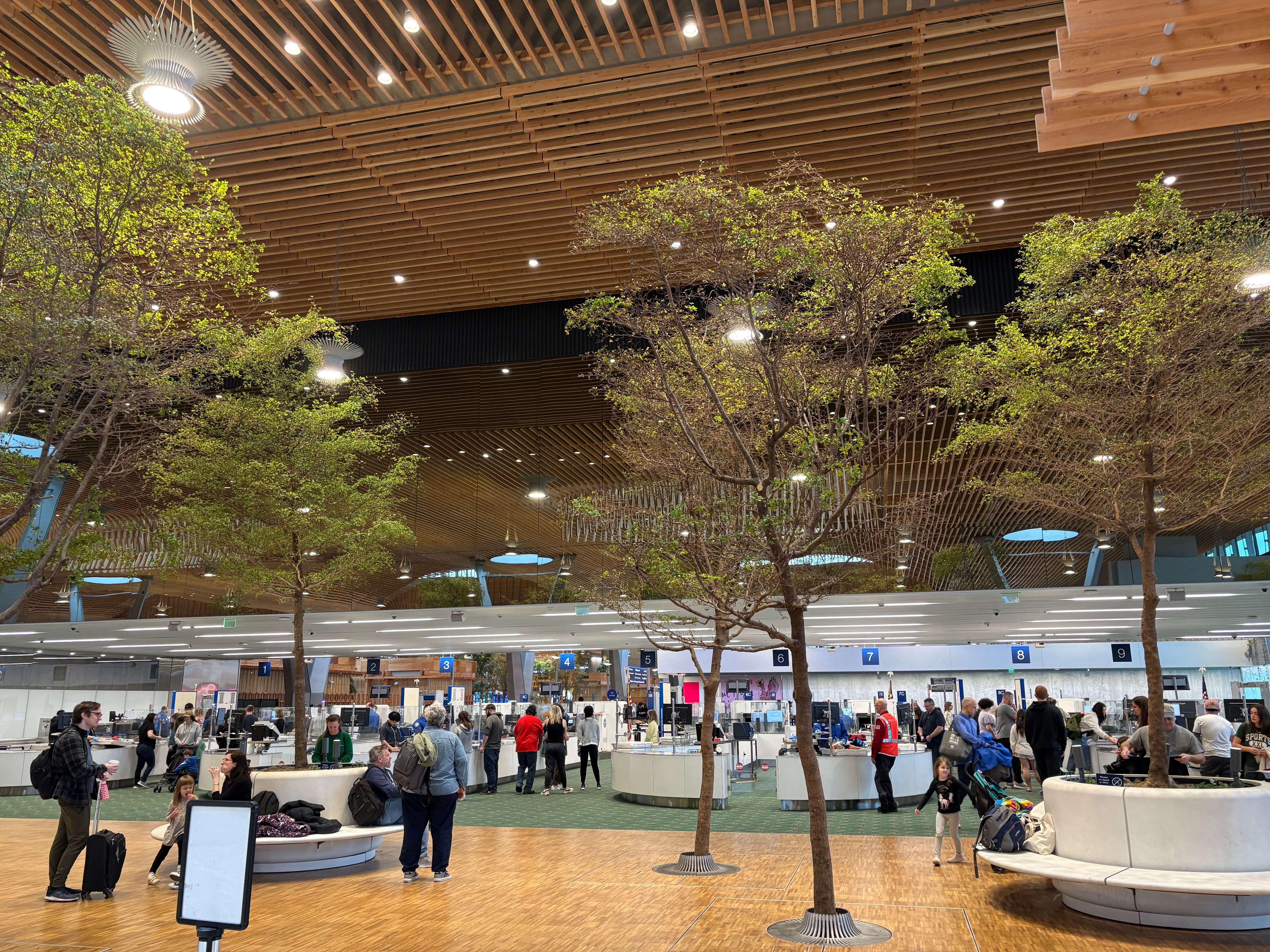
More than half the shops and restaurants are locally owned, including Portland staples like Powell’s Books and Stumptown Coffee. All vendors are required to charge the same prices as they do on the street in Portland — unlike at most airports, where they tack on hefty mark-ups. And since Oregon has no sales tax, those street prices are what you actually pay. A nice feature is the wooden stadium-style seating where people meeting inbound passengers can wait or, indeed, where arriving passengers can chill before braving the wider world. The aforementioned Loyal Legion Beer Hall is pretty unique in the overall desert of U.S. landside airport concessions (and even has a speakeasy, which featured in the airline meals dinner).
Better still, PDX has a good lounge scene, which is shortly to get even better. Alaska is the dominant carrier at the airport. Right now, its two lounges there are nothing special and can be overcrowded, but it will be opening a new, huge one later this year that promises to be one of the best on the West Coast of the U.S.A.
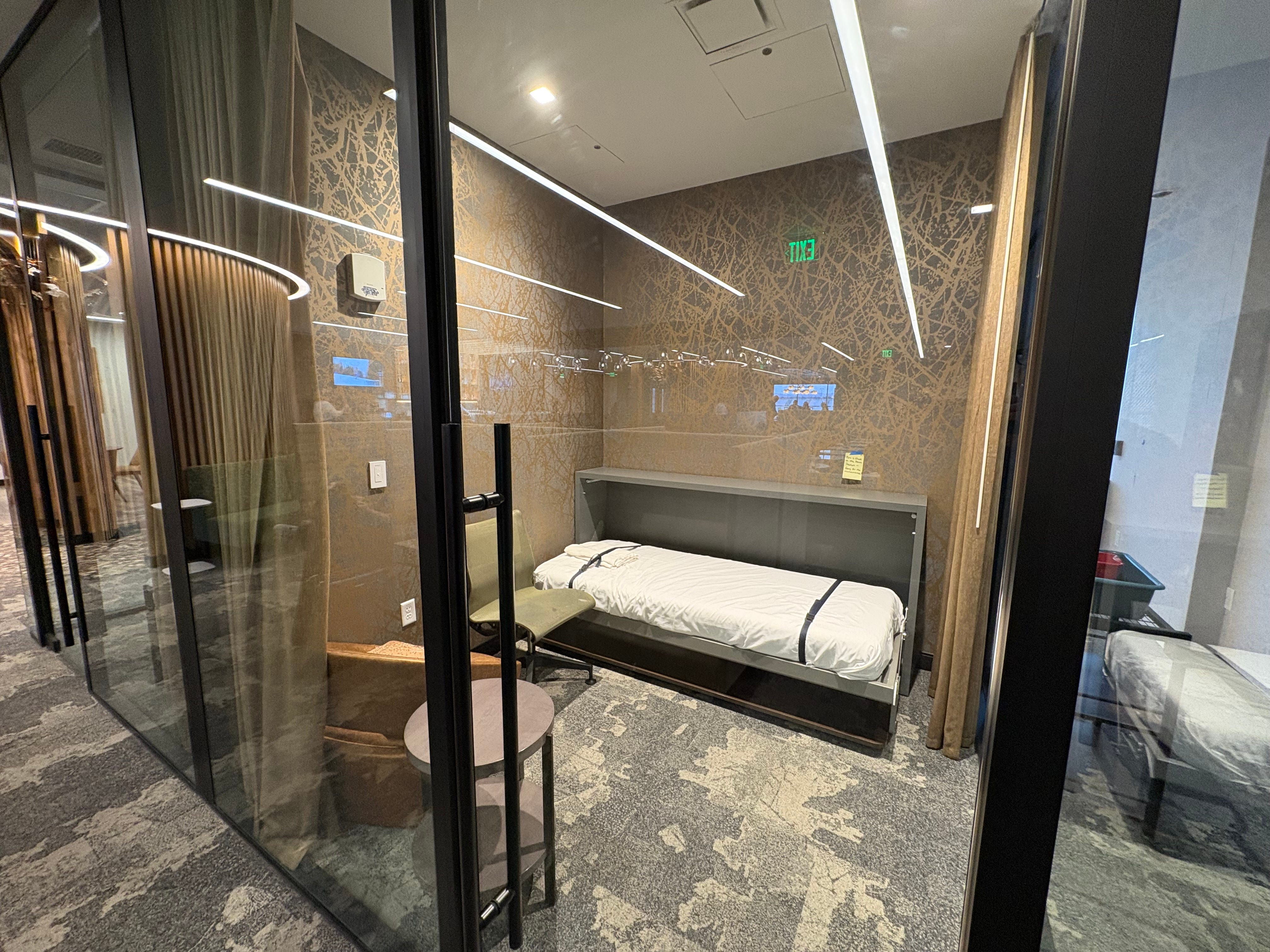
And there is already an excellent Priority Pass lounge, the Escape Lounge. PP lounges within the U.S. aren’t always great (if they exist at all), but the Portland one — where I hung out that day — is among the best. It has nice views, and the staff are unusually attentive in the way they proactively check to see whether you want anything. It even has a private room with a daybed — it has glass walls, but curtains for privacy — as well as a small meeting room and a shower. All are available at no extra cost on a first-come basis.
I am, as I noted earlier, easy to please, and see merit in all of the other main U.S. West Coast international airports — LAX, SFO, SAN, and SEA. But if your connections align — and they may not as PDX is among the smaller of the five — Portland is the nicest. I plan to find an excuse to go back soon to check out the new Alaska lounge soon after it opens. ✈️
Feedback? Email: flyrun@substack.com
If you’ve stumbled across this post, please consider subscribing to this blog using the button below. It covers the intersection of running, travel, and aviation. Subscribing costs nothing (and never will). You’ll get an email every couple of months or so with a new post. Please also share this post with anyone you think might be interested. You can see an archive of previous posts here.